
On 17 October 2017, the South African National Biodiversity Institute Centre for Biological Conservation at Kirstenbosch National Botanical Garden hosted the launch of Ocean Atlas: Facts and Figures about our Relationship with the Ocean (2017). The publication deals with various aspects of the relationship that humans have with the ocean. With extensive graphs and illustrations dealing with topics like fisheries management, plastic pollution, aquaculture, dead zones and marine tourism, the publication provides a comprehensive overview of issues facing the ocean today.

Let’s investigate some of the information contained in Ocean Atlas.
Dead zones
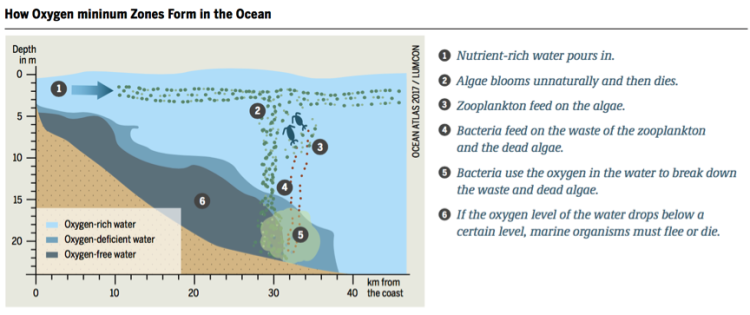
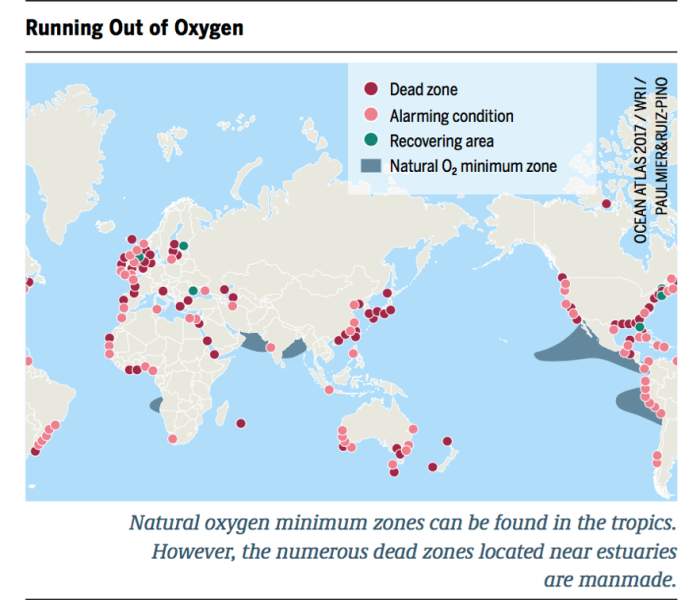
Dead zones are low-oxygen areas in the ocean and lakes around the world where very little plant and animal life exists. Dead zones are caused by human activity on land that produces excessive nutrient pollution. The effects of the over-fertilisation of seawater are called eutrophication. So, what does this mean? It means that so much artificial fertiliser is used in commercial agriculture that crops cannot absorb it all and the excess ends up in the ocean. This sets off a process whereby algae and plankton grow at tremendous rates, die off, and sink to the ocean floor where bacteria consume the matter. This process depletes the oxygen in the area, creating a zone where animals and plants cannot survive, as there is not enough oxygen. This is known as a dead zone.
Microplastic
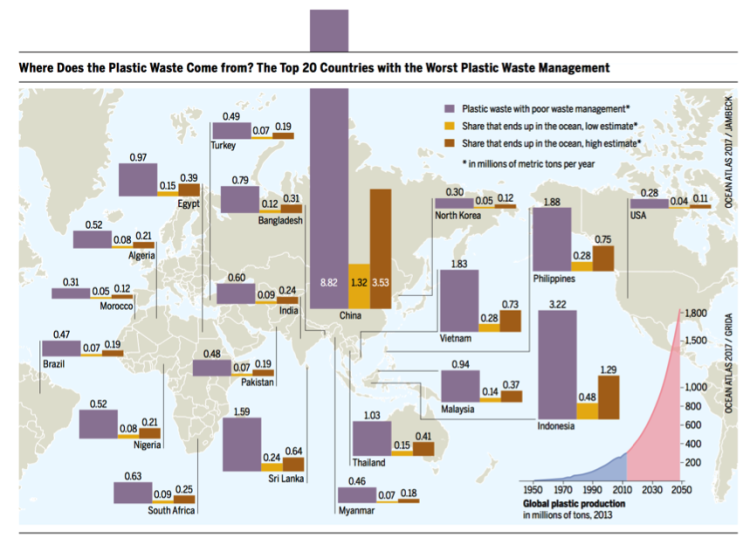
Annually, approximately 300 million tonnes of plastic is produced worldwide. Eighty per cent of the plastic waste that ends up in the ocean comes from land-based sources. We know that plastic doesn’t break down, but rather breaks up. It is therefore not absorbed back into the natural system, but is broken up into smaller and smaller pieces which eventually become part of the food chain when fish and other animals mistake it for food. Plastic pieces smaller than 5mm are known as microplastics and are found just about everywhere in the ocean and in very high concentrations in the five oceanic gyres of the world.

Danger of the declining diversity
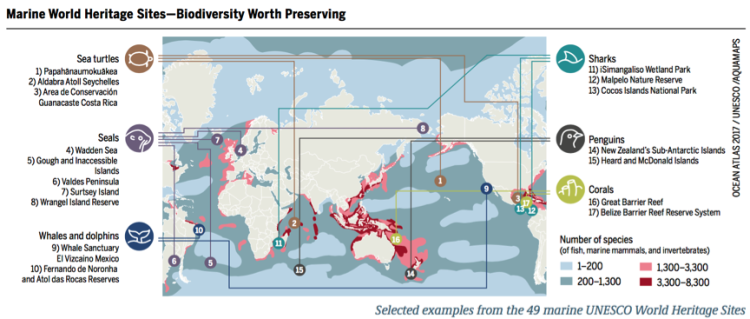
Biodiversity is the term used to describe the variety of plant and animal life found in a particular habitat and ecosystem. Biodiversity is essential to the health of an ecosystem. Healthy ecosystems provide humans with a wealth of essentials needed for our existence. These essentials can be anything from food security, water quality control to tourism and job security. Threats to marine biodiversity include human impact, introduction of invasive species, and pollutions. A 2015 report by WWF entitled Living Blue Planet Report – Species, habitats and human well-being shows a decline in marine populations of 49% between 1970 and 2012.
Ocean Atlas is a great resource for everyone from educators and learners, to those who would just like to know more about the current state of the ocean. The publication can be downloaded for free in PDF format at this link.
_450_310_70_s_c1_c_t.jpg)

_450_310_70_s_c1_c_t.jpg)