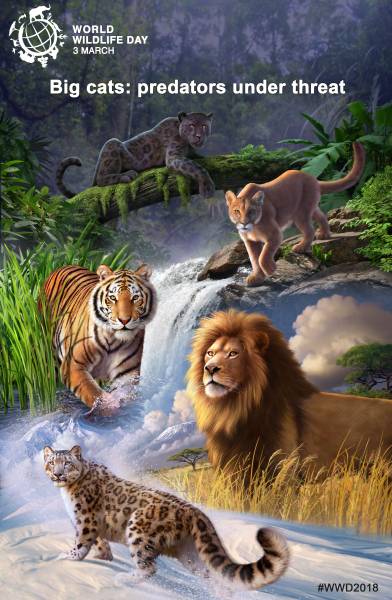

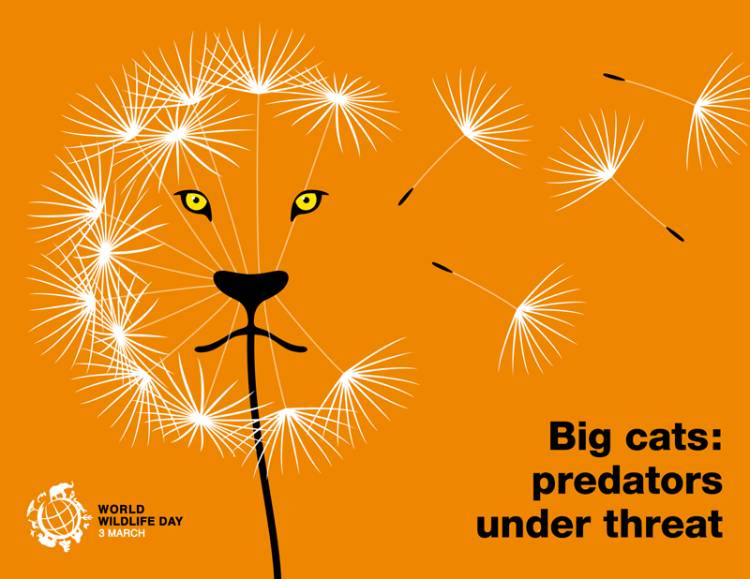
Tomorrow is the UN World Wildlife Day, and the call has gone out for us all to take action to protect the world’s big cats – the ultimate predators, but under threat from humans. We are all asked to do one thing today to help protect these magnificent creatures.
You can help protect big cats in South Africa by showing your support for legitimate conservation and rehabilitation efforts. While there are many initiatives at nature reserves and in communities aimed at conserving these majestic animals, we would like to use this opportunity to ask you to show your support for groups working to ensure not only the conservation of big cats, but also the ecosystems that they depend on.
We recommend supporting the Endangered Wildlife Trust – over the past 45 years, their Carnivore Conservation Programme has been setting the standard for preserving the habitats and ranges of large predators, such as the vulnerable cheetah.
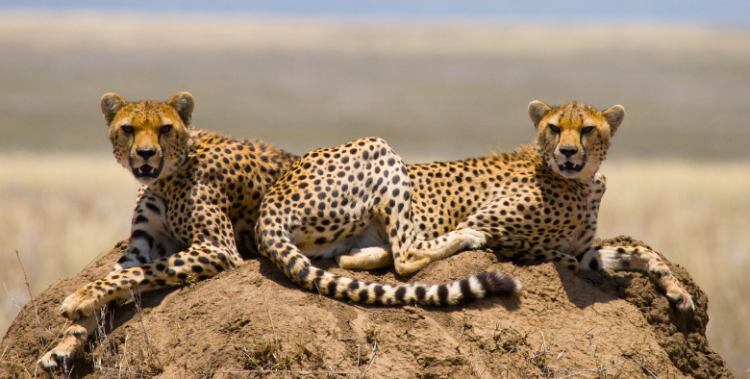
Those of you living in the Cape, wanting to support a cause, can show your support to The Cape Leopard Trust. They are making a significant contribution to the conservation of the Cape's remaining wild big cats, and are leaders in conservation research and educational outreach programmes.
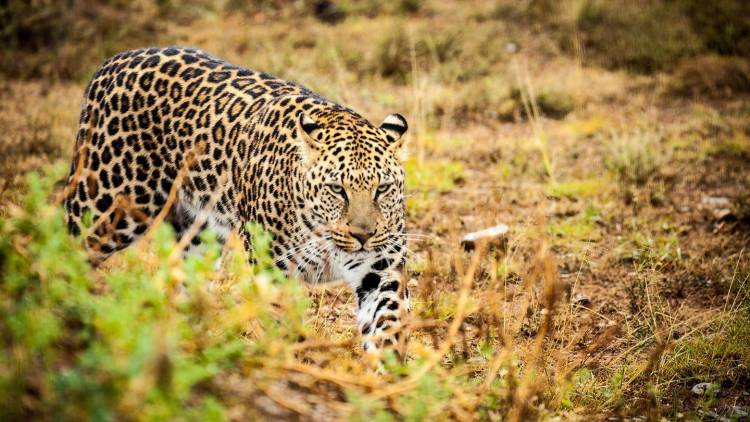
How do big cats fit into the Aquarium?
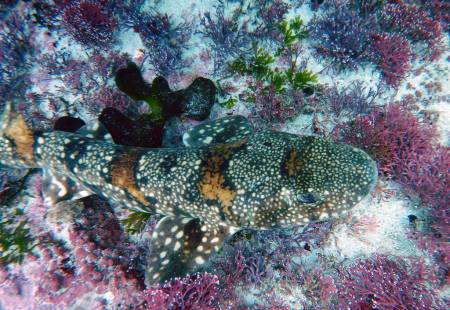
There may not be any big cats at the Two Oceans Aquarium, but there are a few little ones – meet the catsharks living in The Skretting Diversity Gallery!
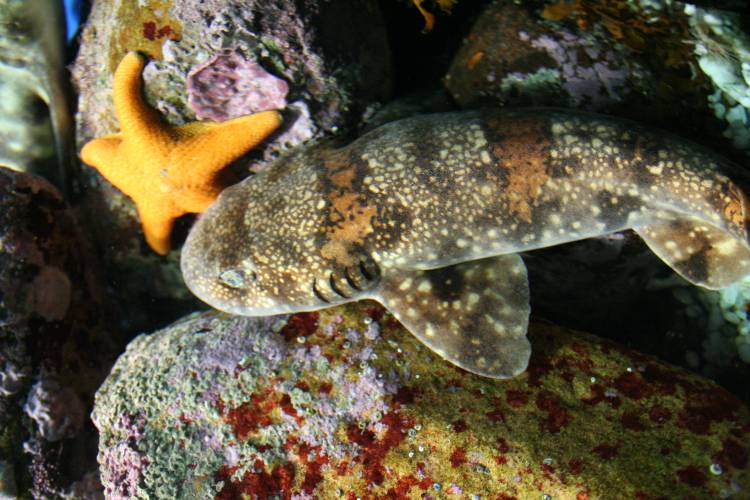

What is a catshark?
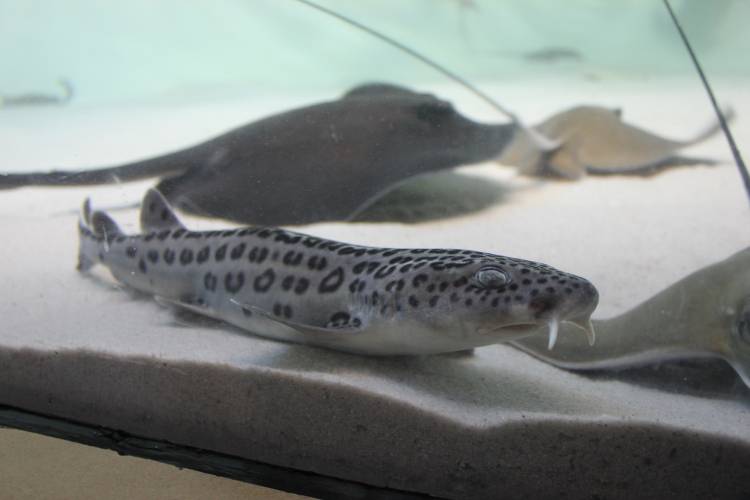
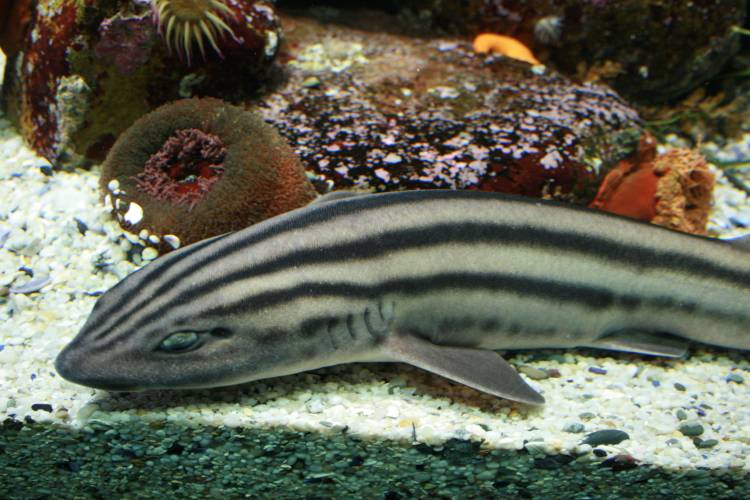
Catsharks are the largest family of sharks, with more than 170 species! These beautifully patterned sharks all feed on bottom-dwelling shellfish and crustaceans, coming out only at night and rarely swimming long distances. They pose no risk to humans, and will usually curl into a ball or hide if they feel threatened, hence their other name – “shyshark.”
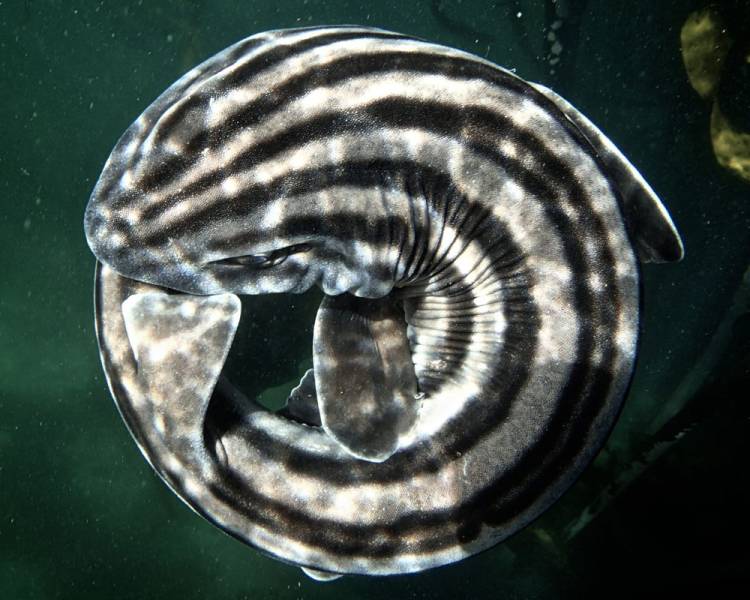
Pyjama catsharks (Poroderma africanum) are recognised as Near Threatened by the IUCN, and are on the WWF SASSI Red List. It is illegal to sell them anywhere in South Africa.
Leopard catsharks (Poroderma pantherinum) and puffadder shysharks (Haploblepharus edwardsii) are listed as Data Deficient species, while dark shysharks (Haploblepharus pictus) are listed as Least Concern by the IUCN.
Regardless of their rating, all catsharks in South African waters face similar threats. Due to their scavenging nature, they often take bait from fishermen. Some fishermen believe that catsharks bring bad luck, kill their target fish or are simply a nuisance, and therefore kill them after catching them.
Furthermore, South Africa’s catsharks are highly dependent on their specific habitats and are largely endemic. This means that they are particularly vulnerable to localised environmental disturbances.
How can you help conserve catsharks?
Protecting catsharks is easy – all we have to do is protect our coasts! Here’s what you can do to help:
- Support coastal cleanup efforts
- Ditch single-use plastic items and choose reusable ones (like these schools did)
- Choose sustainable seafood by using the WWF SASSI App
- Contact the Green Scorpions to report illegal fishing and poaching activities
- If you are a fisherman, stick to your bag limits and release animals that you have no intention of eating or selling legally