

Sharks might look smooth and sleek from a distance, but they are actually covered in hard armour. Unlike bony fish that have flat scales, sharks have microscopic tooth-like scales called dermal denticles, also known as “skin teeth” or placoid scales. These denticles are hardcore! Not only do they resemble the shape of teeth, but they each also have a nerve ending, and a core of dentine and pulp that is covered in enamel.
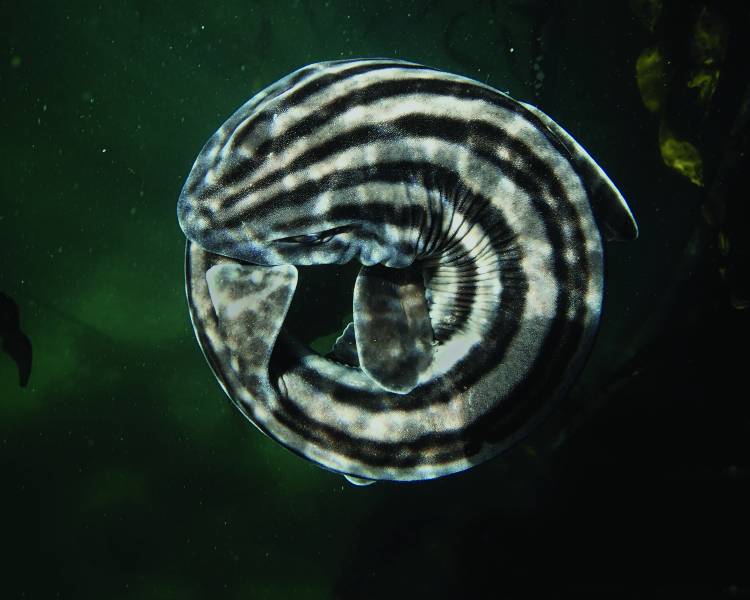
Mammals have skin that stretches as they grow. Fish scales grow larger as the fish grows. Denticles always remain the same size, but as the shark grows, the denticles multiply to cover the animal’s entire body.
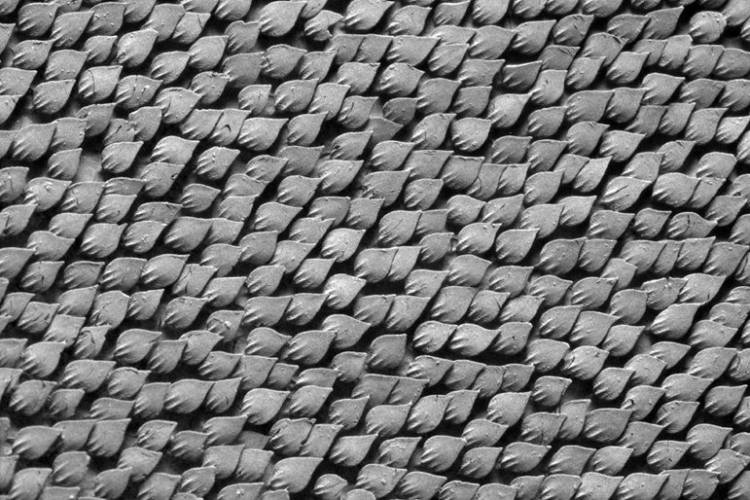
Denticles are brilliant at reducing friction between the water and the shark’s body. This helps with streamlining the animal and conserves energy by reducing drag. Less drag means that the shark can cut through the water faster and easier than other fish. This is essential for an animal that has to keep up with its prey. The denticles are arranged around the shark’s body, forming a “corset” that supports the shark’s muscles and makes for more energy-efficient movement. The skin is tough which provides protection for the animal, and also helps with temperature regulation.
The effectiveness of the denticles at reducing drag and friction comes in very handy when we apply this design to human-made articles by using the principles of biomimicry. 3D printed “denticles” have been applied to aeroplane wings to reduce drag in the air.
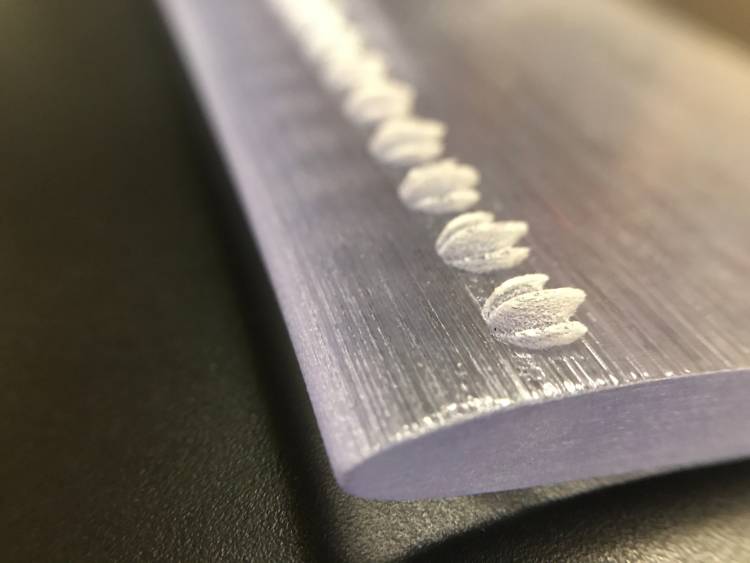
The natural design of denticles has also been applied to swimwear for Olympic athletes. The swimwear was so effective that the International Swimming Federation had to ban it from being used in competitions, as it was deemed to provide an unfair advantage. Other applications for designs based on shark skin include more productive windmills, bacteria-resistant materials for the medical field, anti-fouling surfaces, and improving fuel efficiency in cars.
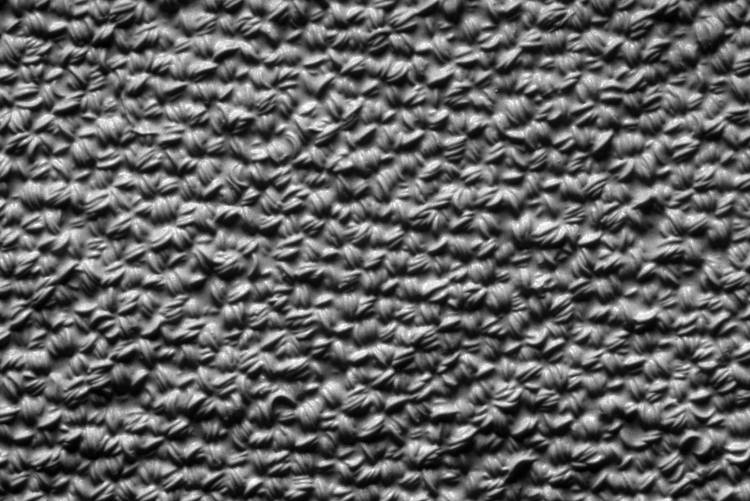
Did you know that shark skin was used as sandpaper? Shark skin is still sometimes used in the manufacturing of shoes, watch straps, handbags, wallets and other leather products.
Shark skin also plays a role in their reproduction process. Female sharks tend to have thicker skin to protect them during mating. During mating, the male has to stay attached to the female. The easiest way to do this is for the male to bite the female, and hang on. The female, therefore, has to have touch, thick skin to prevent serious injuries. Baby shysharks also get help from their denticles when hatching. The baby sharks have all of their denticles raised when hatching, which helps them wiggle out of their tough egg cases.
Did you know that a whale shark’s skin is approximately 10cm thick?
Denticles provide also biological evidence of sharks as they preserve the history of sharks in a particular area. As the denticles fall off of the shark, they accumulate on reefs and other areas of the ocean. Scientists study these discarded denticles and can compile a record of the sharks’ distribution and abundance. This record can indicate how human activity in the area has influenced the shark population and the surrounding environment. We can improve the protection of sharks by knowing which shark species are in a particular area.
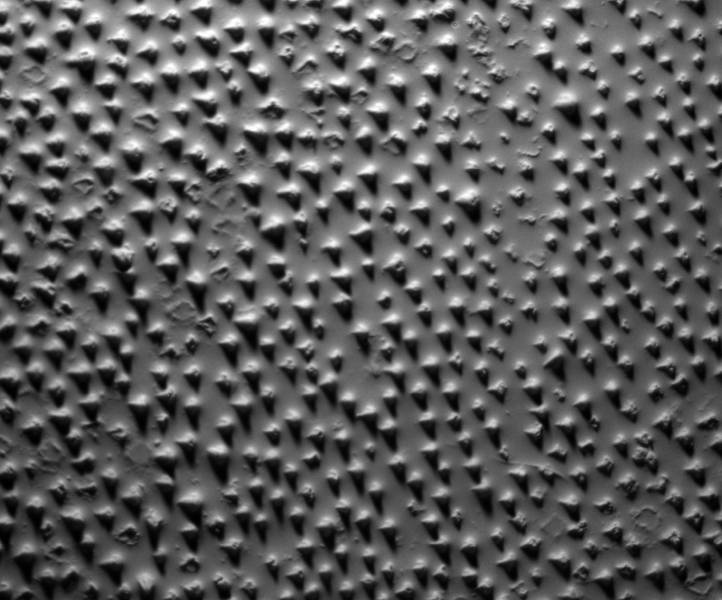
Because shark scales are living structures, there have many other special features that are only just being discovered. For example, the fact that they carry blood helps sharks control their body temperature, and some small sharks use the roughness of the scales on their face to hold onto their food.
There is a not we can learn from nature, and whether it's making a faster swimsuit or increasing the energy efficiency of an aircraft, sharks have been teaching engineers a lot. After all, sharks have had over 400 million years to perfect their abilities - there is still a lot for us to discover about these magnificent animals.
_450_310_70_s_c1_c_t.jpg)