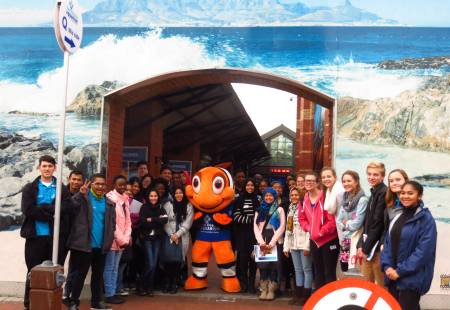

The Two Oceans Aquarium Environmental Education Centre’s SeaFans course for grade 9s has become a well established and much loved part of our Marine Science Academy, with students even applying from provinces outside the Western Cape!
The course is designed to expose students to various areas of marine science, beyond biology, and to guide them in their subject choices for grade 10.
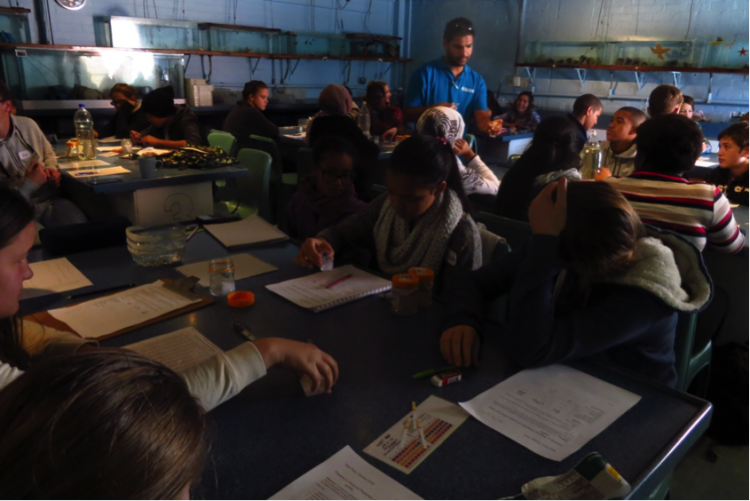
From 11 to 15 July 2016, a new group of SeaFans came to the Aquarium to take part in experiments, data collection activities and field trips. They also received presentations and other educational exercises, like videos and lessons, in our Discovery Centres.
During their five-day course these grade 9s acquired an intoductory understanding of oceanography terminology, ocean currents, ocean geology and topography, marine ecosystems and biomimicry. Students were also given a truly holistic overview of different marine-related careers.
To assess how effective the course was and how much prior knowledge the students had, we gave them a short pre-course assessment that contained some of the content that we would cover. The same test was given after the course. The average percentage attained by the students for the pre-course assessment was 40% and for the post course assessment 80%! We are very proud of these results.
In the field
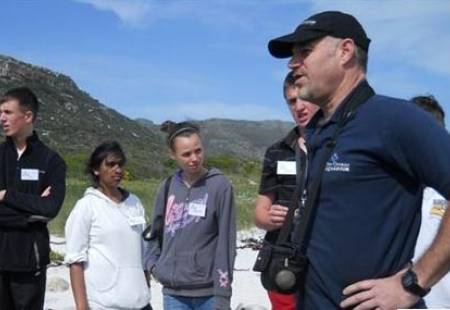
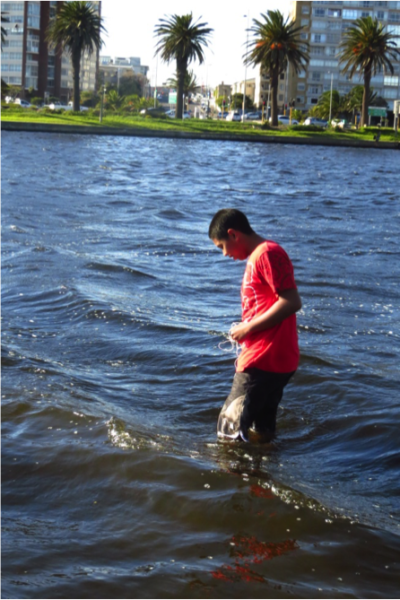
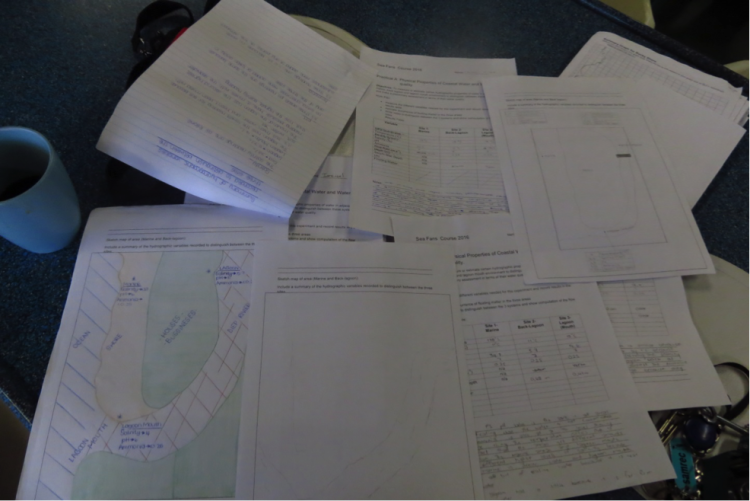
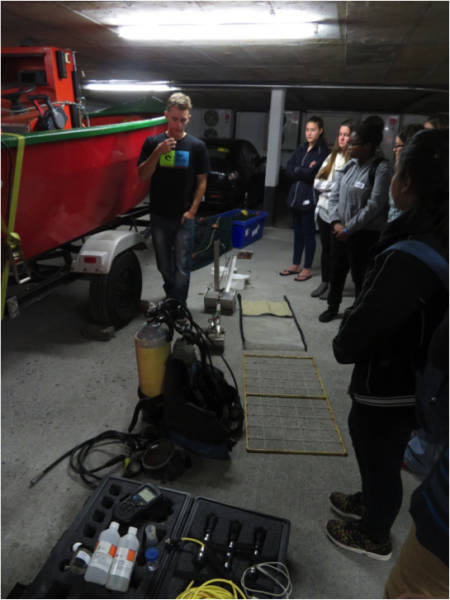
At Milnerton Lagoon, SeaFans conducted a turbidity test at two sites, using a secchi disk, and were asked to measure the temperature of the water. They collected water samples at three different sites – river mouth, lagoon and ocean – and back at the Discovery Centre they tested the pH, ammonia and salinity of the water, then pooled their data. After completing a worksheet, which included drawing a map of where they took their samples, the SeaFans were asked to draw conclusions based on their observations.

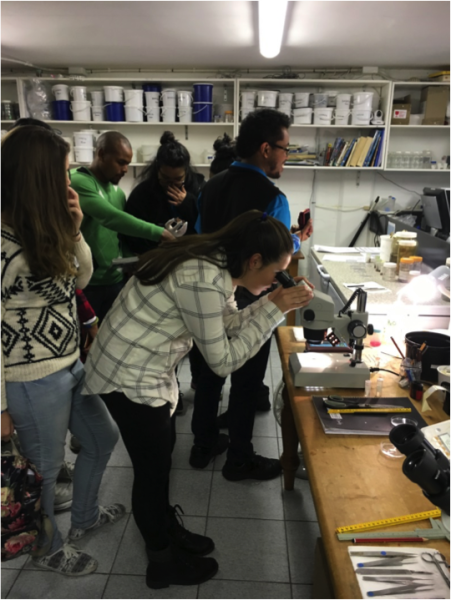
At the Anchor Environmental Benthic Laboratory, SeaFans were introduced to wonderful marine scientists and technicians, who shared their passion and enthusiasm for their chosen careers. In the labs, the students sorted invertebrates in a sediment sample and used the microscope.
As a bonus, Dr Meghan Laird – one of the Aquarium’s first Young Biologists – was there to chat to the SeaFans.

The visit to Anchor Environmental Benthic Laboratory and interaction with the scientists was of immeasurable value and importance, as the students were able to ask the marine scientists and technicians direct questions.
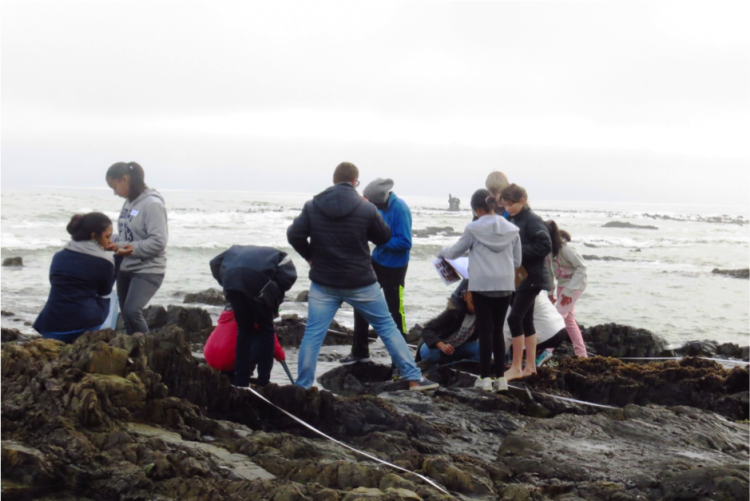
During the field trip to Mouille Point, SeaFans explored the rocky shore ecosystem. Students placed quadrants at one-metre intervals and recorded the physical abiotic conditions, and identified and counted specific invertebrates and seaweed in the quadrant.
Aquarium discovery
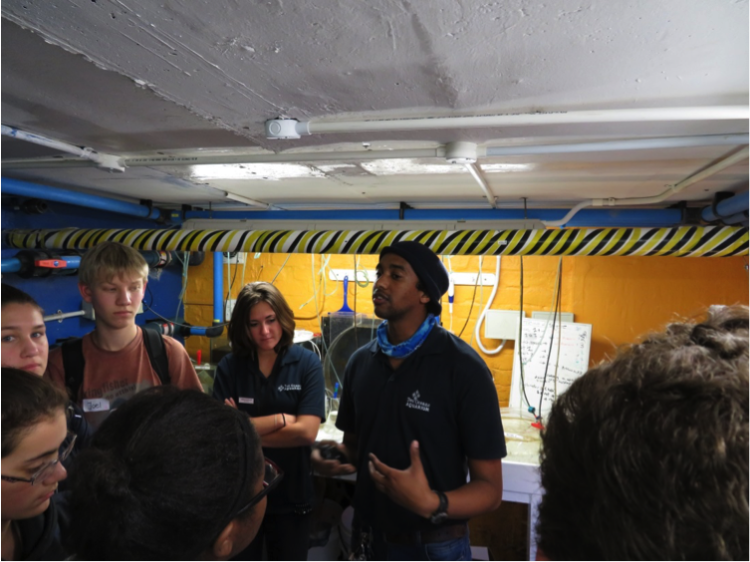
Back at the Aquarium, it was time for an in-depth look at careers in marine science. Our resident vet Dr Georgina Cole addressed the students in the Discovery Centre and shared some of the amazing things she has done while working at the Aquarium.
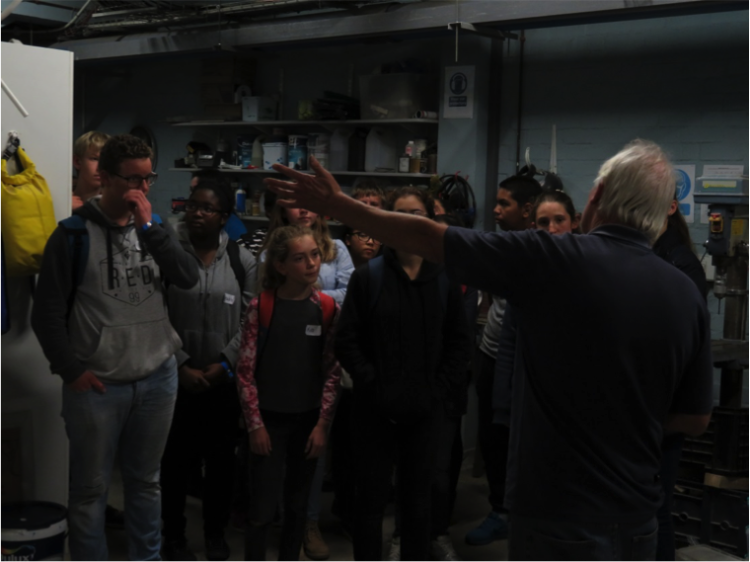
The SeaFans also received talks from Krish Lewis, our jelly expert, and Two Oceans Aquarium Specialist Technician Vincent Calder.
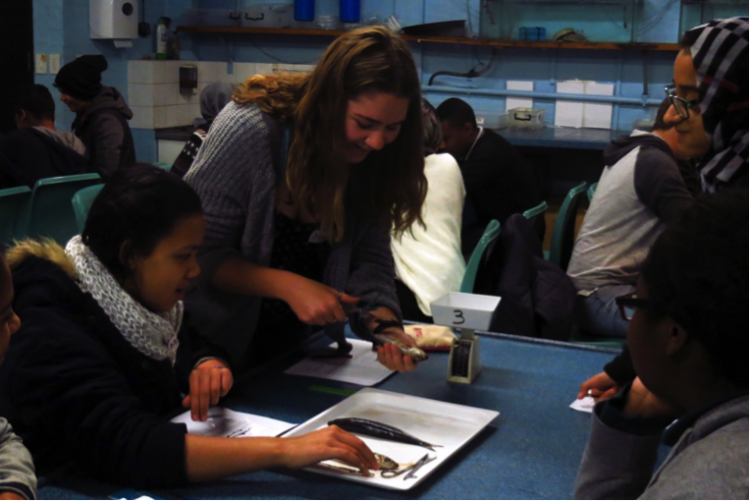
For the data collection exercise, each group dissected and measured three sardines and pooled their information on a data sheet. The data was extrapolated to how fish scientists (ichthyologist) may use this kind of data to make fishing quota recommendations.
As we were at the Aquarium, we needed to tie all of this theory to ocean habitats. Some of the ecosystems we explored in-house included kelp forests and coral reefs. We explored the open ocean or pelagic zone by going on a boat trip on the Ocean Adventurer, into Table Bay. On this trip we observed dolphins, cormorants, gulls and seals.
Another course component was humans' environmental impact, which includes ocean acidification and coral bleaching, destructive fishing methods and overfishing, and the WWF South African Sustainable Seafood Initiative (SASSI) as a consumer-led solution to sustainable consumption of seafood.
It's amazing how much we packed into just five days - we look forward to welcoming some of these grade 9s back next year for the Young Biologist course.