
Inspired by an article I read by Elin Kelsey titled “The Rise of Ocean Optimism” I thought I would look into some South African stories which give me hope for the oceans. Here are some postive stories about marine animals. Next week, in Part 2 I’ll tell you about some of the people who give me #OceanOptimism.
South Africa proposes 22 new marine protected areas
Biodiversity doesn’t stop at the shore – southern Africa has some of the richest marine flora and fauna in the world. Ten percent of the world’s sea plant species (850) are found only off the southern African coastline. Over and above our indigenous sea plants, we have about 15% of the world’s marine invertebrates on our doorstep and about 16% of our coastal fishes are found nowhere else in the world. This rich diversity is due to the variety of habitats in this region, ranging from estuaries, mud flats and sandy beaches; rocky shores, coral reefs and kelp beds to ocean depths of more than 5000 metres.
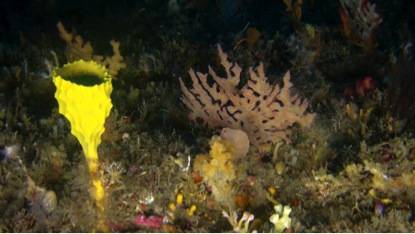
On 9 February this year the Minister of Environmental Affairs proposed twenty-two new marine protected areas (MPAs) as part of Operation Phakisa which is a government initiative to drive the development of the ocean economy. Less than 0.5% of South Africa’s ocean ecosystems are currently protected in comparison to 8% of terrestrial areas.
The South African government has shown real leadership by acknowledging the need to protect our oceans and our marine heritage. We hope to hear soon whether this proposal will go ahead.
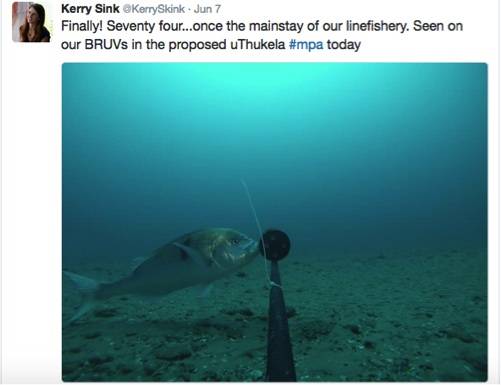
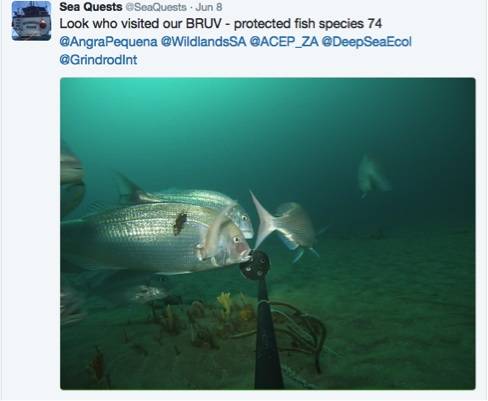
Seventy-four spotted in proposed uThukela MPA
Seventy-four (Polysteganus undulosus) were spotted in June this year in one of the government’s proposed MPAs, uThukela Banks, which is is a coastal and offshore Marine Protected Area lying between the Mlalazi and Seteni estuary in Kwa-Zulu Natal. Adults of this species had not been seen for a number of years although juveniles were reported in the nursery areas off the Eastern Cape.
In the 1920’s seventy-four was the main catch in the offshore line fishery of Kwa-Zulu Natal and the Eastern Cape. In 1989 only 0.8% of the total catch was seventy-four and by 1998 the population had completely collapsed from overfishing. Seventy-four are now protected and are currently listed on SASSI’s Red list.
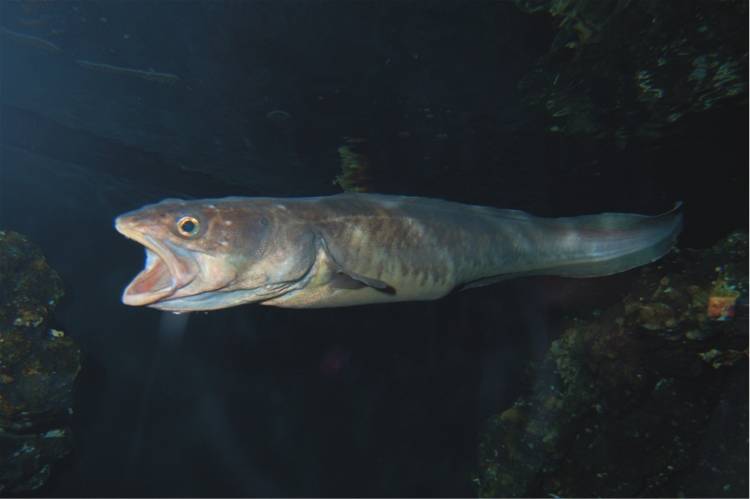
Hake and kingklip have been added to SASSI’s green list
Hake (Merluccius capensis) and kingklip (Genypterus capensis) caught by the demersal longline sector have been added to SASSI’s green list (best choice). While hake caught in the hake longline fishery was previously orange-listed by SASSI, a local Fishery Conservation Project (FCP) was initiated to improve its SASSI status. A number of South African retailers engaged the fishery to show their support and committed to sourcing the product if there was continuous improvement. As a result of the FCP, South African longline hake is now Green-listed.
While kinglip caught by the offshore demersal trawl sector is still listed as orange (think twice), kingklip caught as bycatch in the hake longline fishery is now listed as green. The collaborative FCP between WWF-SA, the South African Hake Longline Association, and the Department of Agriculture Forestry and Fisheries (DAFF), with assistance from CapMarine and BirdlifeSA has paid off in terms of improving the sustainability of these iconic seafood species.
SASSI shows that positive change can happen when consumers, retailers, fishers and government work together. I am reminded of the statement by Mike and Linda Markovina of Moving Sushi: “People are the problem, but people are also the solution”. This gives me hope.
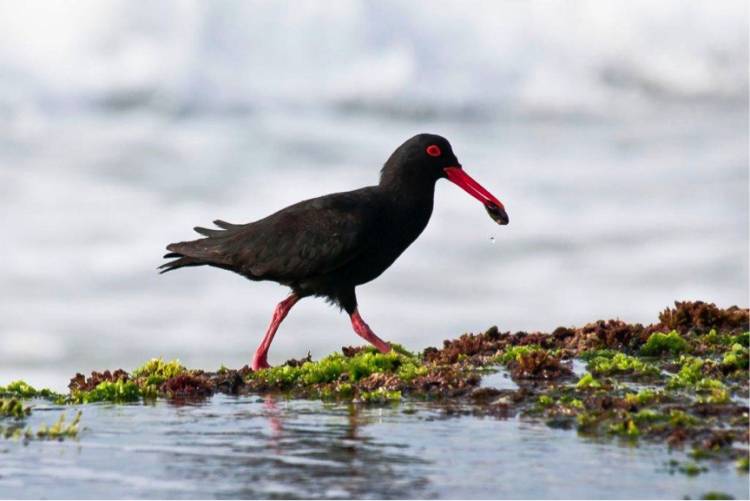
Recovery of African black oystercatchers
In 1998 the African Black Oystercatcher (Haematopus moquini) was considered a threatened species and to protect the species from further decline the Oystercatcher Conservation Programme was initiated by the Percy Fitzpatrick Institute of African Ornithology at the University of Cape Town.
Thanks to the efforts of this Programme under the guidance of the late Professor Phil Hockey and to increased food availability (due to rapid spread of the alien Mediterranean Mussel Mytilus galloprovincialis), numbers of African black oystercatchers have increased. Indeed, they have done so well that numbers today are almost 50% more than they were in the early 1980s. The ban on beach driving in South Africa that came in to effect in 2000 has also had a positive effect on the population, mainly by reducing mortality of eggs and chicks.
Whenever I hear the shrill calls of oystercatchers from the rocky shores I am filled with hope that species can recover if there is commitment from humans in different spheres of influence.