Ingrid Sinclair is a blogger for the Two Oceans Aquarium. The views expressed here are her own, but she owes a great deal to the Aquarium: The example they set in their business practices and the tireless work they do in walking the talk has been nothing short of life-changing.
Today, 8 June 2011, is World Oceans Day. This date has been set aside especially for us to celebrate and honour the sea: The incredibly diverse life that teems underneath (and above) its surface, the countless services it provides (food, trade lanes and travel, education, leisure activities et al) as well as its intrinsic value, those innate qualities that make it mesmerising, inspirational, beautiful and essentially part of the human experience. The ocean covers about 71% of the Earth’s surface, so this no niche interest; in fact, it is the biggest eco-system on the planet, and – it sometimes seems – the most ignored.
Has the human race assumed that, because it’s so big, the ocean is invulnerable to our actions? That since it covers so much of the Earth’s surface, it can’t be destroyed?
The tragedy is that the opposite is true.
Food, glorious food
Reports are coming in from all four corners of the world that the seven seas’ fish stocks are in major trouble. Simply mention the bluefin tuna and most informed members of the public will cry out: Do not eat!
The bluefin is like the panda of ocean conservation, but you need only scratch the surface to learn that this is by no means the only species under serious threat.
South Africans needn’t be reminded of the dire condition of abalone along our shores. It’s become a bit of a swear word in seafood circles and, in all honesty, a blight on our reputation.
Just recently, the Cape Times (3 June 2011) reported on its front page that, due to poaching, West coast rock lobster stocks in the wild are currently at 3% of levels historically considered “pristine”. Three per cent: Where there used to be a hundred, there are now three.
The Sustainable Seafood Initiative of South Africa (SASSI) is the average consumer’s go-to resource for all things seafood. The next time you’re thinking of ordering a certain fish, simply SMS the name of it to SASSI’s hotline on 079 499 8795.
Says SASSI’s website: “Type the name of the seafood species into a text message and send it to 079 499 8795. Shortly thereafter, you will receive a response with the colour category – telling you whether it is OK to tuck in, think twice or avoid - and biological information about the species if we have assessed it.”
If you, like me, love sushi, tuna, tuna sushi, tuna mayo, tuna pasta, pickled fish, game fish, prawns, shrimp, salmon, salmon sushi, salmon pizza (you get the point) please do familiarise yourself with the fishy facts and make some tough decisions.
Can we trust labels? That’s a difficult question for another day.
There is, however, a number of local and international websites that you can consult in your quest to get the full story: SASSI’s database is a great place to start; also check out Hugh’s Fish Fight, which is working hard to raise awareness and encourage change; seafood documentary The End of the Line is a brilliant look at the reality of the fishery situation and its accompanying website continues the work; also check out Moving Sushi for community-based solutions to marine-related problems, a research project with global reach run by two passionate South Africans.
Watch Mike Markovina, co-founder of Moving Sushi, speak about his project at the recent TEDxCapeTown conference. Moving stuff indeed.
Video courtesy TEDxTalks
There’s an ocean of information out there.
A bird in the hand
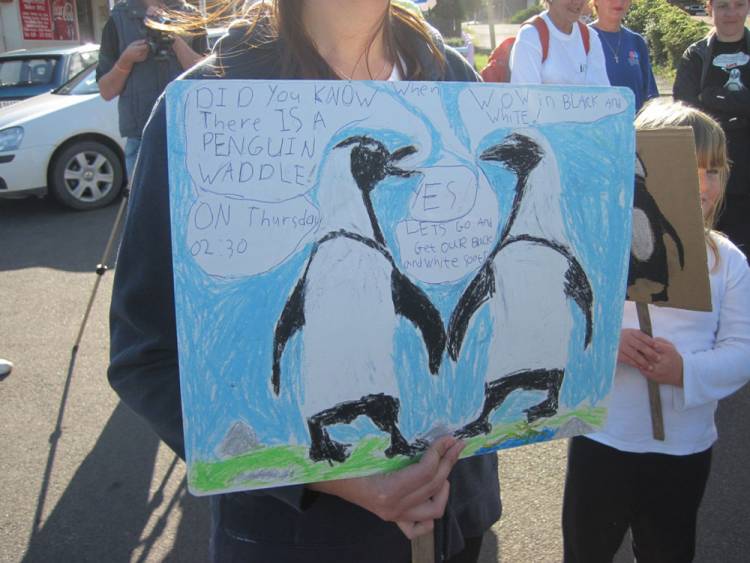
You may have heard about the recent Penguin Promises: Waddle for a Week journey, which was initiated by the Two Oceans Aquarium Senior Bird Trainer Hayley McLellan. Seven intrepid conservationists walked from Gansbaai to Simon’s Town, all for the love of the African penguin.
Those who watched the journey were blown away by the dedication and selflessness of these amazing Waddlers. They reached thousands with their message: Save the African penguin. I count myself among the recently converted.
It’s easy to forget that ocean harbours life not only under the water but above it, too. Marine birds, like the African penguin, rely heavily on krill for food and on in-tact breeding grounds, to which they return every year, to propagate their species.
The African penguin population has decreased by almost 100 birds every week for the last 30 years due to habitat destruction, oil spills and predation. Our endemic beauty is facing extinction.
Seal the deal
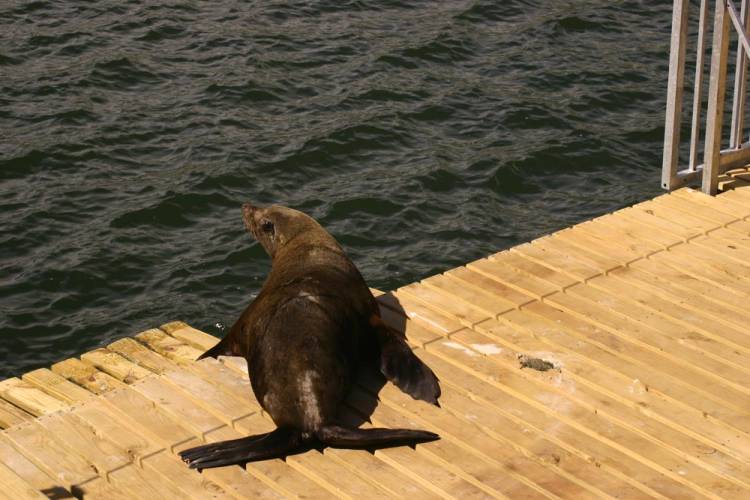
Another ominous result of human behaviour as it relates to the ocean can be seen right here in Cape Town at the V&A Waterfront. The playful and friendly Cape fur seals are often brutally injured by plastic pollutants, becoming ensnared in straps, bands and fishing lines with painful and garish results.
A dedicated team at the Two Oceans Aquarium, lead by Vincent Calder and Claire Taylor, works tirelessly to free the Cape fur seals of their plastic nooses, and in December 2010 they unveiled the SAPPI Seal Platform. This goes a long way in rescuing these injured animals, but what about the root of the problem?
Pollution is not only unsightly, and smelly, and messy, and dirty. It is also life-threatening. As SAPPI Group Head: Corporate Affairs André Oberholzer said on the day of the unveiling: “These injuries are an example of what happens when people indiscriminately throw things away.”
Top of mind
These are just a few of the most pressing marine concerns that I could squeeze into this blog post; the ones that are top of mind.
The most important thing today, though, is to be conscious of the stark and, yes, the depressing truth: The ocean is not an endlessly renewable resource. It, like farmland, needs time to recover after a harvest; it, like rainforests, needs time to replenish itself if it is to continue to supply us with food and the rest of the endless list of products we rely on.
You can take it one step further today by sharing this message of awareness: Your Facebook status, your tweets, your words are the most important weapons we have in this fight, which does not need to turn violent.
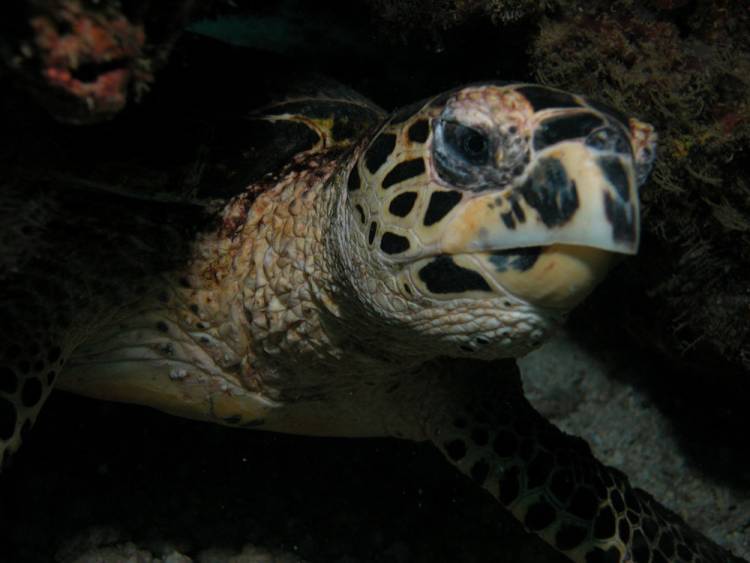
We do have reasons to be happy on this World Oceans Day: Turtles are being rehabilitated and released by passionate South Africans; the African penguin has found a voice; folks like the team at the Two Oceans Aquarium, SANCCOB, uShaka Marine World, Sea Shepherd foundations, the WWF’s SASSI and countless others are pulling together and putting information at our fingertips.
I’d like to extend my personal thanks to these organisations and those I haven’t had the space to mention for their amazing work.
And, if that doesn’t make you happy, then maybe this (one of the greatest songs ever written, am I right?) will bring you some joy today.