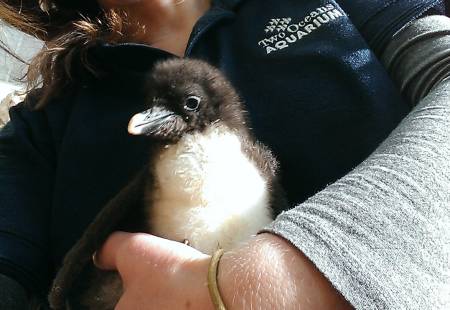

Sonia Peck is an animal keeper at the Two Oceans Aquairum.
The history of the dodo has repeated itself many times... Birds arrive on remote islands rich in food, colonise it, lose their power of flight – and when the world catches up with them, become extinct.
Flying is, after all, a very energy-consuming business and indeed it might have been more beneficial for them not to fly. This is exactly what happened with the ancestral dodo. Their wings, being no longer used, over many generations dwindled in size and ultimately became so small that they could no longer lift themselves into the air.
Besides, they found all that they needed on the ground.
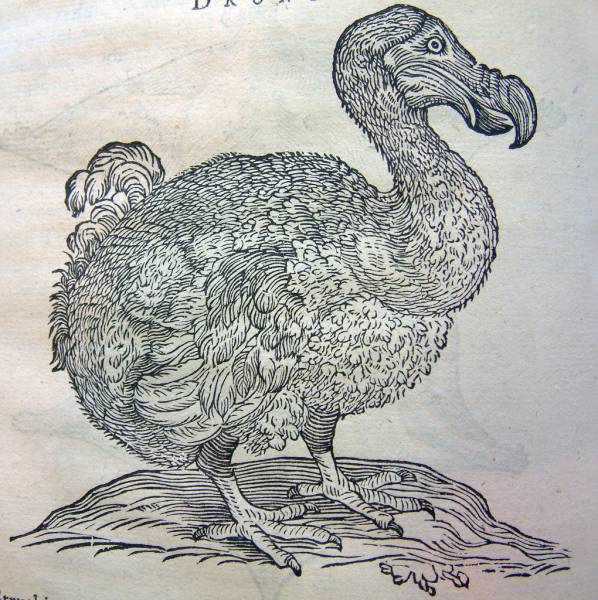
The dodo’s ancestors, probably some kind of pigeon, arrived on the island of Mauritius in the warm Indian Ocean way back in evolutionary history, probably blown there by a storm. The island was an ideal habitat for a bird – no rats, foxes or any other predator. Life was good for a while, and then, some time around the last years of the sixteenth century, men in sailing ships arrived – Dutch, Arab and Portuguese.
The dodos, big, fat and flightless, were also defenceless, and the sailors, after months at sea, were craving fresh food and fresh meat. The dodos were not only flightless but also extremely inquisitive so didn’t even flee, making it all too easy for the sailors to club them to death.
It seems that is why the name ‘dodo’ arose, because in Portuguese that means "stupid".
Humans, having discovered the island, then began to settle on it, bringing with them cats and rats, pigs and monkeys and some forty years after the islands discovery, the inoffensive flightless bird really was dead.
The cliffs surrounding islands in the northern seas around both America and Europe are still thronged with seabirds; fulmars, razorbills and guillemots.
And on the more inaccessible islets around Iceland, Newfoundland, Greenland, Ireland and Scotland, on the cliffs protected from man and animal predation, there were also some birds that were bigger than all of them – the great auk.
They too, lost the power of flight and used their wings only in swimming.
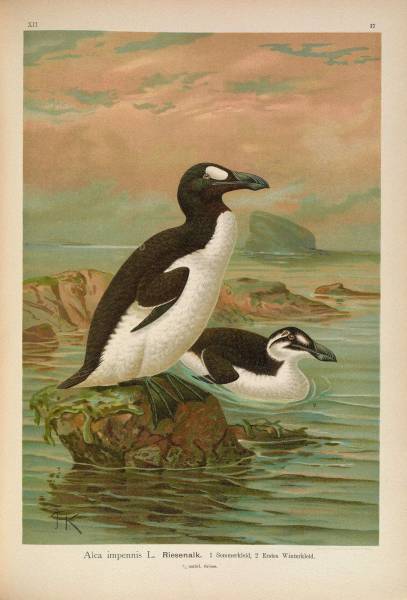
On Funk Island, off the coast of Newfoundland, there was an immense colony of these birds, at least 100 000 of them. And there, every summer, men slaughtered these birds in their thousands for their meat and rich oil that accumulated in their bodies just under their skin.
Once again, the species has no defence and the Auk colonies began to disappear, one by one. In earlier centuries people called the great auk – believe it or not - penguins. The exact origin of the name is debatable however one explanation is that it comes from two Welsh words – "pen" meaning "head" and "gwyn" meaning white, for the great auk did indeed have a large white patch on both sides of its head just in front of its beak.
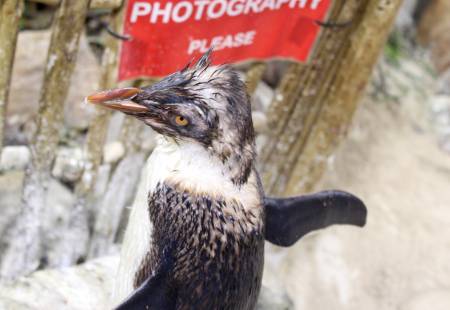
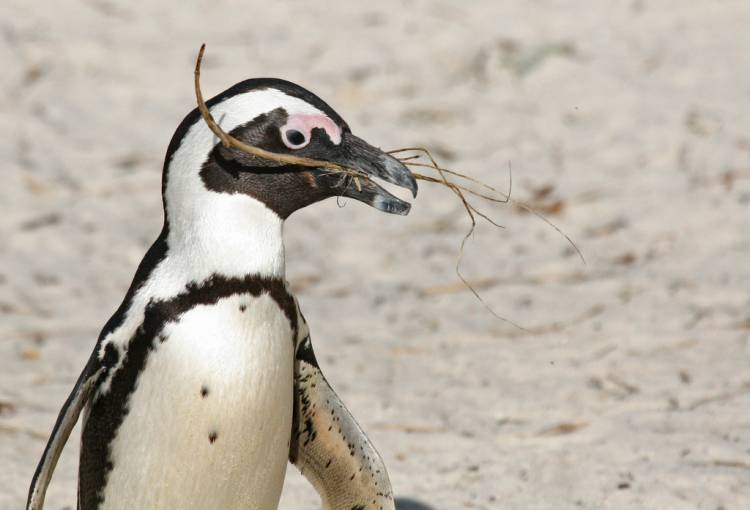
Later in the 18th century, sailors began to sail farther and farther south, past Africa and South America towards the ice-capped islands of the Antarctic, such as South Georgia. These islands boasted large flocks of flightless birds with black coats, white chests and wings reduced to flippers which they used for swimming. Due to the visual similarities of the birds that they knew from further up north, they called them, of course, penguins.
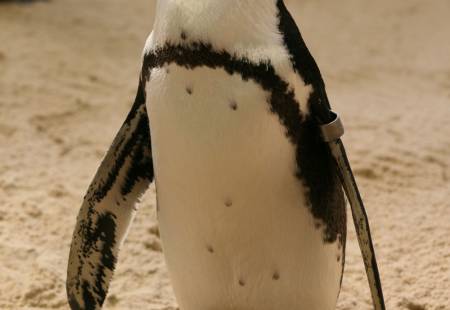
For some reason, the name penguin is no longer used for the northern birds however it has stuck to those in the south. Which brings us to the African penguin.
The Antarctic began way back when dinosaurs still roamed the earth, as an immense super-continent. Eventually that broke up and Antarctica slowly moved towards the southern end of the globe and became so cold that an ice-cap developed over almost all of it.
Its coast and the ice shelves that extended from them into the sea, offered valuable places where seabirds could land, laying their eggs in safety. In the North; Europe, Asia and North America – the surrounding oceans never freeze so land living predators such as foxes, wolves and bears can travel north and raid the breeding colonies in summer. So for birds on these colonies the ability to fly is essential.
But that was not so for the Antarctic – an enormous island surrounded by the roughest seas.
Once again, birds that once flew now had a sanctuary on which to build their nests and lay their eggs. So, why fly?
And here again, history began to repeat itself.