Although the threatened extinction of larger species like polar bears and tigers is well documented, most people have no idea that frogs are the most threatened group of animals on our planet.
Two hundred amphibian species have already been wiped out – the vast majority due to chytridiomycosis caused by the chytrid fungus – while a third of the world’s 6 600 amphibian species face future extinction.
The Aquarium’s Frogs: Beyond the Pond exhibit is an interactive amphibian gallery that educates the public about the many threats faced by frogs and other amphibians, in order to protect and conserve them.
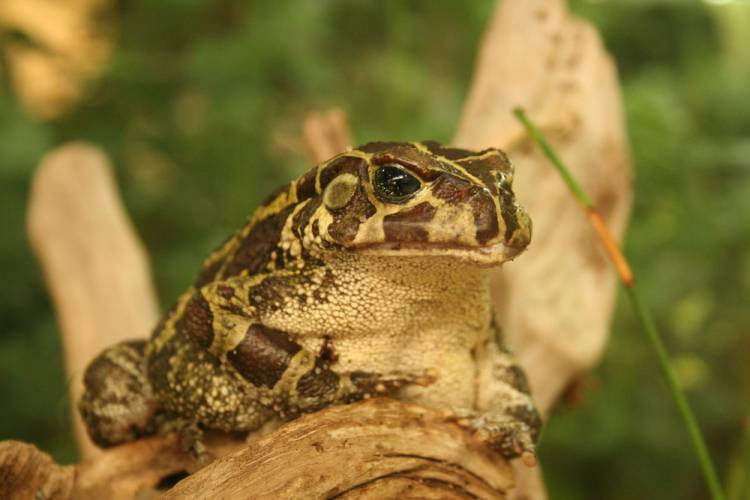
The exhibit houses two Western leopard toads, Teddy and Thali, both of whom were seriously injured when they were run over by cars. Given the permanence of their injuries, they cannot be released back into the wild and have instead become ambassador species at the Aquarium, where they are hand-fed.
The Aquarium recently received a third Western leopard toad that was found on the eighth floor of offices in Cape Town’s central business district.
“Since the origin of the toad was unknown, it will be screened carefully and a permit obtained before being sent to Butterfly World in Stellenbosch to form part of a public exhibit,” says Operations Manager Tinus Beukes.
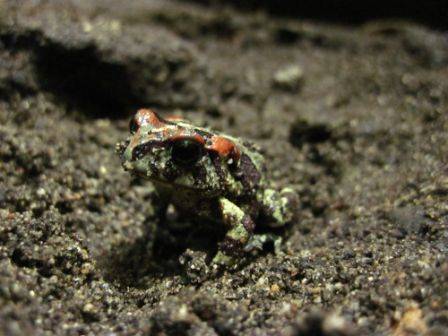
The large and exquisitely patterned Western leopard toad is an endangered species found only in a small coastal lowland between the Cape Peninsula and Gansbaai. The main threat to its existence is posed by habitat destruction due to increased urbanisation and poor management of water resources.
“Basically, the Western Cape is running out of natural wetlands,” says Beukes. He adds that there are currently no breeding programmes under way for leopard toads. Rather, the focus is on environmental protection through CapeNature and creating public awareness through educational programmes run by the South African National Biodiversity Institute (SANBI).
There are, however, ongoing discussions between the Two Oceans Aquarium, SANBI and CapeNature to reach consensus on captive breeding for these toads with the focus on finding ways to restock the wild population.
The Western leopard toad is named after the distinctive reddish-brown blotches that pattern its yellow back, reminiscent of a leopard’s coat. As is the case with its feline namesake, the patterns that mark each Western leopard toad are unique. A pale yellow dorsal stripe runs from head to rear and a red parotid gland, which releases toxins in defence against predators, lies behind each eye.
The preferred habitat of the Western leopard toad is wetlands, coastal lakes and slow-flowing rivers in fynbos heaths, but due to the pressures of urbanisation, the amphibian is also being found in gardens and on farms.
Ahead of the breeding season many toads gather in selected breeding sites after the rains to mate. The Western leopard toad breeds in short bursts of four to five nights at a time between August and October.
The species is most vulnerable during the breeding season, when thousands of toads hop across roads on their migratory route to their favoured breeding sites.
Various other frog species are housed in the Frogs: Beyond the Pond exhibit, including South Africa’s largest frog, the giant bullfrog, and two threatened species, the tiny arum lily frog and the Western leopard toad.
The giant bullfrog is rarely seen in nature as it spends most of its life underground. Bullfrogs usually retreat to an underground burrow during the dry season, where they can remain dormant for months or even years, waiting for good rains to fall before they come out into the open.
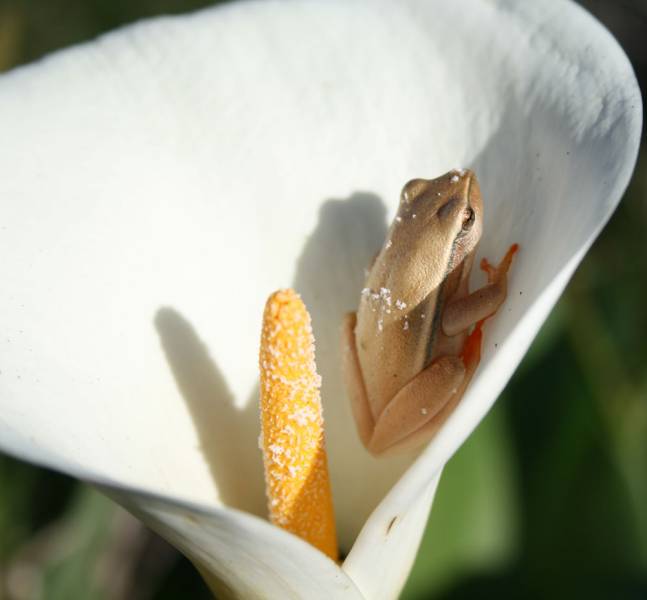
Five diminutive arum lily frogs live at the Aquarium, sheltering in the flowers of lilies during the day and descending down the stems to feed at night. The four-centimetre-long frogs have the ability to camouflage their bodies to match their surroundings, making them difficult to detect by both predators and prey.
In the wild, this species inhabits coastal lowland and wetland regions from Cape Town to the Tsitsikamma, where it is threatened by the destruction of its habitat and by alien reed frogs, which are overwhelming its natural environment and competing for common resources.
Reed frogs are endemic to South Africa and are found from Limpopo down to Southern KwaZulu-Natal and into the Eastern Cape. They are believed to have migrated to the Southern Cape by “hitchhiking” on nursery plants. Once here, the favourable climate, absence of predators and an abundance of food meant that they would soon overwhelm resident arum lily frogs.