

Earth Day has just passed, on 22 April, and we rewarded two planet-lovers with a pair of Two Oceans Aquarium tickets each for showing us their Earth knowledge! Congratulations to Brenadette Crewe-Brown and Warren Idas!
If you want give the quiz a try before checking out the answers, please go ahead. show us how well you know the planet we call Earth:
Create your own user feedback survey
The theme of Earth Day 2018 was "End Plastic Pollution". This is a message that the Two Oceans Aquarium stands firmly behind, and is one of the foundations of our environmental campaigns, such as Rethink The Bag. Plastic pollution devastates wildlife, affects hormones in our own bodies, litters our beaches and clogs our planets vital waterways. It is no exaggeration to say that plastic pollution is threatening the survival of our world as we know it.
Quiz Answers:
1. Where does most of the oxygen we breathe come from?
Answer: The Ocean
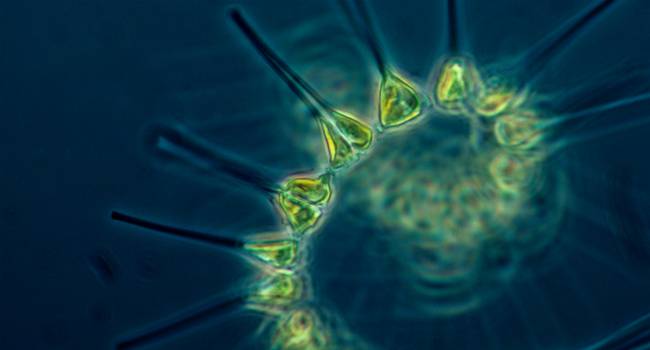
Tiny photosynthetic plants and organisms living in the top few metres of the ocean's water column contribute 50-85% of all the oxygen in the air we breathe (and we have them to thank for the ozone layer too). The rainforests certainly play a vital role, but it is the oceans that are the true lungs of the world.
2. How much plastic pollution enters the ocean every minute?
Answer: A dumptruck load
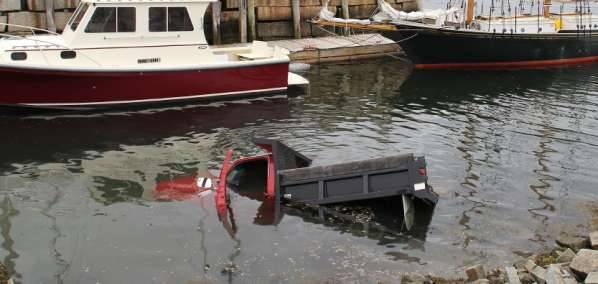
Recent studies have show that this huge amount is growing - it will be two truckloads by 2030 and four by 2050. At current rates, there will be more plastic than fish in the ocean by weight by 2050 - there are already more plastic particles in the ocean than fish.
3. When was the first Earth Day?
Answer: 1970
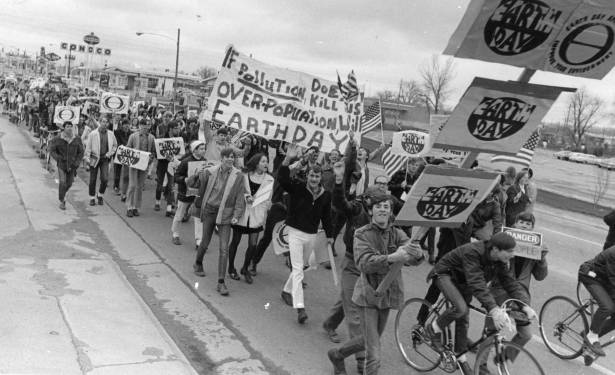
Earth Day has grown to become the largest non-religious holiday in the world, but it had humble beginnings, sparked by a small group of passionate people who wanted to draw attention to environmental issues following the 1969 Santa Barbra Oil Spill - the third largest oil spill in history.
4. What is absolutely the longest mountain range on Earth?
Answer: The Mid-Oceanic Ridge
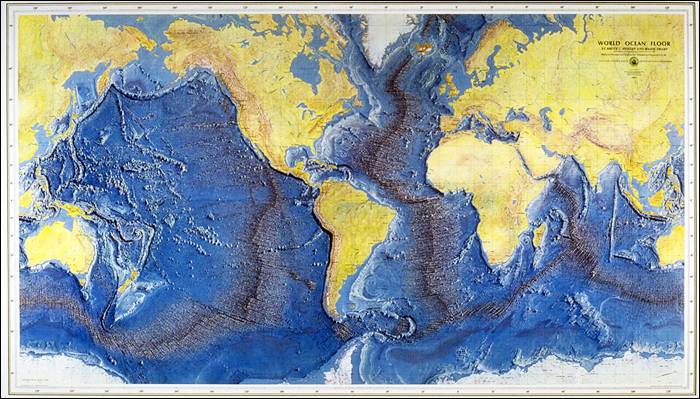
Many of you picked the Rockies (4830km) and Himalayas (2400km), but these are dwarfed by the world's longest ranged - at 40 389km, the Mid-Oceanic Ridge, the underwater mountain range following the edges of the Earth's tectonic plates is longer than the next 30 mountain ranges combined). You might be surprised to know that we only discovered this mountain chain in 1956!
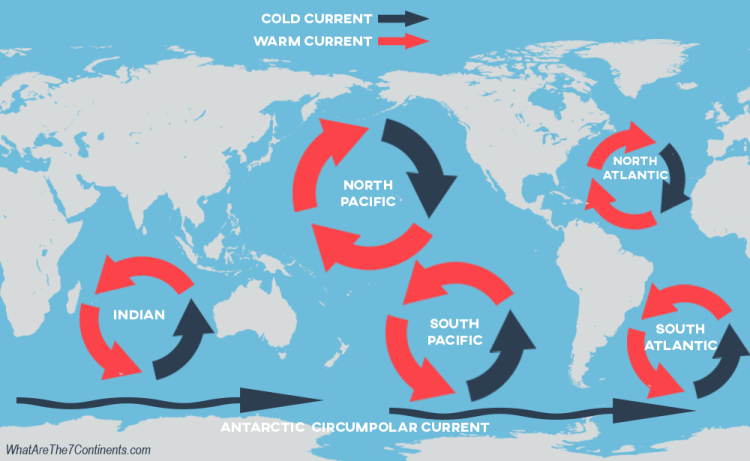
5. The ocean currents rote around huge gyres, How many major gyres are there?
Answer: Five
6. Where is the biggest impact crater in the world?
Answer: Vredefort, Free State, South Africa
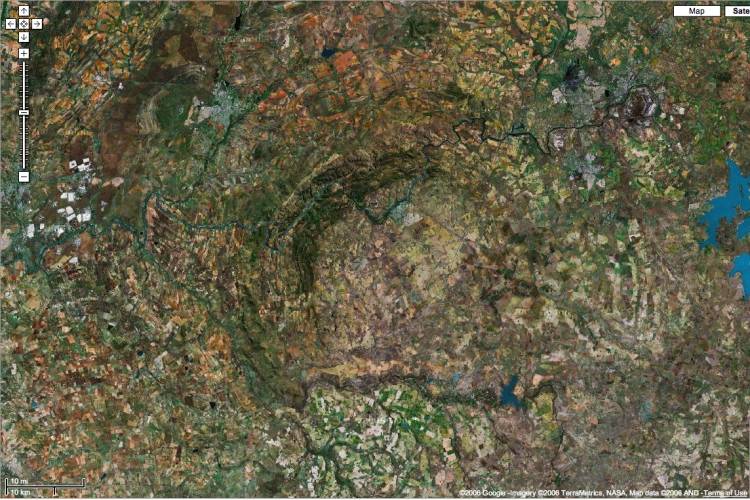
The Vredefort Impact Structure is more than 300km across - twice as wide and four times as large as the Chixulub Crater (the one from the impact that wiped out the sauropod dinosaurs). An asteroid more than 15km across struck the earth with more than ten times the energy of every nuclear bomb ever made combined. Luckily, this happened two billion years ago, long before complex life evolved on Earth!
7. What is the name given to the smallest icebergs?
Answer: Growler
_750_422_70.jpg)
Icebergs come in a variety of sizes, ranging from growler to floeberg. Growlers are the smallest icebergs, classified as being no more than a metre across. There isn't any agreement about where the name came from - some say it's from the sound the make scraping against the sides of ships, others that it is the sound made when gas bubbles are released and the iceberg vibrates.
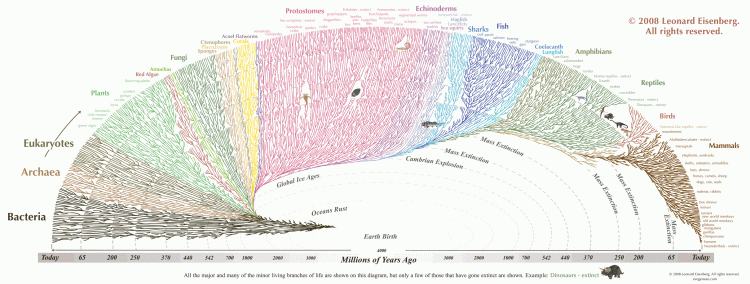
8. How many species of plants and animals inhabit the earth?
Answer 8.7 million
9. Since plastic was invented more than 70 years ago, we've made more than 8 billion tons of it. How much has decomposed?
Answer: None at all
With a few modern exceptions, plastic is not biodegradable. It 'photodegrades', meaning that it breaks up in direct sunlight, but this only breaks it into smaller pieces. The same goes for mechanical degradation - bashing against rocks, ridden over by cars, eaten by animals, etc. - it only breaks it into smaller pieces, eventually so small that we cannot see it. But it still exists. The chemicals haven't "fallen apart".
Some plastics have been incinerated, gasified and recycled and some modern plastics, such as PLA, do decompose in industrial composting facilities (although these plastics are still the minority). Every piece of plastic that has been dumped in a landfill, the ocean or the environment is still with us, and probably will be for thousands of years.
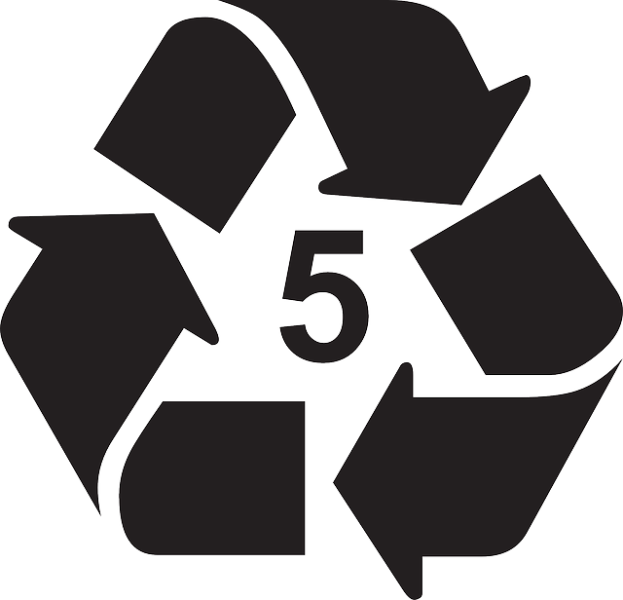
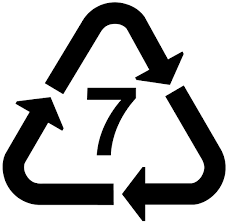
10. Which of these labels means that the product can be recycled?
Answer: There were two possible answers to this one
This was a tricky question - sorry! The two logos below are indicators or the polymer that the item is made from, they do not automatically mean it can be recycled. Number 5 means "polypropylene" (often used for yoghurt tubs) and number 7 is "other", often combination packaging such as chip packets. While "5" is the only once actively recycled in South Africa, we allowed "7" as well as there are small startups separating these mixed plastics for recycling.
Competition terms and conditions
- All content sent to the Two Oceans Aquarium as entry into the competition may be used on the Aquarium’s website and associated digital platforms.
- Entries close at 24h00 on Sunday 22 April 2018.
- Winners will be notified on Monday 23 April 2018.
- To be entered into the lucky draw, all 10 questions must be answered correctly.
- Two individual winners will be chosen by lucky draw.
- Each winner will receive two complimentary day tickets to the Two Oceans Aquarium. Tickets will be available at the Aquarium's front desk and are valid for 3 months from the date that winners have been notified.
- Representatives of the Two Oceans Aquarium will pick the winner from eligible entries.
- Prizes are non-transferable.
- Prizes must be redeemed within three months of date of issue.
- The judges’ decision is final and no correspondence will be entered into.
- The winners may be required to participate in a photo-taking session during the issuing of the prize.
- Pictures may be posted online.
- Entry into the competition and acceptance of any prize shall constitute consent on the winner's part to allow the use of the winner's name, image, voice and/or likeness by the Two Oceans Aquarium for editorial, advertising, promotional, marketing and/or other purposes without further compensation except where prohibited by law.
- This competition is not open to Two Oceans Aquarium or volunteers and their families.
- Anyone who has won a competition or promotion through the Two Oceans Aquarium in the last six months is not eligible to win.
_450_310_70_s_c1_c_t.jpg)
_450_310_70_s_c1_c_t.jpg)