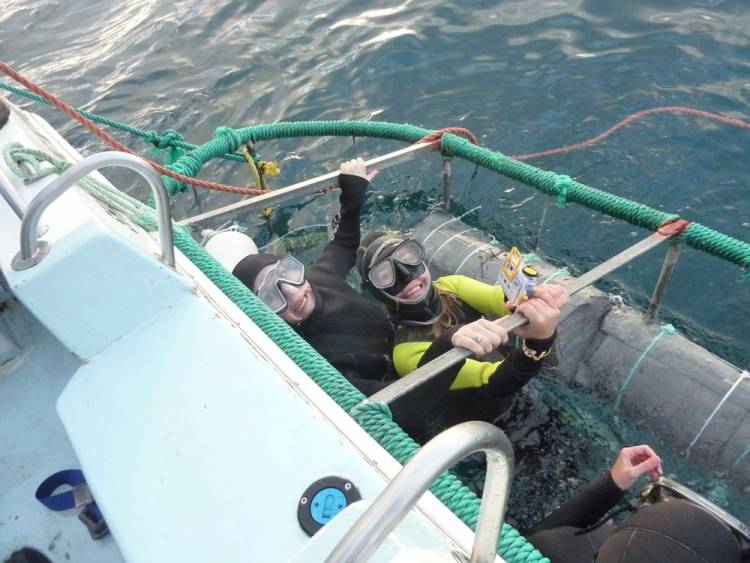
Not many people can say that they’ve gotten “up close and personal” with a shark, but this winter, diving enthusiasts have the opportunity to come face to face with some of the ocean’s most magnificent creatures: ragged-tooth and great white sharks.
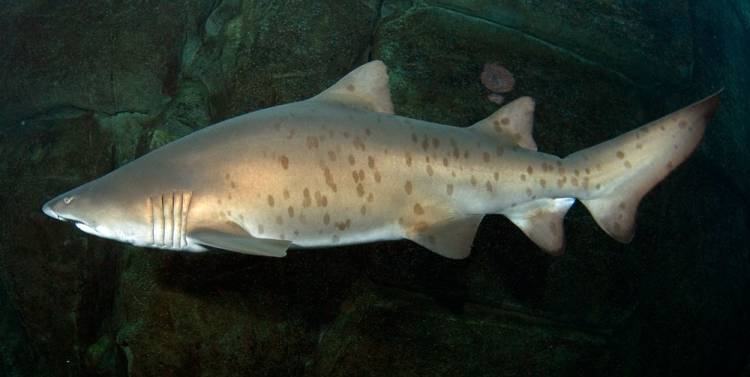
Ragged-tooth sharks Carcharias taurus
The ragged-tooth sharks of the I&J Predator Exhibit are among the Aquarium’s most famous residents. They hail from “Little Raggie Bay” in the Eastern Cape, but these creatures are found all over the world.
Ragged-tooth sharks (also known as grey nurse sharks or sand tiger sharks) usually grow to 3.2m long and can sometimes weigh up to 300kg. Affectionately termed “raggies”, these creatures are light grey in colour with white underbellies. They are known for their pointy snout and elongated tail.
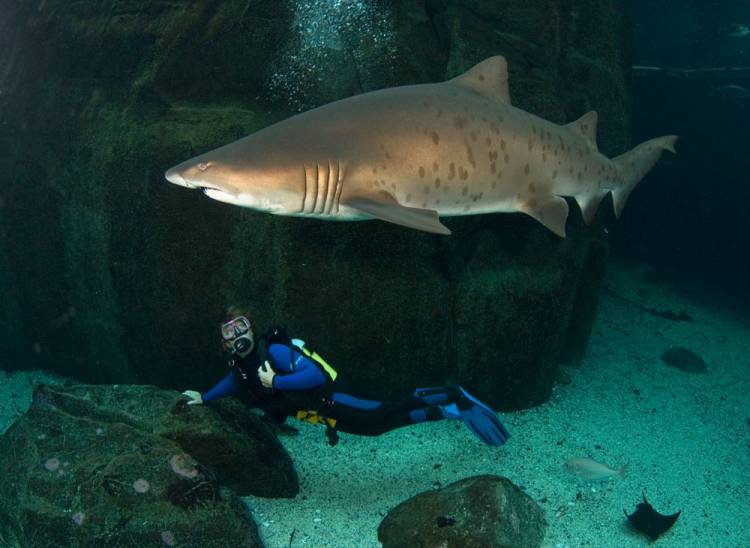
Raggies have an impressive set of needle-like teeth that can be seen even when their mouths are closed. This gives them their fearsome appearance … But raggies are harmless to humans. They prey mostly on fish, young sharks, rays, squid and crustaceans.
Great white sharks Carcharodon carcharias
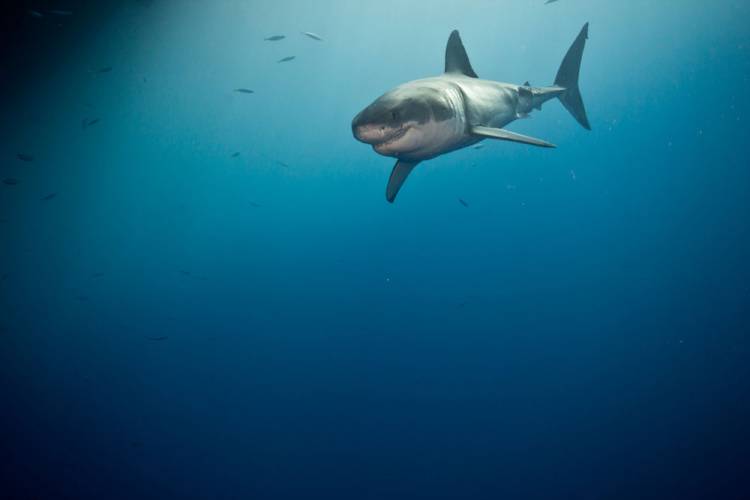
Raggies share the waters with great white sharks. Perhaps the best known of all sharks, great whites can be found in all corners of the world, but a heavy concentration is known to exist along South Africa’s coastline.
These creatures usually measure in somewhere between four and five metres and tip the scales at anywhere between 680 and 1 100kg, although lengths of six metres and masses of over 2 000kg have been recorded!
Despite their name, these massive fish are not only white in colour – they have grayish upper body. They’re known for having conical snout and are famous for their pearly whites – great whites have several rows of sharp triangular teeth.
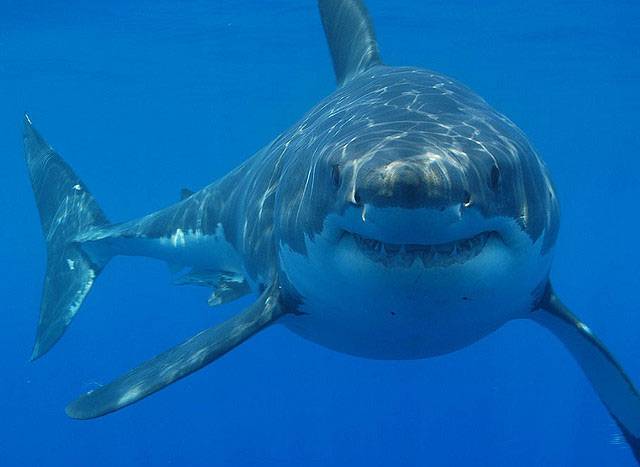
Great whites feed mostly on sea lions, seals, small whales and dolphins. These fascinating creatures can detect a tiny amount of blood from a few kilometers away and can detect movement of prey using electroreception.
Take the plunge and save R445!
Marine Dynamics affords shark enthusiasts the opportunity to cage-dive with these majestic creatures. It is an exhilarating and safe experience, as is the dive with ragged-tooth sharks at the Aquarium. Qualified scuba divers should not miss the opportunity to take advantage of our double dive offer:
Two Oceans Aquarium has teamed up with Marine Dynamics Shark Tours to give divers the chance to experience what it’s like to share the water with a shark. For just R1 500, qualified divers can swim alongside ragged-tooth sharks at the Aquarium and take the plunge with majestic great whites in Gansbaai, saving R445.
Click here for more information and to book now.
Read more about Marine Dynamics’ great conservation efforts here.