
Did you know that an angulate tortoise drinks water through its nose? That Burmese pythons are flourishing in the United States of America (USA) as an invasive species? Or that termites help incubate the rock monitor lizard’s eggs?
So far we’ve looked at some of the more dangerous snake species ahead of snakehandler Francois van Zyl’s arrival at the Two Oceans Aquarium for his exciting demonstration this month.
Here’s a look at some of the friendlier, non-venomous critters of the reptile world.
Francois’ snake demonstration at the Aquarium gets under way with two shows per day at 10h30 and 13h00 from 2 to 10 April and then again from 22 to 27 April. These are some of the riveting reptiles he’ll be bringing along ...
See also:
- Egg-citing times at the Two Oceans Aquarium this Easter
- Creepy Crawlies! Puff adders, rattlesnakes and Cape cobras coming this way
- Snakes slither to Aquarium: Snouted cobra, egg eater and mole snake
Burmese python (Python molurus bivittatus)
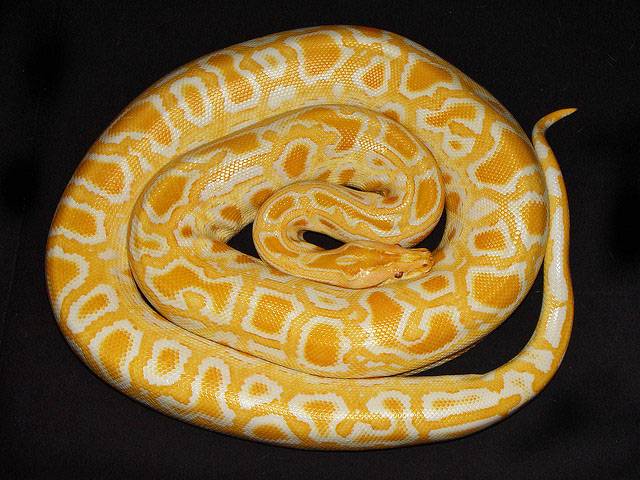
Among the largest snakes in the world, a fully grown Burmese python is truly a sight to behold. Although rare, specimens can grow to be a massive 7m or more in length, have the girth of a telephone pole, and slither around weighing as much as 90kg. A typical snake will reach about 5m in length.
According to National Geographic, one of the largest Burmese pythons lives at the Serpent Safari Park in Illinois. Ironically, this 8.2m long giant is named Baby, and she holds the world record as the heaviest snake in existence at a staggering 183kg.
Despite their imposing nature, Francois says they are placid snakes to work with and are not usually aggressive. “The one I’ll be bringing to the demonstration will be about 2m in length,” he explains. Burmese pythons are native to the swamps, marshlands and rocky foothills of Southern and Southeast Asia, but can be kept as pets around the world.
Perhaps the most interesting thing about this gorgeous snake is their seemingly hostile takeover of the Everglades in Florida (USA), where they are now flourishing as an invasive species.
This Wikipedia post explains that captive breeding is largely to blame. People who became tired of keeping the snakes as pets, or simply could not look after them properly once they became too big, released them into the wild. Over the years, they have made their way into the wetlands of Florida, and now pose a real danger to an already fragile ecosystem as they are eating endangered birds and alligators in the area.
Many articles have been written about this, and people have even posted videos of their battles with large alligators on video-sharing website YouTube:
Proper care is required when handling a Burmese python, and even though they are known to be docile, a 5m-long snake is more than capable of killing an adult human, which has happened in the past.
In the wild they are solitary animals, and are only seen together during mating season in spring. Females can lay up to 100 eggs, which they keep warm by continuously contracting or “shivering” their muscles around them.
Rock monitor lizard (Varanus albigularis)
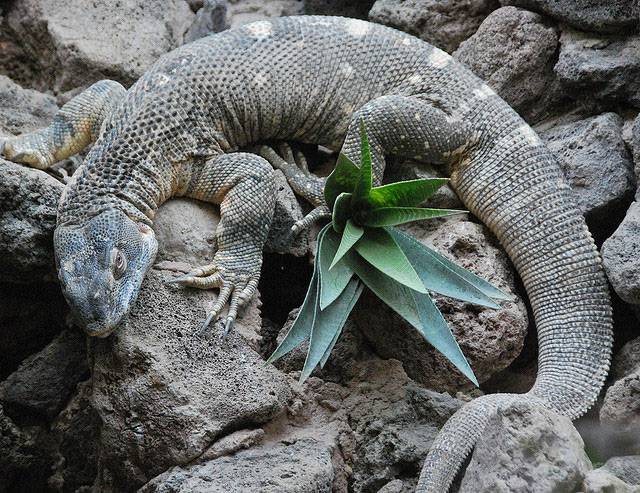
Next to the water monitor, this lizard species is the second largest in southern Africa, with an adult’s body length reaching about 800mm (or 80cm). Young rock monitors are vividly marked, but their colour fades with age, usually becoming a murky brown or beige.
In A Guide to the Reptiles of Southern Africa (2007), Graham Alexander and Johan Marais explain that the fat and skin of these lizards are used in the muti (traditional medicine) trade, and the skin was once highly prized in the leather industry. As a result, rock monitors were listed in the first reptile red data book in South Africa, but being a widely distributed and abundant species, were later taken off that list.
However, they are still found on the Convention of International Trade in Endangered Species (CITES) Appendix II list, meaning they are not endangered, but may become so if trade is not closely monitored (no pun intended).
Interestingly, Francois explains that rock monitors sometimes lay their eggs in termite mounds, which they dig open using their sharp claws. “The termites close it back up again, and this acts as a natural incubator for the eggs,” he says.
Their diet consists mostly of beetles and millipedes, but they will also eat snakes, rodents, birds, small tortoises, eggs and carrion if the opportunity arises.
Although rock monitors can be quite dangerous considering they are able to deliver a nasty bite or scratch vigorously when handled (Francois says he has been shredded to pieces), they can make excellent pets provided they are not obtained from the wild.
Hatchlings raised in captivity will tame easily and become fantastic companions, and can live for a long time if cared for properly.
Angulate tortoise (Chersina angulata)
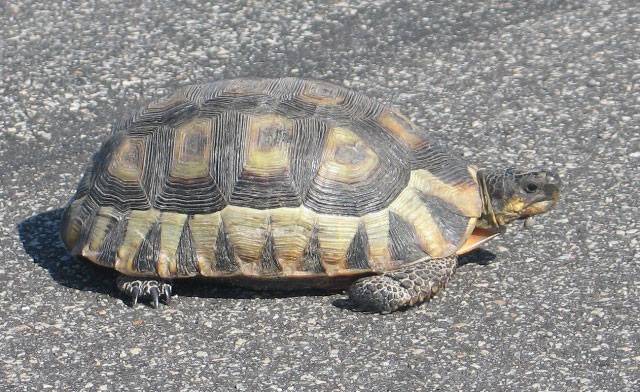
This hardy tortoise is unique in the fact that it is the only member of its genus (family), and is entirely endemic to South Africa. Another interesting characteristic is that it only has a single projecting gular shield (part of the shell which extends past the chin), whereas all other tortoise species have two.
Francois explains this gular shield is used as a fighting aid among the males when competing for a female; males use the shield to ram and overturn rivals. Females produce an average of four eggs per year, which are laid in soft ground after rains anywhere from March to December.
The female will also urinate on the ground to help facilitate digging. Hatchlings are born after the first winter rains.
In A Guide to the Reptiles of Southern Africa (2007), Graham Alexander and Johan Marais explain that the agulate tortoise can be found in a wide variety of habitats within the Eastern, Western and Northern Cape, from semi-desert to fynbos, and succulent Karoo to thicket.
This unique, vividly marked tortoise is also one of the few known species to drink water through its nose. Francois believes they do this as it allows for a greater intake. “Their mouth has a hard bony ridge, thus not allowing them to suck up water easily, like a human would for example.”
As many angulate tortoises live for more than 30 years, they can make good pets. Again, Francois asserts they must be bought from a breeder, as obtaining them from the wild is illegal. “They are reasonably simple to care for, but you must provide fresh water and plant material for them daily,” he says.