
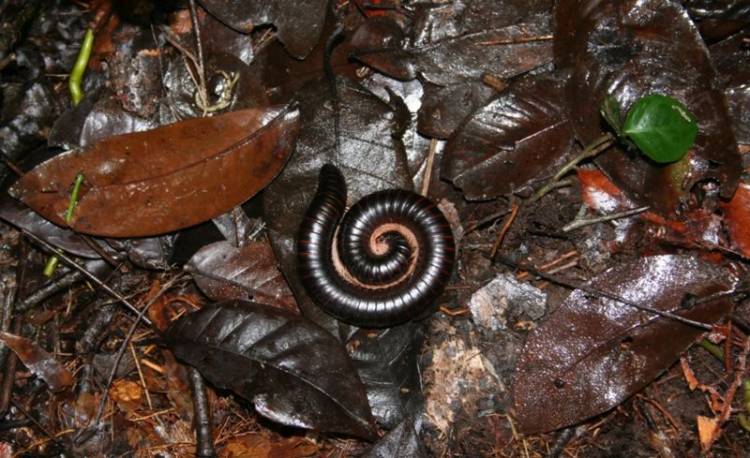
All South African children know what a shongololo is, and will be quick to spot one of these creepy crawlies along the Sappi River Meander at the Two Oceans Aquarium. Part of a healthy riverine ecosystem, these crawlies don’t bite so they’re not all that creepy. Coming from the Nguni for “roll up”, the local name for these millipedes just rolls off the tongue, doesn’t it?
Now millipede means “one thousand legs” in Latin. However, most shongololo species have between 36 and 400 legs so this is not exactly true. Shongololos are arthropods – or insects – which means they have a hard exoskeleton and their bodies are divided up into segments. Their bodies are made up of between 11 and over 100 segments, and they moult and add segments as they grow. Each segment has two pairs of tiny legs, except for the first three segments in most species, which have one pair each.
They use their antennae for navigation (shongololos have poor eyesight and some species have no eyes at all) and have sensory organs on their heads, which some scientists suggest are used to measure humidity.
Often seen crossing open, sunny ground, these creatures actually prefer shady, humid conditions, where they are well camouflaged. They are herbivores, or plant-eaters, as well as detritivores – they eat detritus or decaying matter like leaves and fruit which has fallen to the ground and started to rot. This is a vital function within an ecosystem because it creates nutrient-rich soil to be used by plants.
They have a jaw to chew the plant matter, which they ingest after releasing secretions to aid with digestion, but they can’t bite – unlike centipedes, their relatives.
They do emit smells, however, and you should wash your hands after handling them. But shongololos don’t have a nose, so perhaps they don’t know any better: They breathe though a system of windpipes which run the length of their bodies. And, as all South African children know, they curl into tight spiral balls when threatened.
About 7 000 species are known worldwide, and in South Africa, there are only a few specialists who can name our different species. Many are endemic, which means they don’t occur anywhere else and are confined to small, niche habitats. Ezemvelo KZN Wildlife has recognised a number of species in the eastern part of the country as needing special conservation efforts.
We have lots more to learn about these harmless, not-so-creepy creatures and the role they play in nature. Come start you own journey of exploration and insight along the Sappi River Meander.