
When you’re in the hub of one of the most beautiful cities in the world, which recently played host to the FIFA World Cup™, you’re bound to have a star-studded time – with Black Stars, Ugly Betty stars, stars and stripes. And that’s not to mention the countless five-star experiences on offer in Cape Town.
If you’re into a little star-gazing, you can find further delight at the Two Oceans Aquarium.
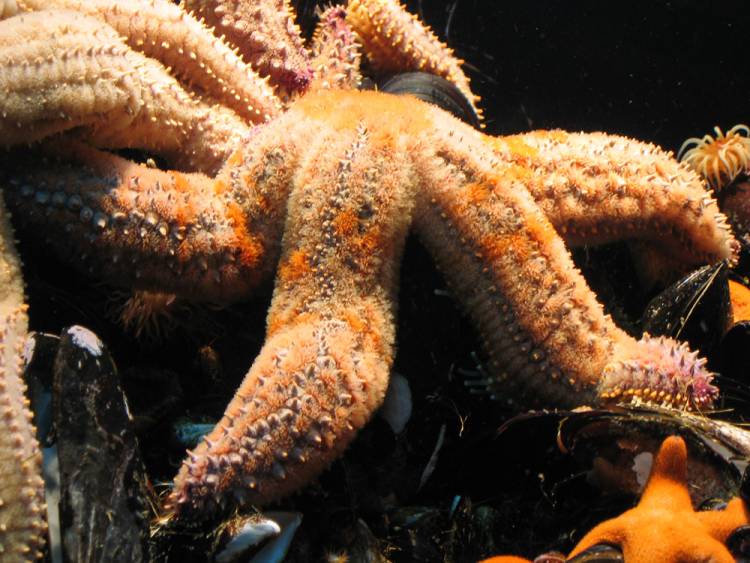
In Oceans of Contrast: Atlantic Ocean Gallery, you can spy a few local celebrities – red and spiny starfish – although their names can be a little misleading. For starfish aren’t fish at all, but echinoderms; that means they’re closely related to the likes of sea urchins and sea cucumbers (which lost their star shape a long time ago).
While many starfish have five arms, some species have many more. The sunflower starfish, for example, has between 16 and 24 arms, each measuring up to one metre in length. To avoid muddying the waters, some marine scientists are trying to rename this constellation of creatures seastars.
Whatever you call them, these spiny members of our sealife can be quite remarkable. They have no brain, no blood and (to our human eyes) are all upside down: their mouths are on their underside, their bums are on top.
Their nervous system and vital organs are spread throughout their body – which also means they can easily regenerate parts. They can grow back arms (if they’ve lost limbs to would-be predators) and, in some cases, can even grow a new body in an astonishing display of self-replication.
The smallest starfish known to man, the paddle-spined seastar (discovered recently off the Victorian coastline of Australia) is less than five millimetres long and can use its little sucker feet to pull itself apart. Soon enough, you’ll find two paddle-spined seastars clinging to the seaweed, trying not to be swept away by the tide.
If that’s not incredible enough for you, you should watch them eat! Starfish use their suction-cupped feet to open shelled prey, likes perlemoen and oysters, before thrusting their stomachs out of their mouths and into the shell to digest the juicy bits. When they’ve finished their meal, they simply swallow their stomachs back in.
Other than at our Aquarium (and others like it), you won’t find these shining stars anywhere but in the ocean. Starfish are truly marine creatures. They don’t live in fresh water, but use filtered sea water instead of blood to regulate their water pressure, distribute nutrients throughout their bodies and control their movement and breathing.
Come hitch your wagon and watch our non-fishy friends do great things.