
The Two Oceans Aquarium, in partnership with the Department of Environmental Affairs (DEA) Mammal Unit, has launched a pioneering job creation and wildlife preservation project with a simple objective: taking care of the Cape fur seals at the V&A Waterfront.
Seal-human conflict
Cape fur seals (Arctocephalus pusillus) are one of the few marine mammals whose numbers are increasing, but this does not mean that they’re not at risk. At the V&A Waterfront, the seals’ inquisitive natures bring them close to humans, making them the perfect ambassador for their ecosystem.
_750_500_70.JPG)
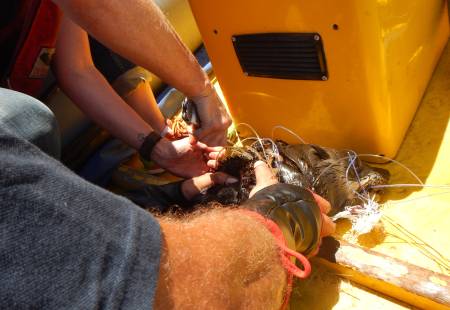
But this curiosity and natural playfulness, especially in the polluted waters of Cape Town’s ports, is potentially deadly for a seal. Entanglements in discarded fishing line, ropes, plastics and box bands are common. This entangled waste cuts deeply into a seal’s flesh, leading to a slow and painful death if no human intervention takes place.
_400_600_70.JPG)
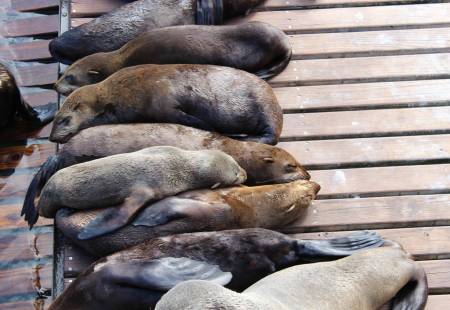
Seals are also seen as a pest by some, as their pursuit of shady, comfortable resting spots on land often takes them onto yachts and jetties where the risk of a close encounter with humans increases.
_750_500_70.JPG)
The V&A Waterfront’s Cape fur seal population offers a unique insight into the lives of these animals – presenting the opportunity for scientific study into the relationships between seals and fisheries, investigation of methods to avoid human-seal conflict, and of course the opportunity for the public to experience the joy of seeing a playful seal in nature.
_750_500_70.JPG)
Our Seal Rescue Programme
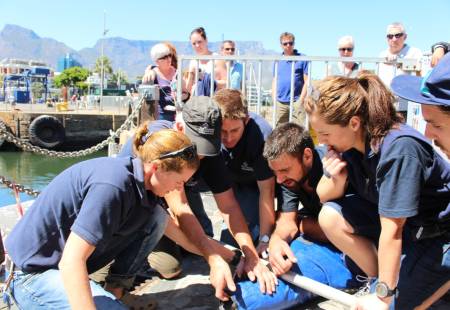
The Aquarium’s Vincent Calder and Claire Taylor have both been involved in daily excursions into the waters of of the V&A Waterfront, finding entangled seals and freeing them. Their combination of stealth and behavioural knowledge, together with generous support from SPAR Western Cape, has disentangled countless Cape fur seals through our Seal Rescue Programme.
Other attempts to reduce the negative impacts humans are having on the Cape fur seals have also been made.
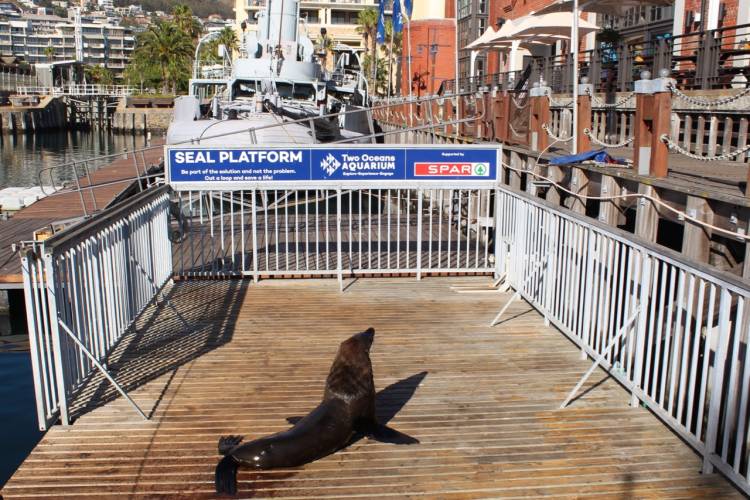
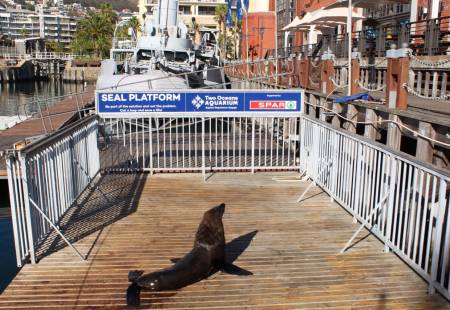
Most notably, the SPAR Seal Platform, located just behind the Aquarium, offers an excellent resting spot for seals, a picturesque photo opportunity for tourists and a place where entangled seals can be easily identified.
_750_500_70.JPG)
Public participation – a new solution
Existing efforts alone are not enough to combat the ongoing conflict between Cape fur seals and humans in Cape Town. In an effort to address this conclusively, the Two Oceans Aquarium, DEA and SPCA held a workshop with community members and stakeholders to identify and address these concerns.
_750_563_70.JPG)
Full-time seal monitors have been hired as part of a new Seal Management Programme. The first of these monitors are already patrolling the V&A Waterfront – being trained to serve as spotters of distressed seals, and also as guides who can educate the public and tourists about these incredible creatures.
_750_500_70.JPG)
The Two Oceans Aquarium has also recently taken on two interns from the World Wildlife Fund (WWF South Africa), Inge Adams and Craig Haley. They will be working in conjunction with the Aquarium’s conservation coordinator, Talitha Noble, to conduct research into better understanding these endearing creatures.
_750_500_70.JPG)
Turning a "pest" into an attraction
The Aquarium is proud to be a part of this endeavour, and the years of experience that Vincent and Claire have gained is of utmost importance in establishing new, safe resting spots for the seals. For example, did you know that seals prefer dirty jetties and will avoid resting on freshly washed ones? Or that they have different landings and jetties that they rest on depending on the weather?
_750_500_70.JPG)
Our goal is that the V&A Waterfront becomes a habitat where Cape fur seals and humans can coexist in harmony. Let’s turn a “pest” into an attraction here in the V&A Waterfront.
These new conservation efforts are made possible by the Two Oceans Aquarium’s conservation fund, and donations from you!