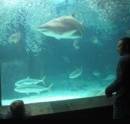
The sardine run has arrived at the Two Oceans Aquarium. A large shoal of sardines (pilchards) were introduced into the I&J Predator Exhibit on Friday 28 July 2006. The silvery shoal has transfixed staff and visitors alike with its shimmering ‘underwater ballet’.
The sardines were donated to the Aquarium by the Santa Monica, a tuna fishing vessel which uses live sardines to bait tuna. Using seine nets, the crew collect shoals of sardines and keep them alive in the ship’s hull. They then pump live pilchards into the surrounding water to attract tuna to the side of the boat. As soon as there are sufficient numbers of tuna close to the boat, the crew switch to spraying jets of water onto the surface of the ocean which sustain the tuna’s interest for a while. The tuna are then caught on baited hooks on short lines attached to bamboo poles hence the term ‘pole-caught tuna’.
This fishing method is probably one of the most eco-friendly and sustainable methods. It is highly selective and targets exclusively yellowfin and longfin tuna. There is no by-catch as in other methods such as trawling and longlining, both of which kill thousands of animals not targeted by the fishery. These animals, including seabirds, turtles, dolphins and sharks, are thrown back into the ocean, either dying or already dead. Because pole-fishing is such a highly selective method with no bycatch issues, tuna caught in this manner are recommended as a sustainable seafood choice by the Southern African Sustainable Seafood Initiative (SASSI).
SASSI is a relatively new initiative in South Africa which aims to reduce the decline of fish populations by informing consumers about sustainable choices which they can make when ordering, or purchasing seafood. SASSI has developed a Consumers’ Seafood Pocket Guide which divides seafood into 3 categories (Green, Orange and Red) according to the current population status of the species, the fishing methods used to catch the particular fish and the impact of these methods on the environment.
Seafood on the Green List is recommended as a good choice as these species are from relatively healthy populations and can sustain current fishing pressure. The Green List includes all tuna (except bluefin tuna), sardines, yellowtail and hake. The orange category indicates those species which are seriously overexploited and in need of recovery (e.g. kabeljou and rockcods), or where the fishery of the species has serious bycatch or other environmental impacts (such as locally trawled prawns). Species listed on the Red List, including well-known species such as galjoen, white steenbras and white musselcracker, are illegal to buy or sell in South Africa.
Seafood lovers are encouraged to ask questions when they purchase seafood and so encourage retailers to comply with regulations that are in place to ensure a sustainable seafood source into the future. By supporting SASSI and making informed choices, consumers can have a direct and positive influence on the health and productivity of fish populations in the future.
To obtain a Consumer Seafood Pocket Guide and more information about SASSI log on to www.wwf.org.za/sassi or visit the Two Oceans Aquarium.