28 September was World Rivers Day.
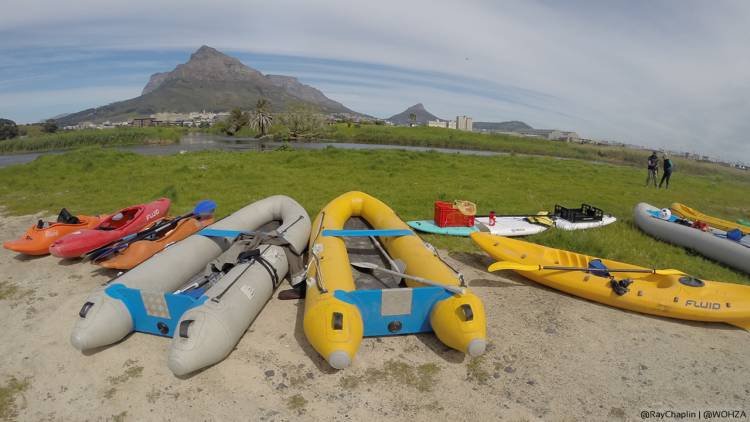
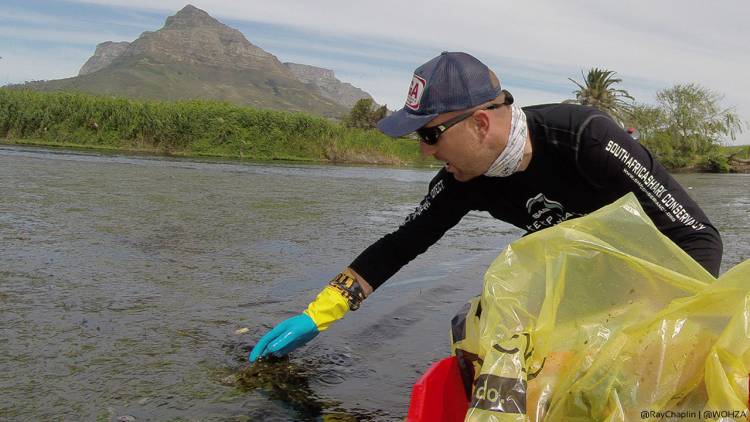
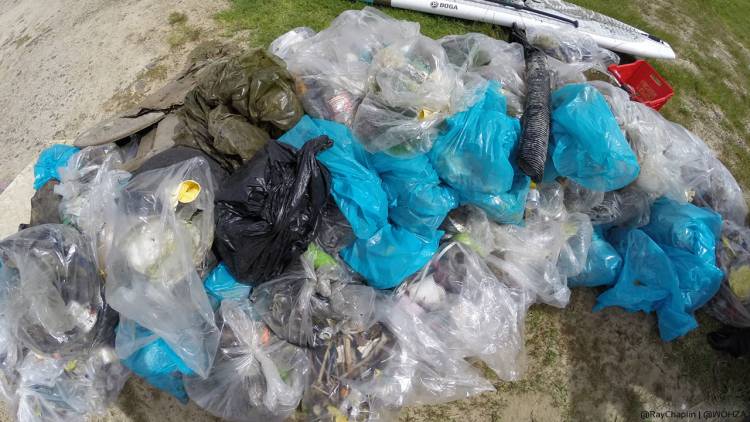
Rivers, just like the oceans and beaches, are heavily polluted. Ray Chaplin – friend of the Aquarium, Ambassador for the SA Shark Conservancy & WWF-SASSI, and the first person to descend the length of the Orange River by riverboard (an expedition that earned him the title of South African 2014 Adventurer of the Year) – joined a group of water-loving people in cleaning up the Black River near Observatory, Cape Town.
Jonathan Tucker, of the Cape Whitewater Club, organised the clean-up and the initiative was supported by the City of Cape Town’s Department of Water and Sanitation.
We live in a society where throwing things “away” is the absolute norm. Interestingly enough, no matter how many people I have asked this question of, no one can tell me where “away” is. Think about it for a moment. You throw something away. Where does it go? To landfill, right. And then? What happens to it then? It’s still there. You can go and find it if you really want to.
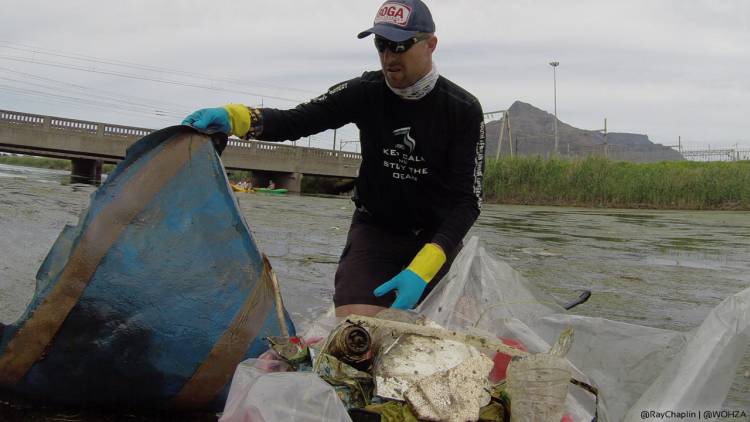
If it is organic, hopefully it will biodegrade. If what you have thrown away isn’t biodegradable, it sits in landfill for however long it takes to break into smaller and smaller pieces. But it doesn’t go away. Or, it escapes landfill and ends up in the environment, be it a river, the ocean, your favourite park, game reserve or your backyard.
And here is where it gets really interesting. If you live inland, you might think that you are not connected to the ocean. You are. You are connected to the ocean through your rubbish. What you do on land, no matter where you are, affects the ocean.
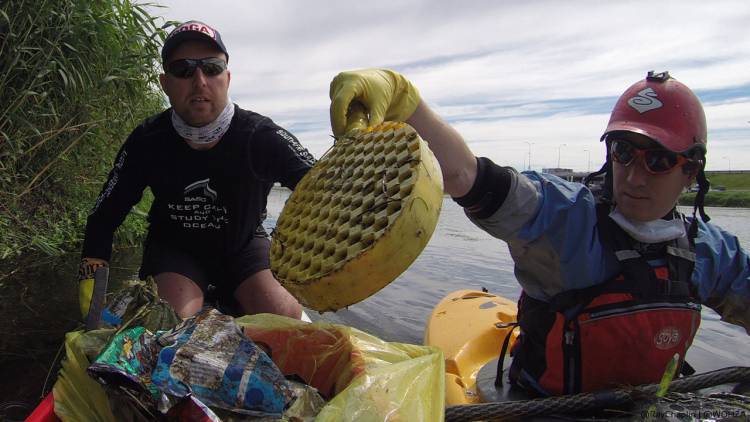
As Ray so eloquently puts it: “Having descended the length of the Orange River in 2013, I have followed the entire course of South Africa’s longest river and seen the full extent of how mankind is destroying our waterways. And I, for one, cannot stand by and watch it happen.”
The good news is that instead of having a negative affect on the ocean and the environment, you can choose to have a positive one.
How? It is quite easy.
The first thing is to do is to decide to live as someone who wants to have a positive impact. And then do one thing. Change one habit. There are thousands of things that you can start, or stop doing.
Do not litter. Ever. No matter how big or small, do not throw anything anywhere except the recycling or garbage bins. And yes, that goes for your cigarette butt, too!
Stop buying plastic shopping bags and take your reusables when you go shopping.
Say no to takeaway packaging. Take your own container. How many plastic forks do you really need?
Stop using straws.
Start recycling.
Get involved.
Educate yourself about the problem. Have a look at the Two Oceans Aquarium’s environmental campaigns.
Then, educate others.
“While clean-ups are great and they have an amazing impact, we can’t keep being a reactive force. We need to start at schools, at our businesses, and change mindsets to prevent the waste from getting out there,” says Ray.
You do not have to change your entire life or household. You just need to start by doing one thing, making one decision, taking responsibility for one aspect of your rubbish. From there you might find that it is much easier to make the second change, and the third, and the fourth.
Just start.
Stay in touch: for daily Aquarium updates, follow us on Twitter (@2OceansAquarium) and become a fan on Facebook.