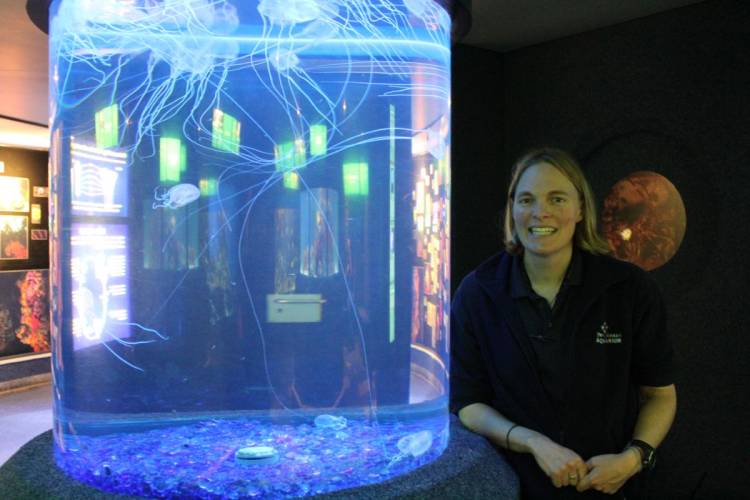
May the record show that I was armed with a list of carefully thought-out questions when I headed to the Two Oceans Aquarium to meet aquarist Ruth Wright. But I should’ve known – when you spend time with an aquarist, you’re bound to get more than you bargained for.
“Jelly tanks are never square but always round. They’re called kreisels,” Ruth says as she steps down from a ladder in a backroom of the Two Oceans Aquarium. “A current keeps the jellies swimming around, otherwise they’d get trapped in the corners. Jellies are also not supposed to rub on things because they’re so fragile.”
We’re talking about jellies because Ruth is doing maintenance work on the Aquarium’s jellyfish exhibits. While she tweaks and checks she tells me that, like plants, jellies are photosynthetic: “So they need really strong light.”
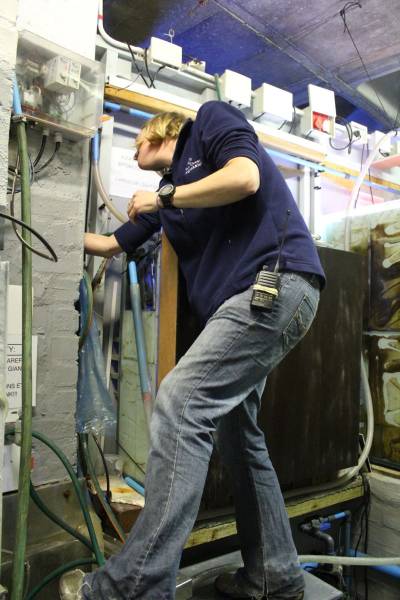
“The Aquarium’s life support system for jellies is hidden to make it pretty on the other side,” Ruth says as we leave the backroom and rejoin in the public in the Aquarium for our interview.
So what exactly is it that you do around here?
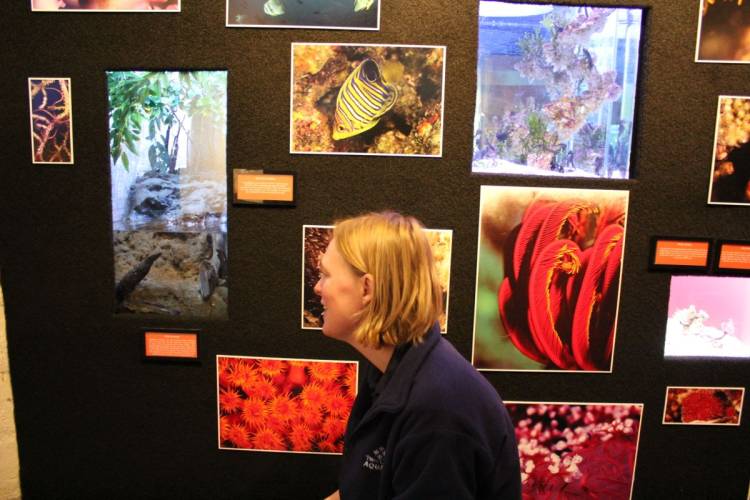
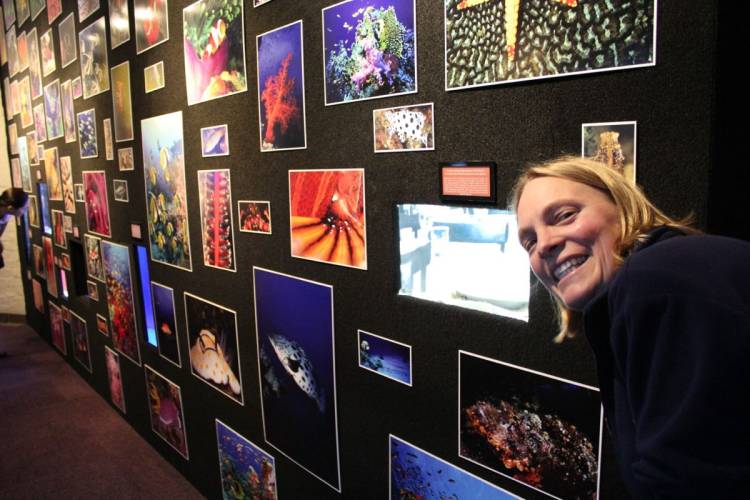
My focus is the wall mosaic (in the Oceans of Contrast: Indian Ocean Gallery) and jellies at the moment. I’ve only been doing jellies since October 2010. When I went overseas, I met people who’ve been working with jellies for eight years!
You’ve recently re-done the moon jelly exhibit. Tell me about the globe theme and lighting that you’ve used?
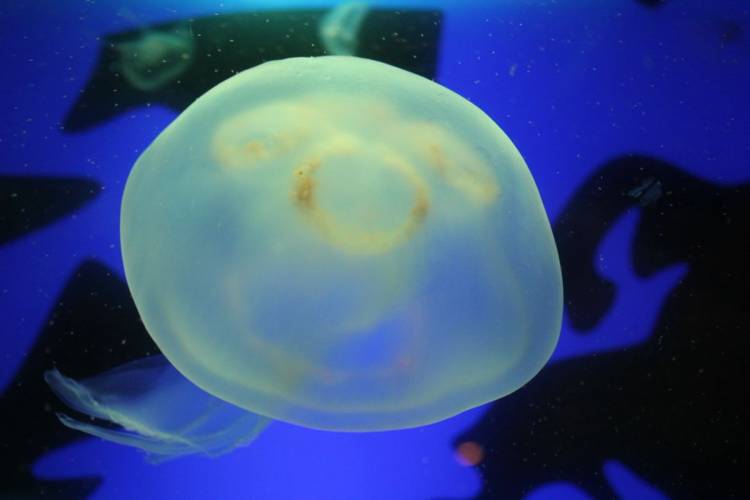
Moon jellies are found in water temperatures from low to high and all around the world – from 40 degrees south to 70 degrees north. I tried to get that across to people by using the globe. It’s a highly experimental exhibit and still a work in progress.
What factors do you consider when designing and building an exhibit?
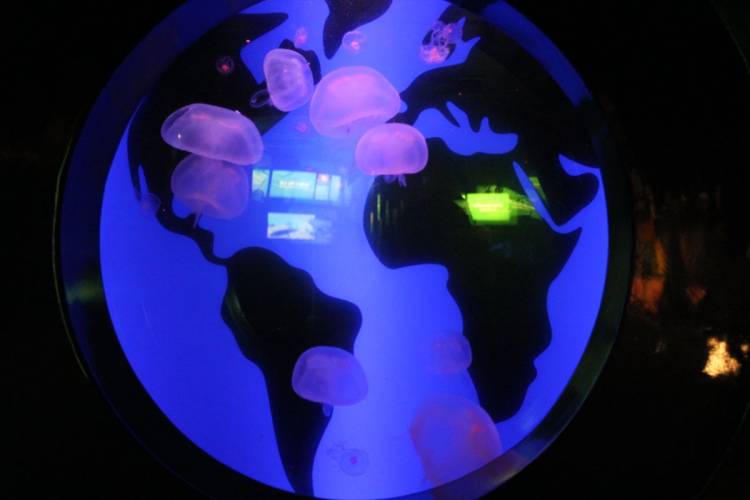
I think it was Dr Pat [Two Oceans Aquarium Managing Director Pat Garratt] who said that an exhibit must still be pretty even when there’s no animal in it. Often there are shy animals or animals that hide … Visitors still need to get something from the exhibit even if this is the case.
The animals get shy?
Yes! Animals can be naughty and they all have characters and personality. The myth that goldfish have a two-second memory is such rubbish. These animals learn behaviours.
Tell me about the box jelly exhibit. It’s a favourite with photographers.
The box jellies are the worst stingers we have here! I’ve been stung many times. At the beginning it wasn’t too bad but now I get blisters. It’s like a bee sting and we wear lots of protective gear.
Each dot on the tentacles is a stinging cell. We do trim tentacles because they get too long and tangled, but you can still get stung even when the tentacle is unattached – the stinging is a protein-based reaction. Tentacles re-grow after a few days.
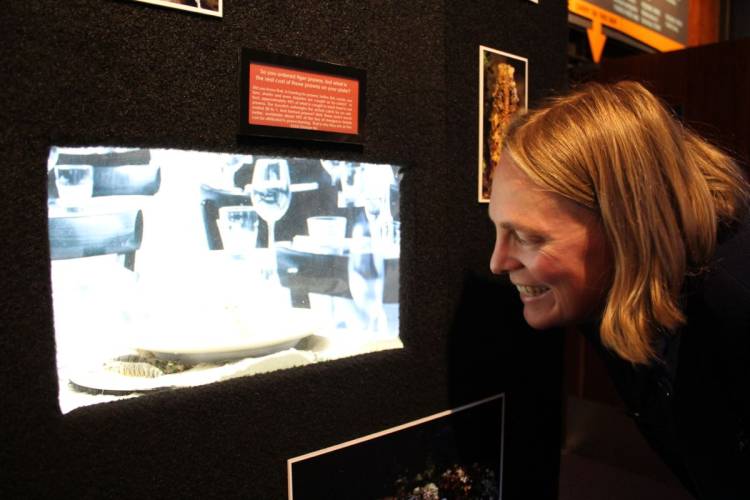
Your new tiger prawn exhibit tells visitors about the by-catch associated with the tiger prawn fishing industry and shows tiger prawns on a dinner plate. According to your signage, 1kg of tiger prawn yields 9kg of bycatch.
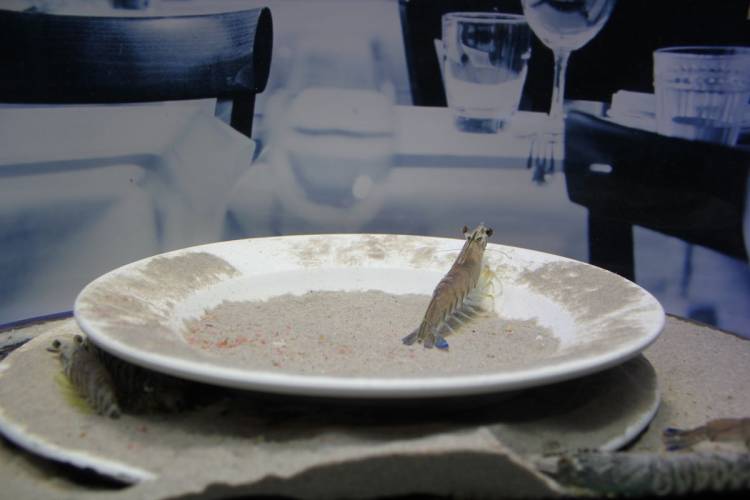
I’m not a big fan of seafood. I don’t really want to eat my work! And I really feel bad eating prawns now, so I don’t eat prawns anymore.
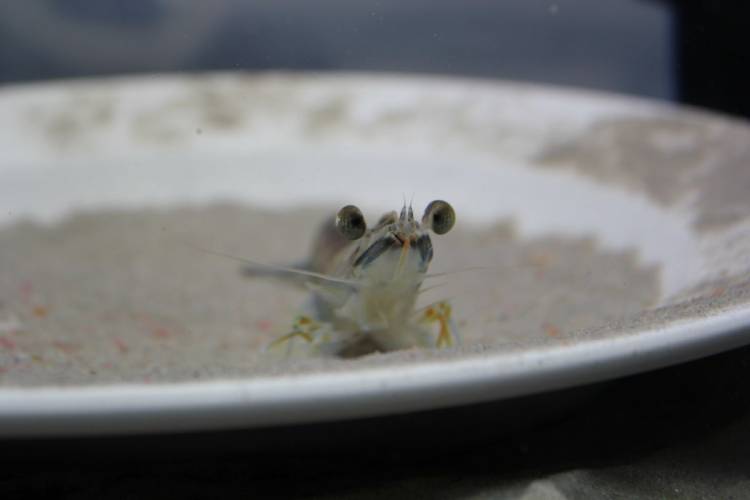
This is another highly experimental exhibit that went up mid-May. I love the prawns’ rainbow tails!
These mosaic wall photographs were all taken Geoff Spiby. Because there’s so much colour in the photographs, I can use lots of colour in the tanks.
So, we have to ask. Which Aquarium animal is your favourite?
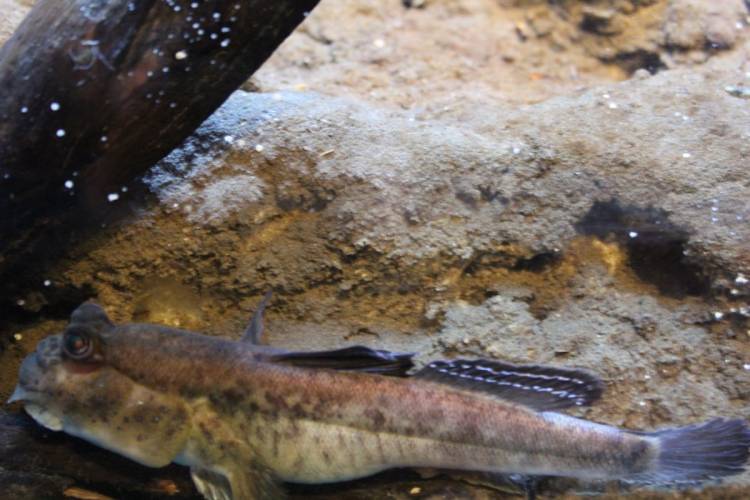
The mudskipper is the coolest fish ever. This guy has a lot of personality and he is just really cool. His tank was a nightmare to make but Kaptein [that’s his name] is worth it.
A mudskipper will sit on the little log in the exhibit and jump to catch food. Skippy, the mudskipper before Kaptein, used to climb to the top of the log and jump and try and bite people!
Kaptein is actually chubby so he’s on a diet now. Look at his belly!
If mudskippers don’t like the conditions, they’ll just leap out of the water. They are very territorial, and when we had more than one specimen in the exhibit they would often fight.
They can be quite vicious to each other but Kaptein is an angel with me!
Describe your typical day.
In the morning it’s a mad rush from 07h00 to 09h30 because we have to clean all exhibits before the public starts arriving. This involves ladders, buckets, scrubbing, siphoning … We prepare the tanks so they look their best.
After that, it’s the morning feed. There are some other feeds later in the day, too.
The rest of the time, I’m either involved in collection trips, boat dives, animal care, in-house diving or exhibit design. We are constantly doing maintenance work on the exhibits.
There is also paper work to be done on a daily basis. Records are kept on all animals we have. We keep a close eye on our animals: we look at their eating habits, if they have bite marks, if we need to send them to quarantine and so on.
Our main focus is animal husbandry – taking care of our animals is our most important job.
How did you get this job?
I started as a volunteer in 2007 and in September 2008 got a permanent position.
Most people start as volunteers. I studied marine biology at the University of Cape Town and then I obtained my commercial diving qualification. That’s when I started volunteering. A three-month diving contract opened up at the Aquarium, and then a permanent position became available.
We’re all commercial divers here so there’s a roster for cleaning, feeding, collecting and events.
What’s your favourite Two Oceans Aquarium memory?
This was in retaliation … A colleague of mine was working on the boat, standing at the bottom, and I was standing three storeys up and I dropped a pilchard down the back of his neck and down his shirt! It was such a good shot!
Retaliation?
He had filled my gumboots with water and put them in the freezer. So, you see, that’s the problem with having a big freezer at work.
What advice do you have for aspirant aquarists?
If you want to get involved, get involved! This is for you if you aren’t worried about getting your hands dirty and if you are good at working in a team. This job can often look like just fun and games, but it’s actually serious work. We’re looking after animals that are not in their natural environment.
I asked Two Oceans Aquarium Sustainability and Communications Assistant Manager Renée Leeuwner to describe Ruth in one sentence.
Ruth will amaze you with her creativity, impress you with her wit and humble you with her kind heart.