
The Two Oceans Aquarium's I&J Ocean Exhibit is a representation of South Africa's sub-tropical eastern coastlines, together with their clear water and colourful fishes. Where these clear, warm waters intersect our cooler Atlantic currents on our southern shores, incredible diversity arises - the real meaning of what "Two Oceans" have to offer. The three species of ray in the I&J Ocean Exhibit demonstrate the biodiversity of these two oceans, and their commingling - let's take a look:
_750_544_70.jpg)
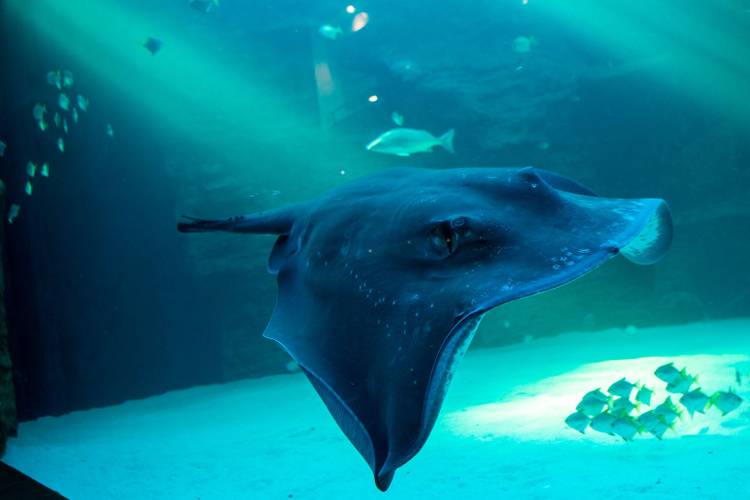
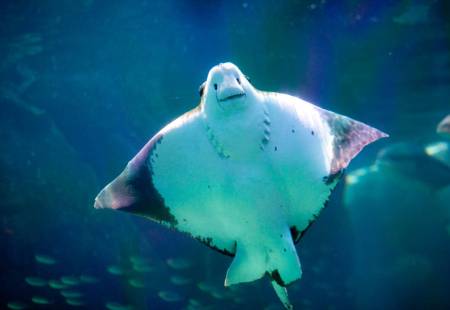
Giant shorttail stingray:
Shorttail stingrays (Bathytoshia brevicaudata) are the largest stingrays in the world and call the southern coasts of South Africa, Australia and New Zealand home. Their large size and strength mean that adult shorttail rays have very few natural predators, and are capable of great bursts to speed. If they can't escape from a predator, they can strike with their venomous barbs as a last resort. Despite being truly powerful animals, these gentle giants are bottom feeders, patrolling in estuaries, kelp forests, and sand sea floors for worms, crabs, and small fish to feed on.
Did you know that you can learn to scuba dive in the I&J Ocean Exhibit with these amazing animals?
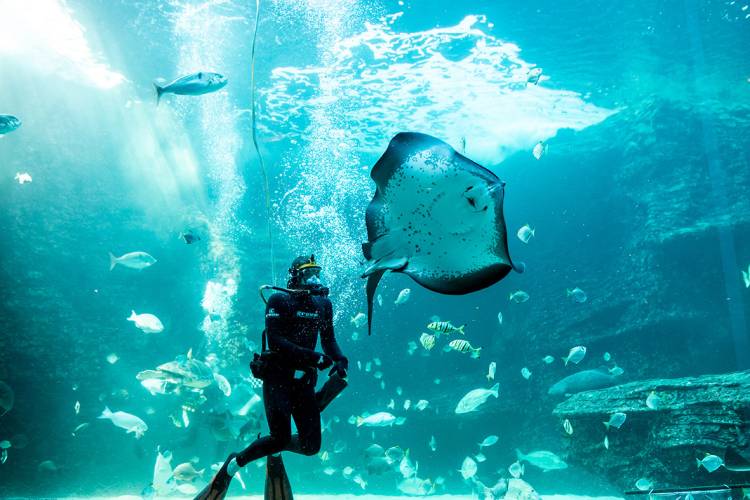
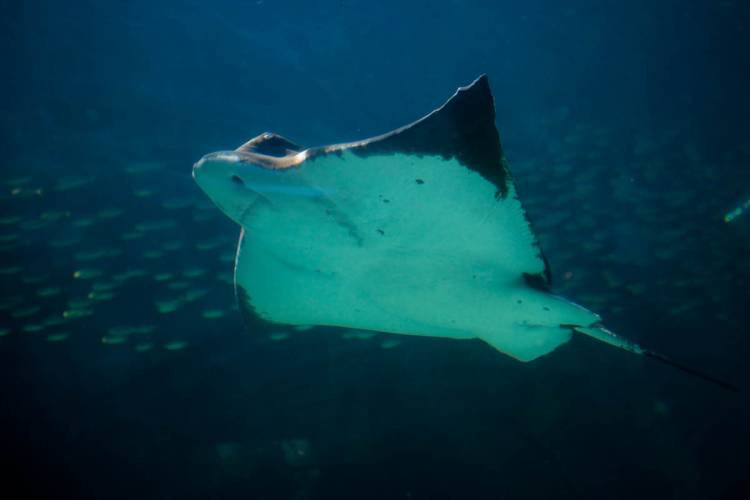
Common eagle ray:
Eagle rays (Myliobatis aquila) rely on a different life strategy - speed. Although like most rays, they are adapted to feeding on hard-bodied animals on the seafloor, eagle rays excel at life in the open ocean. Thanks to their speed, they are comfortable in shallow waters, where they can leap from the water to avoid predators if necessary. Thanks to their ocean-going abilities, eagles rays are found throughout the world, but locally the East Coast is their preferred habitat.
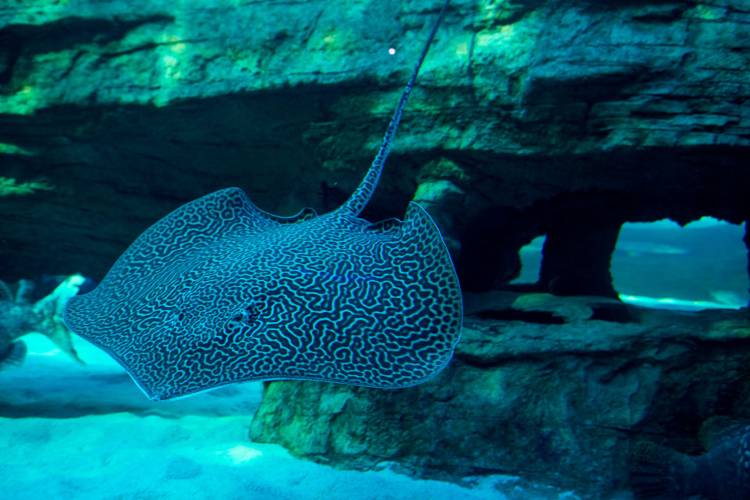
Honeycomb stingray:
The Vulnerable honeycomb stingray (Himantura undulata) is a beautiful resident of our East Coast, using yet another survival strategy. Its unique reticulated patterns allow it to partially bury itself in the sand and blend in when viewed from above, and its long, whip-tail acts like an antenna that can detect predators with great sensitivity. In fact, it is so good at detecting predators that other species of stingray are known to preferentially hang out with it for safety, rather than with their own species!
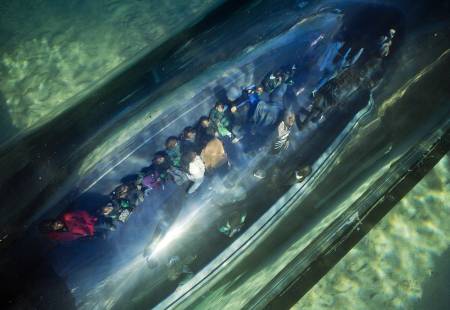
So, which of the similar, yet unique rays of the I&J Ocean Exhibit is your favourite? Be sure you get your "fly-over" selfie on your next Two Oceans Aquarium visit.
_750_550_70.jpg)
_450_310_70_s_c1_c_t.jpg)
_450_310_70_s_c1_c_t.jpg)