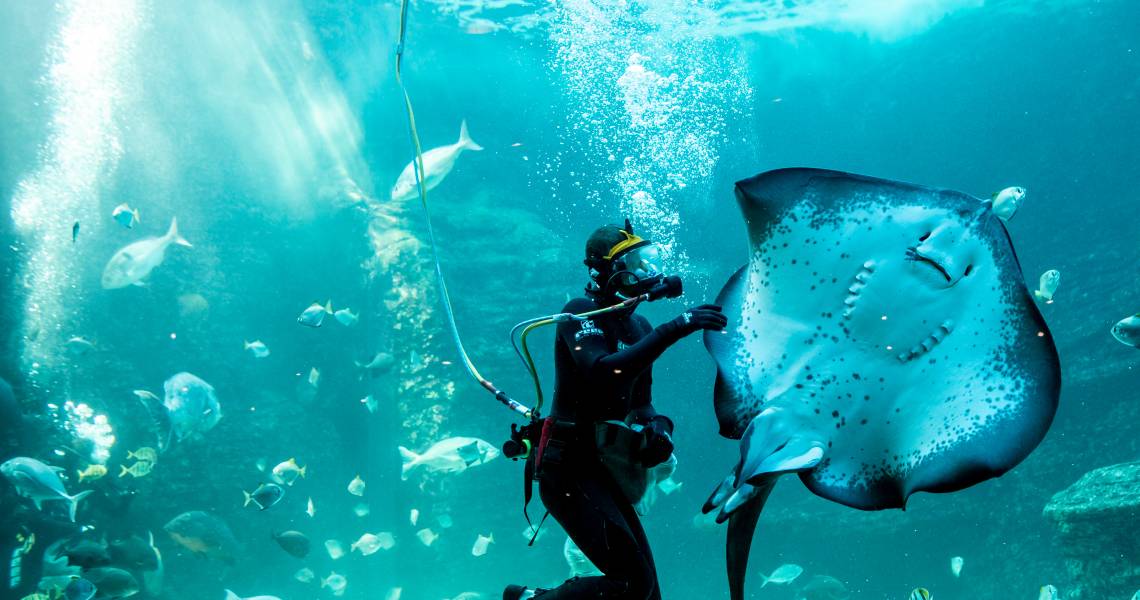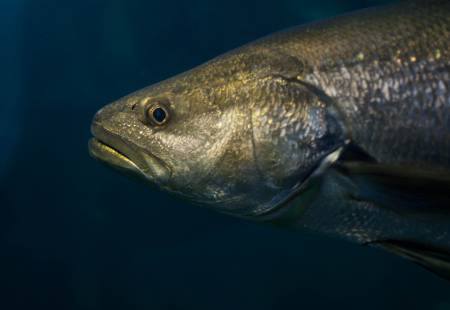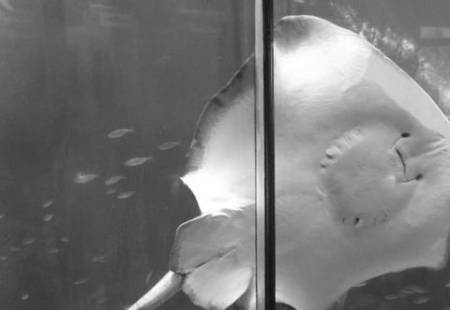

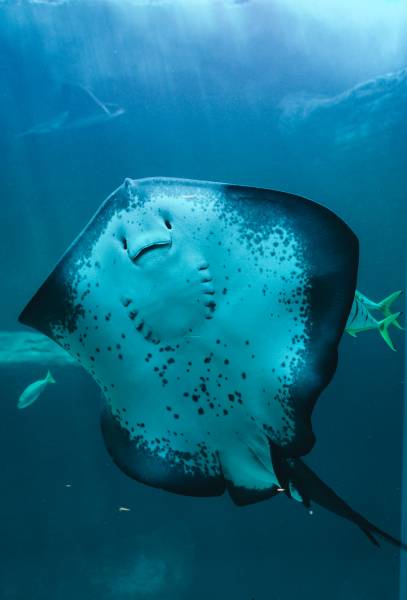
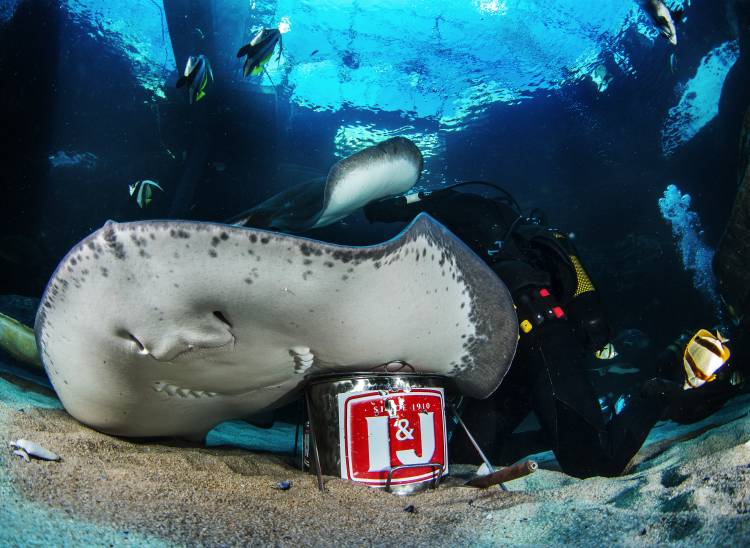
Did you know that the Two Oceans Aquarium is home to the world's largest stingray species? Meet the giant short-tail stingrays of our I&J Ocean Exhibit - one of South Africa's lesser-known ocean giants.
Sort-tail stingrays (Bathytoshia brevicaudata) live in waters up to half a kilometre deep, along the coasts of South Africa, Mozambique, Australia and New Zealand. Although they are relatively rare in shallow waters in South Africa, they are a delightful surprise for many False Bay divers!
Growing to over 2m and 350kg, fully-grown short-tail stingrays have few natural predators on the seafloors they inhabit, aside from orcas and a few large shark species. Despite their large size, they have relatively short tails compared to most other stingray species - hence the name!
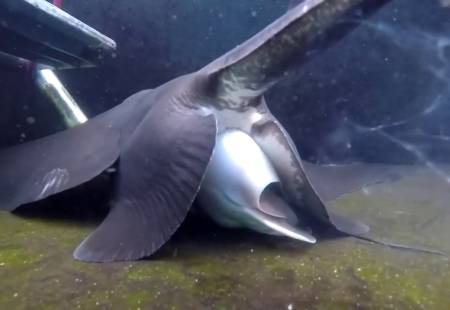
This short tail is equipped with large armoured tubercles, thorns and dermal denticles, providing it with protection. Behind this armour are one or two long, venomous spines. The spines are angled backwards, providing the ray with a safeguard against predators striking from behind, and can be used to "sting" a predator if the ray is chased or trapped.
_750_544_70.jpg)
The backs of these stingrays are typically black, but are often mottled with white blotches and markings that help camouflage them when on the seafloor, particularly when partially buried. This camouflage is especially useful when the rays are digging through sediment - often feeding on small buried animals.
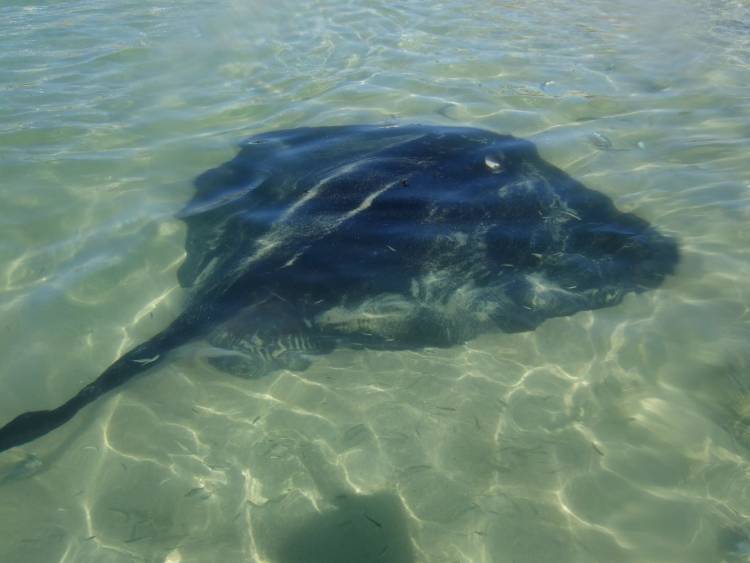
Like all fish, short-tail rays have a lateral line system that can detect pressure changes. Theirs are so sensitive, that they are able to detect the tiny movements of burrowed animals like worms and mussels! The large size and powerful muscles of this ray enable it to swim incredibly powerfully (despite usually seeming so calm), and it can actually flap its find quickly enough to cause loud bangs due to cavitation bubbles! This allows bursts of speeds that enable large rays to catch squids, fish and crustaceans in open water.
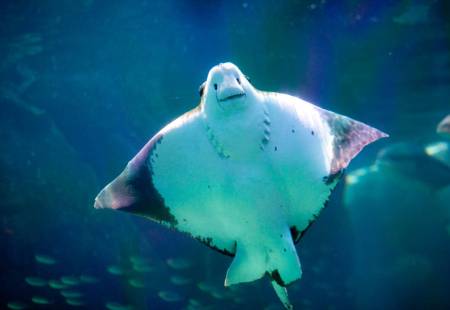
When it comes to breeding, these rays gather in large numbers to mate in open waters. Their mating seasons are timed to coincide with periods of ideal conditions and abundant food, like the chokka squid spawning season in South Africa. Like our famous eagle rays, short-tail stingrays are aplacental viviparous, meaning that their eggs hatch internally and mothers feed their embryos internally before giving birth to groups of up to 10 pups.
Words can only do so much to describe these incredible ocean animals - be sure to visit them in the I&J Ocean Exhibit on your new Two Oceans Aquarium stop (or learn to scuba dive with them in False Bay).