
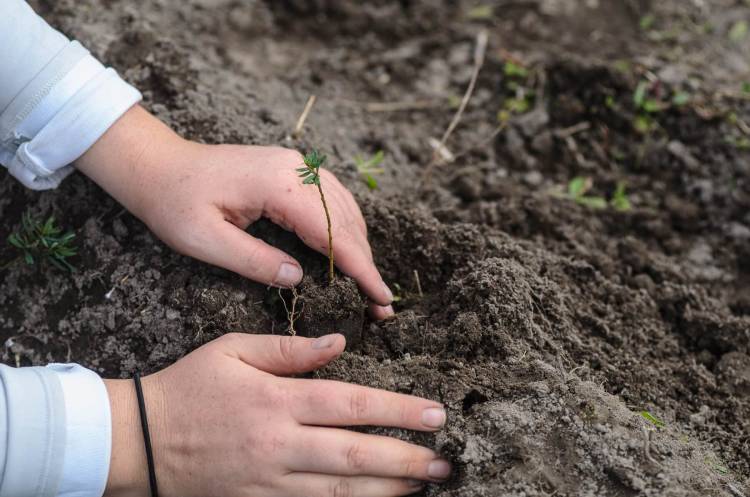
At the Two Oceans Aquarium, we take sustainability seriously, but with much of our attention turned to the issues of water use, sustainable seafood and waste reduction, one might wonder what the Aquarium does to lower its carbon footprint. Recently, we sponsored the planting of 118 trees at the Platbos indigenous forest via Greenpop to offset the carbon footprint of our fleet of outreach, delivery and technical vehicles - but what else does the Aquarium do to minimise its impact on the atmosphere?
Reducing our carbon footprint
Through constant optimisation of our systems, we've seen year-on-year reductions in our footprint. Between 2015 and 2018, we lowered our footprint by 136 tons CO2e. Here are a few of the ways we're lowering our carbon footprint throughout the company - there is still a lot of room for improvement, but we're hoping that, by being transparent, we can encourage other businesses to follow suit:
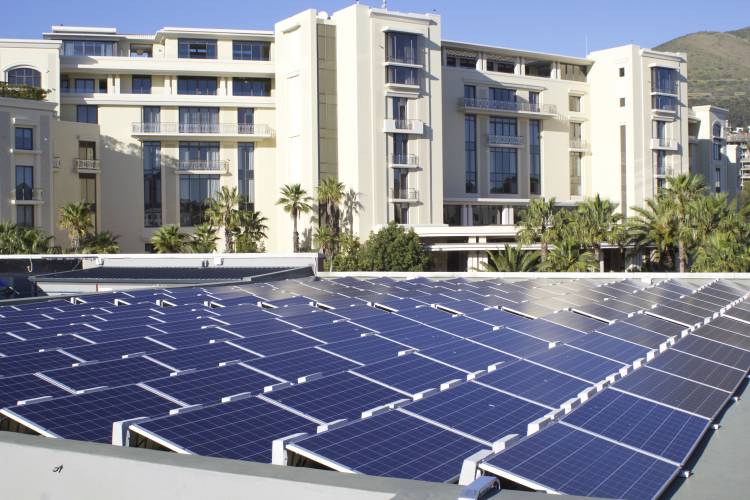
- Installation of solar panels on our roof covers 12% of our energy usage, reducing our footprint by 190 tons CO2e.
- By optimising our life support systems, and reducing our energy usage, we were able to lower our footprint by another 73 tons CO2e, even though we've expanded our facilities over the same period.
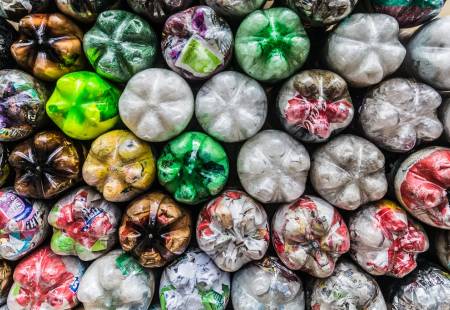
- By diverting over 80 tons of our waste from the landfill to recycling instead, we've lowered our footprint by about 5 tons CO2e.
- During the Cape Town Drought Crisis, we were able to reduce our freshwater usage significantly, resulting in a further 6 tons CO2e saving.
The Aquarium's energy consumption remains the biggest contributor to our carbon footprint, and due to the fact that we are required to move water 24 hours per day to ensure a healthy environment for the animals in our care, we have to be continuously innovative in identifying energy-saving opportunities. We have reduced the number of water pumps on-site, use variable speed drive pumps on our bigger systems, monitor energy demand and usage on most of our sub-distribution boards, have initiated an energy management programme and committee, and work with an independent consultant to assist us to reduce our energy usage. It's not an easy task, but we are up for the challenge!
Partnerships are key
The most critical partnership is with our owners, the V&A Waterfront, who supported our Solar PV plant acquisition and implementation. This formed part of the greater V&A precinct PV roll-out. Through our collaboration, the V&A has now also committed to phasing out single-use plastics within the greater V&A precinct over the next 2 to 5 years. They have also developed a large scale waste management plant where they sort all waste generated within the retail space and support our carbon footprint minimisation efforts.

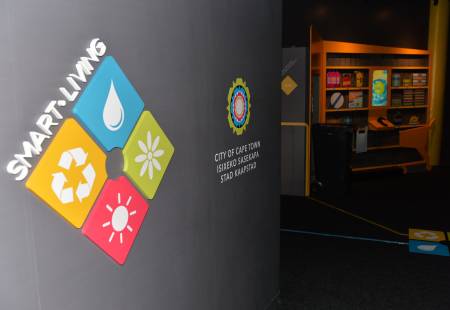
In 2015 the Two Oceans Aquarium opened the Smart Living Challenge Zone in collaboration with the City of Cape Town – the exhibit consists of four digital interactive installations, which address the themes of energy, water, waste and biodiversity. The energy exhibit consists of a 3D cityscape onto which various scenarios are projected. Through an interactive app, users learn about the different types of power generation including solar, wind, coal, hydroelectric and nuclear. Visitors are challenged to make choices around lighting, cooking and heating as well as designing an energy-efficient home. Beware of load shedding and take care of your enviro points! In the accompanying signage, visitors are encouraged to live low carbon lifestyles.
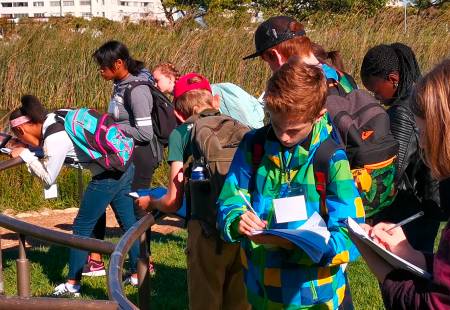
In conjunction with the Smart Living Challenge Zone, we also run education programmes which include courses for Grade 7 students as well as a Travelling Exhibit which visits schools and a mobile puppet show with the puppet storybook “I Live Smart”. The themes of energy, waste, water and biodiversity are covered in all these programmes. Since 2015 the Smart Living education programmes alone have reached close on 70 000 school children.
Some other collaborations we're part of where carbon footprints have been a key issue:
- In 2011 we signed the Responsible Tourism Cape Town Charter.
- The Aquarium was chosen by a local NGO (Project 90 x 2030) to act as a demonstration site for renewable energy.
- Eskom, the South African electricity supplier, used the Two Oceans Aquarium as a case study.
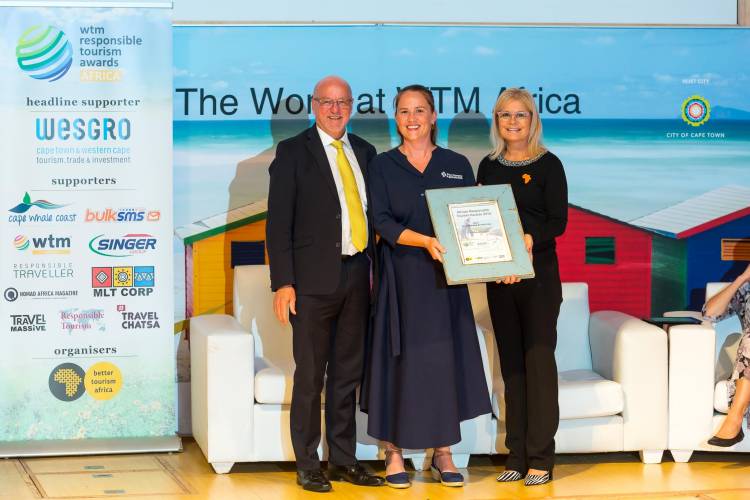
- In 2019 we won Gold for Best Responsible Attraction and Silver for Best for Global Goals Reporting in the African Responsible Tourism Awards.
- The Two Oceans Aquarium is currently a certified Diamond member of the Heritage Environmental Rating Programme. We achieved Diamond status in 2016 after maintaining Platinum status, the highest level of achievement in this internationally recognised eco-labelling programme, for five years.
The Two Oceans Aquarium still has a long way to go to achieve true carbon neutrality, but we are incredibly pleased with the start we have made and look forward to working with even more local business partners to continue implementing and improving our sustainability strategy into 2020 and beyond.
Want to see how we do things behind-the-scenes for yourself? Become an annual member and get invited to exclusive tours, or bout a group tour via our tourism portal.
_1_450_310_70_s_c1_c_t.jpg)