
Join the Two Oceans Aquarium on a journey back in time to the ancient Earth - and the living fossils that survived until today. Here are the ancient animals you can learn about at the Aquarium:
- Mudskippers (lived 140 million years ago)
- Hagfish (lived 300 million years ago)
- Coelacanths (lived 360 million years ago)
- Horseshoe crabs (lived 450 million years ago)
- Comb jellies (lived more than half a billion years ago)
And, despite the millions of years that have passed, all these animals have survived until today!
Mudskippers
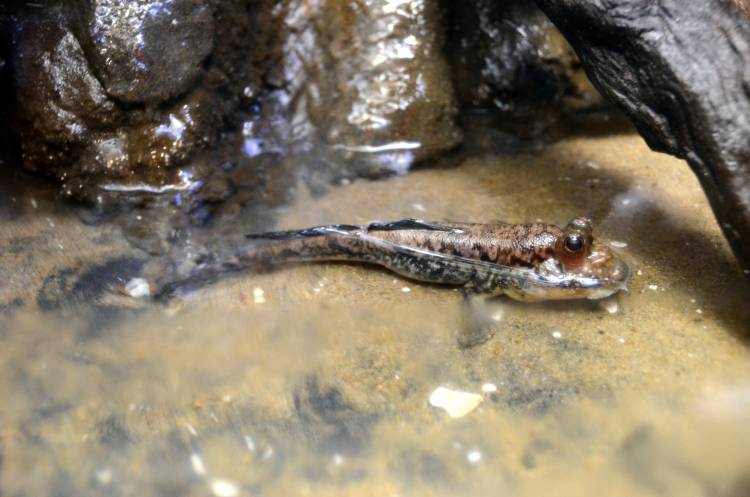
The humblest of this list's living fossils, mudskippers separated from other fish about 140 million years ago. This time period was known as the Cretaceous - the age of the dinosaurs. The world was warmer, and the earth's habitats were filled to the brim with life.
Spend some time with a real mudskipper in the Skretting Diversity Gallery.
As you probably know, the paradisic Cretaceous came to a swift end when Earth was struck by an asteroid twice the size of Table Mountain.
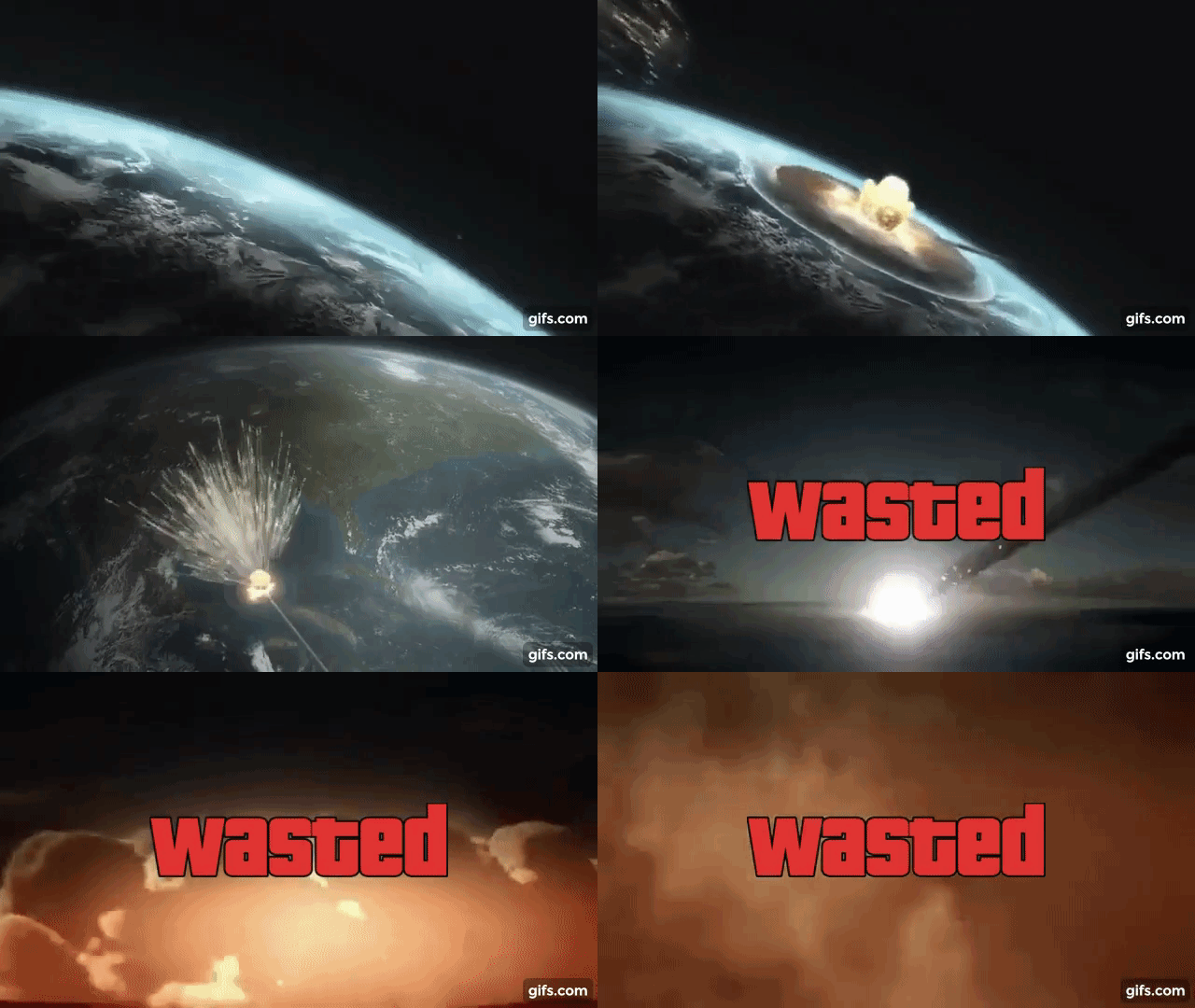
The extinctions caused by this impact left a lot of ecological niches open for the "underdogs" of the animal kingdom to exploit: Tiny mammal scavengers blossomed to fill the void left by the dinosaurs, sharks diversified to take the place of the giant, extinct sea predators, and the humble mudskipper emerged from the ocean to fill the environment on muddy coastal flats left by extinct amphibians and giant insects.
Hagfish
Hagfish are the only living animal to have no spine or jaws but still have a skull. This is because they evolved before all the other vertebrates that live today - taking their present-day form more than 300 million years ago.
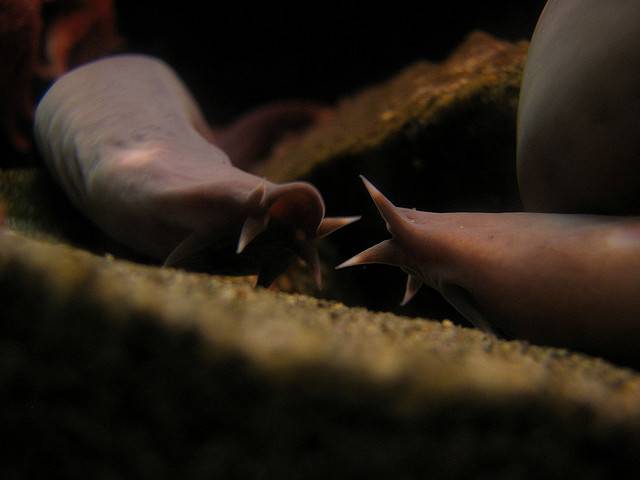
Hagfish first inhabited the oceans during a time period called the Carboniferous Rainforest Collapse, when almost all the world's tropical forests died, forming most of the coal we have today. As the world was cooling, the continents were colliding forming the one supercontinent we know you have heard of - Pangaea.
Discover a real deep ocean environment: Find six-gill hagfish, giant spider crabs and more in our Skretting Diversity Gallery.
Jawed fishes were flourishing, with the oceans being dominated by sharks - including sharks that invaded the freshwater coal swamps. This time period saw the end of the amphibians as the dominant land animal, with reptiles rising to take their place. But, hagfish survived.
Coelacanths
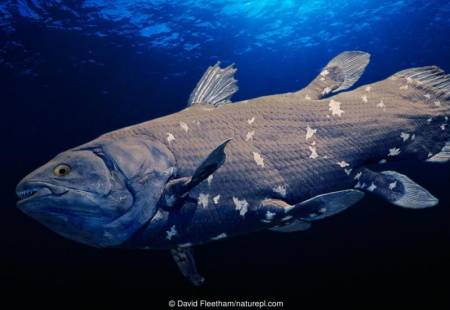
The "classic" living fossil, coelacanths have inhabited the ocean for over 360 million years. They are also an example of a "Lazarus Taxon" - and animal that we thought was extinct, only to be rediscovered after a 66 million year absence in the fossil record.
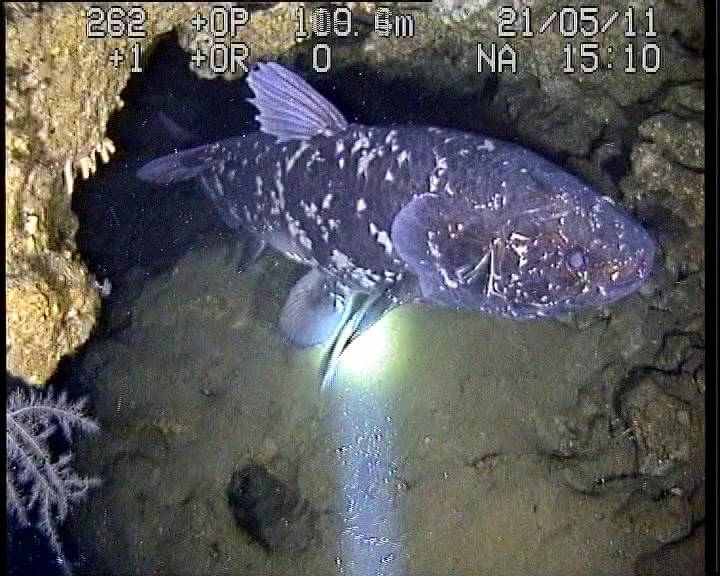
They emerged during the Devonian Period, or the "Age of Fish". Unique characteristics include a hinged joint in the skull which allows the fish to widen its mouth for large prey; an oil-filled tube, called a notochord, which serves as a backbone; thick scales common only to extinct fish; and an electrosensory rostral organ in its snout likely used to detect prey.
We've hidden an artist’s impression of a West Indian Ocean coelacanth (Latimeria chalumnae), also known as the African coelacanth, in the dry display next to the Touch Pool Exhibit, and invited kids of all ages to dig through the sand to discover the “fossilised” treasure underneath.
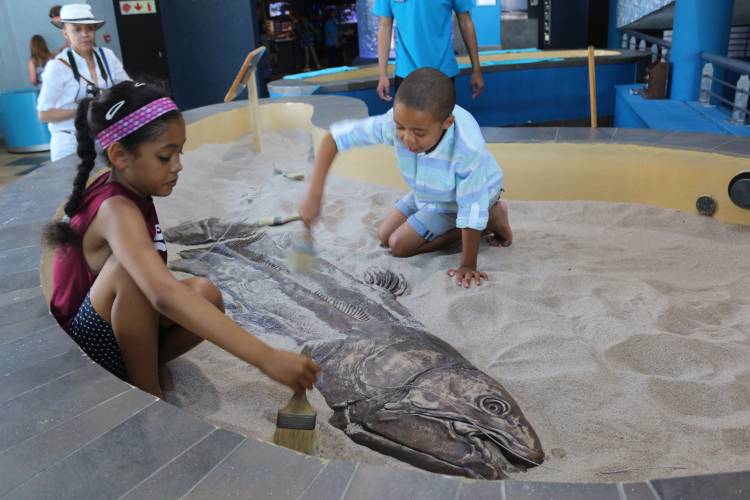
The most striking feature of this "living fossil" is its paired lobe fins that extend away from its body like legs and move in an alternating pattern - the basic structure that evolved into the four limbs of we now see on mammals, amphibians, dinosaurs and reptiles.
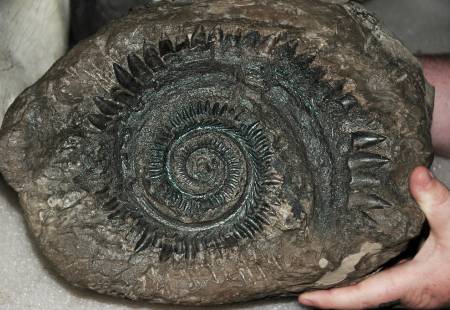
Horseshoe crabs
Horseshoe crabs have been on Earth for over 450 million years - from a time period called the Ordovician. During this time the earth was hot, regularly bombarded by meteorites and had no ice caps. Life was abundant but totally alien from what you see today - the oceans were ruled by trilobites, bivalves and nautiloids. The first corals were only beginning to evolve, and the first tiny plants and fungi were beginning to move life onto land.
A group of Atlantic horseshoe crabs just moved into the Aquarium, all the way from the USA. Be sure to check them out on your next visit.
As horseshoe crabs were just beginning to find their place in this alien world, ash clouds from huge volcanoes blocked out the sun and plunged the whole world into an ice age that killed almost half of all the earth's species. To make matters worse, the earth may have also been struck by a gamma-ray burst which destroyed the ozone layer - irradiating the survivors. Despite this chaos, horseshoe crabs survived.
Comb jellies
Of all the living fossils on this list, comb jellies, or ctenophores, are the most remarkable - they evolved before all other animals. They were the first animals that had muscles and could move at will, rather than relying on ocean currents.
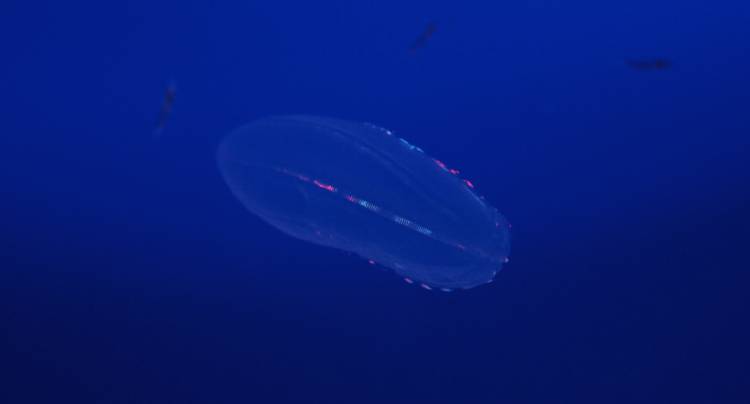
Jellies are too soft to leave nice fossils, but we know that they first roamed the oceans more than half a billion years ago. During this time, the Proterozoic, the earliest life evolved - the first plants spread throughout the ocean, single-celled bacteria formed giant colonies and, into this "empty" world, the first comb jellies emerged.
Stop by and marvel at the Beroe's comb jellies and their true jellyfish cousins in the mezmerising Jelly Hall of the I&J Ocean Exhibit.
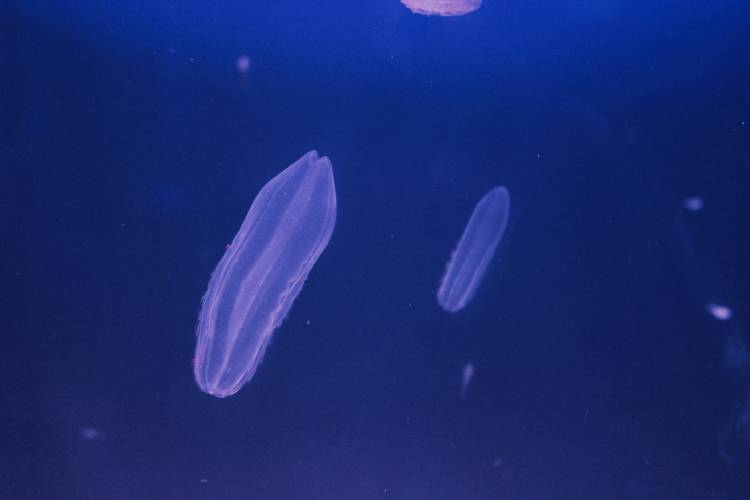
Comb jellies predated an event known as the "Cambrian Explosion", where the diversity of life greatly expanded, laying the groundwork for almost every animal, plant, bacteria and fungi we see today. Comb jellies survived this, and are still around today. Just goes to show - original is best!
What was your favourite living fossil on this list? Discover these, and many more ocean wonders at the Two Oceans Aquarium.