
The ocean holds many wonders and innovations. Things and ideas we can use to create technology that will aid us in our everyday lives, medicine, construction, design and a multitude of other applications. Through what's known as biomimicry, we can learn from the ocean...
Seahorses

Seahorses are fish, but unlike fish, have no scales. Instead, seahorses are covered in small bony plates. Remarkably, even though the seahorse’s “armor plating” is very sturdy, the fish’s tail is still very flexible and is used to grab-on to and curl around plants and other objects.
What we can learn from seahorses:
The seahorse’s sturdy, yet flexible tail design can assist us in developing more effective robotic arms for use in automated production lines.
Echinoderms:

Echinoderms are marine animals, like starfish and urchins that use their tiny tube feet to, through suction adhesion, attach themselves to rocks and other substrates.
What we can learn from echinoderms:
Effective suction adhesion can be used in marine installations where tidal conditions play a role. Also, boat moorings that make use of suction adhesion will decrease damages caused by anchors.
Mushroom corals:
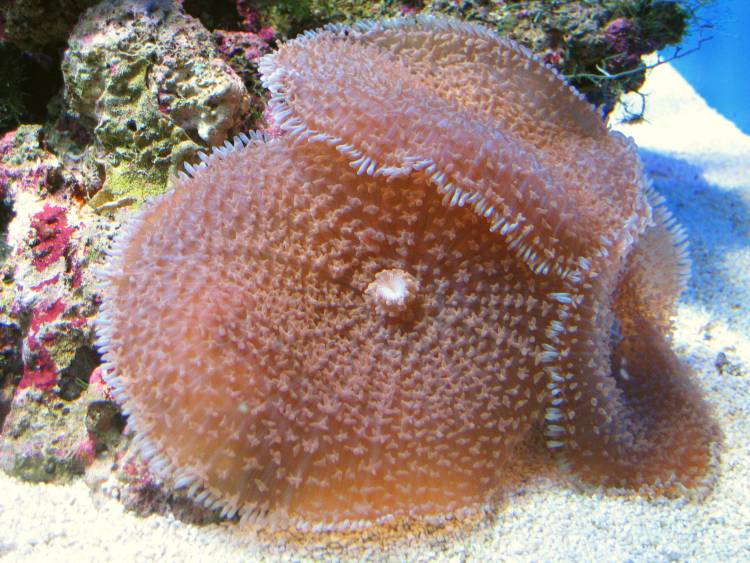
Mushroom corals are delicate colonies of animals living together to make up one large organism. To protect against the harmful rays of the sun, these corals secrete a specialised mucous. This mucous acts as a sunscreen, protecting the coral.
What we can learn from mushroom corals:
The “sunscreen mucous” that mushroom corals secrete can not only assist us with developing waterproof sunscreen for ourselves, but could also play a role in protecting the corals from being bleached.
Abalone

The abalone shell is as ‘hard as nails’. A car could drive over the shell and have no impact. It is stronger than any known ceramic, but why? Abalone build their protective shells in seawater, at low-temperatures, using locally plentiful materials.
What we can learn from abalone:
Mimicking abalone shells could revolutionize and inspire biologically safe hard materials that need to be lightweight but fracture resistant. This could be applied in building structures, composites, orthopedics, dentistry, bone repair, anti-fouling and anti-scaling agents.
Read more here Ask Nature.
Sharks:
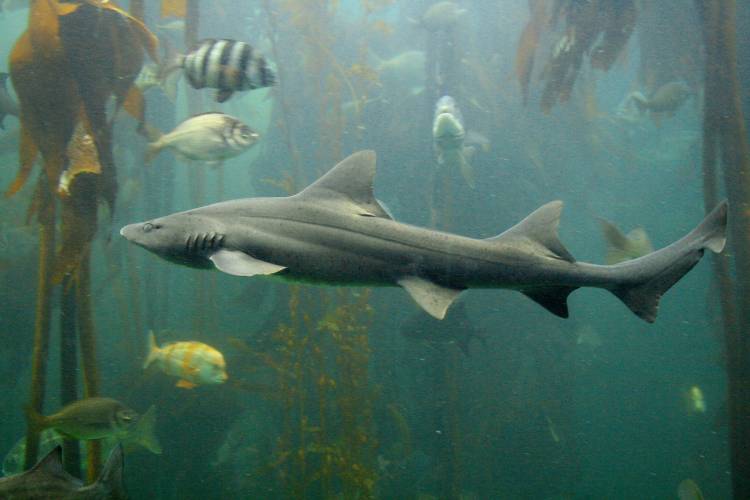
Not only are sharks’ bodies designed to enable them to swim fast and effectively, their skins also aid in this by reducing drag. The small scales (‘little skin teeth”) have longitudinal grooves which result in water moving more efficiently over the surface.
What we can learn from shark skin:
We can use the design of shark skin to improve fuel consumption in water craft, as well as to reduce friction in pipes. One swimsuit manufacturer has already used this design in a very effective swimsuit.
Sea cucumbers
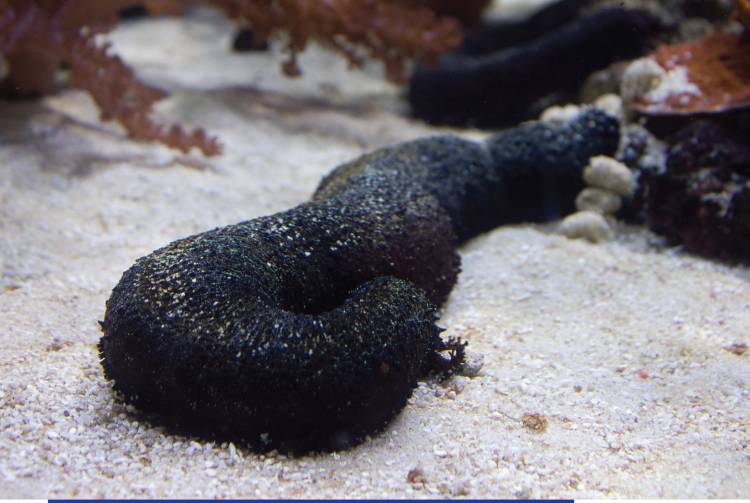
Sea cucumbers are echinoderms, which puts them in the same family as starfish.
What we can learn from sea cucumbers:
These unimposing animals have inspired some amazing scientific developments. One of these is a new type of plastic which mimics the sea cucumber’s ability to quickly change the flexibility of its skin. Future uses for this plastic include brain implants to treat Parkinson’s disease or spinal injuries, bullet-proof vests that can be “turned on and off” at will and specialist casts that can be strengthened and softened as needed.