
To some the question, “Why research whales?” might seem a rhetorical one, but the answer to that question in fact opens up the fascinating world of “cetacean fauna”, i.e. whales and dolphins.
On 12 November Dr Ken Findlay, Director of the University of Pretoria’s Mammal Research Institute (MRI) Whale Unit, will be answering this question right here at the Two Oceans Aquarium. This talk is free and open to the public. A cash bar will be available.
Talk details
Date: 12 November 2015
Time: 18h30 for 19h00
A cash bar will be available.
RSVP: Entry is free but please RSVP to members@aquarium.co.za so we can have an idea of numbers on the night.
The MRI Whale Unit - Why we do the research that we do
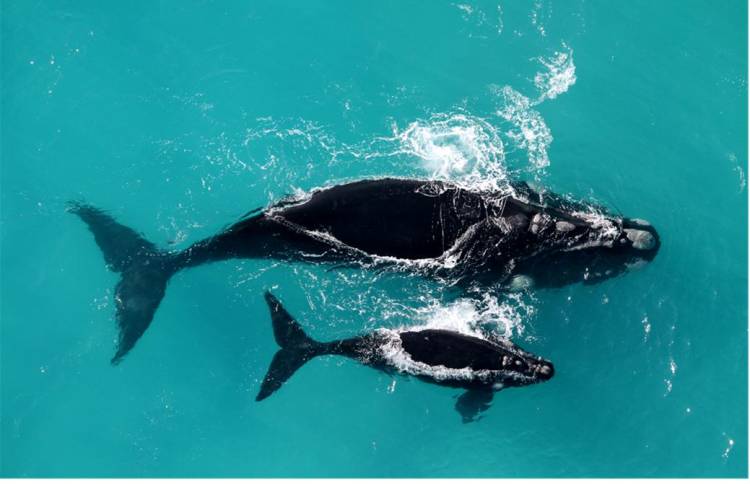
There are more than 50 resident and migratory whale and dolphin species in the Southern African sub-region and the associated Southern Ocean region, including eight species of large whale, the majority of which were subject to severe whaling pressure in the last century.
Population estimates (and consequent conservation status assessments) exist for only a few of these species, which has resulted in a critical knowledge gap. Bridging this gap remains a concern for research-based conservation-management planning and biodiversity conservation.
The research project portfolio of the University of Pretoria’s MRI Whale Unit includes inter alia work on southern right whales, humpback whales and blue whales. For example, researchers at the Whale Unit have been managing a photographic identification programme on southern right whales of the southern Cape coast that is now in its 37th year. Their humpback whale research encompasses abundance, stock structure, population recovery and seasonality patterns across the Southern African, South Atlantic and Western Indian Ocean and Arabian Sea regions. Their blue whale research work includes acoustic investigations of seasonality and distribution off the west coast of Southern Africa and Antarctica as well as abundance, seasonality and trophic ecology with a blue whale “hotspot” off the Queen Maud Land coast of Antarctica.
Dr Findlay’s talk will highlight insights gleaned from this research in the context of current ocean conservation and management issues. His talk will be accompanied by breathtaking imagery.
Meet Dr Findlay
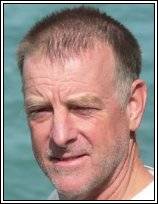
Dr Ken Findlay has been involved in whale research in the Southern African region, in the Arabian Sea region, and in the Southern Ocean since the late 1980s. He has been a member of the Scientific Committee of the International Whaling Commission (IWC) between 1997 and the present, and is a member of the IUCN Cetacean Specialist Group. He was integrally involved in the IWC’s IDCR and SOWER Antarctic survey programmes between 1991 and 2005 and in the IWC’s Comprehensive Assessment of Humpback Whales since 2000. He currently directs the Mammal Research Institute Whale Unit of the University of Pretoria.
We asked Dr Findlay a few questions ahead of his talk here on 12 November.
Two Oceans Aquarium: What is it about marine mammals, and whales specifically, that captures your professional interest and imagination?
Ken Findlay: The ability of populations to recover from extreme whaling pressure over the last 200 years so that I feel whales, which were so severely depleted 50 years ago, are going to do a lot better than many terrestrial mammals where habitat fragmentation, climate change and other anthropogenic vectors are far more severe than in the ocean. The recoveries and partial recoveries of whale populations give me some hope in ocean conservation where doom and gloom often prevail. It is important to tell the success stories.
TOA: Of all the oceans and coasts you’ve travelled through and to, which destinations stand out, and why?
KF: I have been lucky to research large whale populations over a broad area from the Antarctic to the Arabian Sea. Each region has its different highs and lows. The Southern Ocean for example can be really stunning, but it can also with its fog and high winds and seas be really miserable for research compared to the tropical coast of Mozambique.
TOA: As Director of the MRI Whale Unit and to give us an idea of scope of scientific research being conducted through the UP, can you share one or two (or more) highlights about projects that are being run are have run under you?
KF: Our flagship projects are centred on recoveries of large whale populations, including blue, humpback and southern right whales. The Whale Unit researches the ecology, population dynamics and behaviour of the cetacean fauna in the Southern African sub-continental waters and surrounding oceans. Our primary aims are to provide information that will promote cetacean conservation and the training of marine mammal research capacity. Highlights can be long-term project goals, such as seeing the humpback whale population recover on the east coast of SA, short-term projects such as satellite tracking of ocean scale movements, or immediate experiences or encounters with animals.
TOA: Of all the scientific findings and insights you’ve developed over the years researching whales, what has surprised you most?
KF: The ability of whale populations to bounce back from the low levels in response to protection from whaling. There were probably fewer than 100 southern right wales left in southern African in the 1930s. The population is now in the region of 5 000 to 6 000. Still well down on what it was before whaling, but increasing close to the maximal plausible rate.