The United Nations has declared today International Biodiversity Day, to highlight the importance of sustaining the Earth’s delicate and intricately-linked ecosystems – which are often under threat from human development.
Biodiversity is a series of relationships in the complex “web of life”. Rivers, wetlands, coastlines, mountains as well as all the life on Earth, such as plants, animals and birds are part of this web. When one part weakens or disappears, every other part in the web is affected.
Water sustains all life on Earth. It is vital for all people and ultimately determines our way of life. Providing and sustaining water for the needs of people around the world is already well recognised as a major challenge for sustainable development in most areas, in both developed and developing countries.
The ecosystems of our world, but particularly forests and wetlands, ensure that clean water is available to human communities. Water, in turn, underpins all ecosystem services. Wetlands can help reduce risks from flooding. Restoring soils can reduce erosion and pollution, and can increase water available for crops. Protected areas can assist in providing water to cities. These are but a few examples of how ecosystem management can help us solve water-related problems.
– United Nations Environment Programme
The facts
Below are some facts, figures and useful tips to to help you think about biodiversity, and the importance of protecting the Earth’s ecosystems:
- Biodiversity provides us with various “goods” (e.g. food and medicine) and “services” (e.g the absorption of carbon dioxide by plants and flood control)
- A healthy biodiversity improves our natural systems’ ability to withstand or recover from the impacts of global climate change
- Although an estimated 5- to 30-million species live on Earth, only 1.9-million species have been described, the process in which scientists identify specimens they have collected
- Over 50% of the world’s plant species and 42% of all terrestrial vertebrate species are endemic, and do not occur anywhere else
- Tropical regions contain 50-90% of Earth’s plant and animal species
- 15 589 species are currently threatened with extinction – 1 in 4 mammals and 1 in 8 birds. This number is increasing as habitats are continually destroyed
- More than 300 critically endangered, 237 endangered and 267 vulnerable animal species have no legal protection in any part of their habitats
- In the last several decades of the 20th century, about 20% of the world’s coral reefs were lost and an additional 20% were degraded due to warmer water temperatures, and water pollution and pollutants
- Habitat change, over-exploitation, invasive alien species, pollution and climate change are the most important direct drivers of change in ecosystems
- Biodiversity has declined by more than a quarter in the past 35 years
- An estimated 50-80% of all life on Earth is found under the ocean surface
- By the year 2100, without significant changes, more than half of the world’s marine species may stand on the brink of extinction
“Ironically, it is not the big and beautiful creatures but the ugly and less dramatic ones we need the most.”
– Douglas Adams.
Experience the two oceans
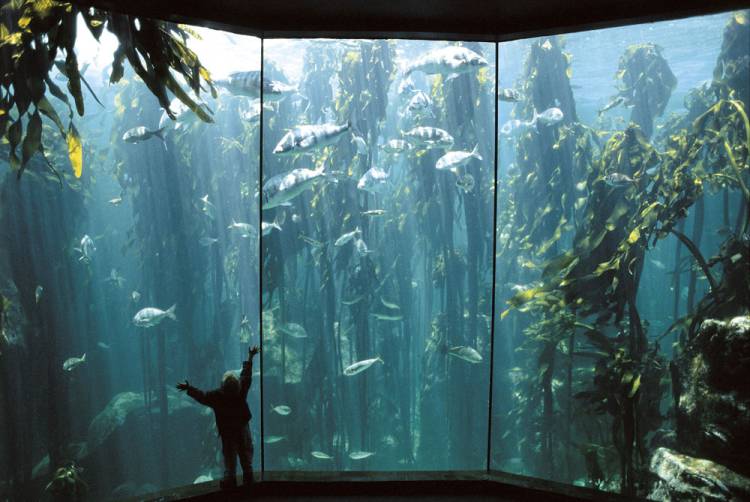
Come through to the Two Oceans Aquarium to experience the two oceans for yourself. Our species and exhibits are organised according to the Indian and Atlantic oceans, plus we have some above-water friends, too. Then sit back and admire the waving fronds in the Ocean Basket Kelp Forest Exhibit – one of only three exhibits of its kind in the world – and the rays, sharks and turtles in the I&J Predator Exhibit.
Tickets are discounted online – click here to buy now.
Stay in touch: for daily Aquarium updates, follow us on Twitter (@2OceansAquarium) and become a fan on Facebook.