
Today is International Plastic Bag Free Day, and we are running a “single-use plastic bags for a reusable bag” exchange – the first 40 people to each bring us 20 single-use plastic bags will receive one reusable bag in exchange (today only).
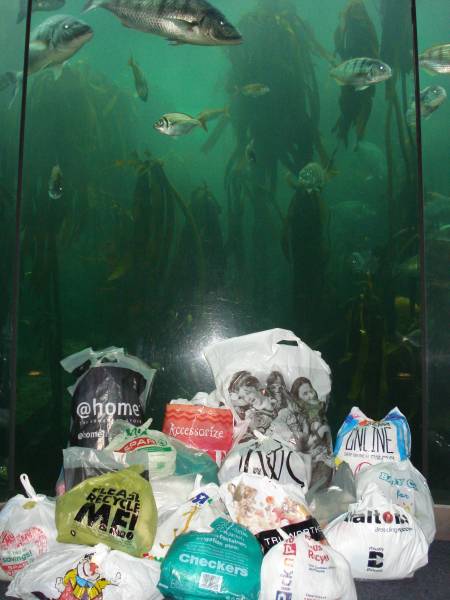
If you committed last year to no longer buying plastic shopping bags (PSBs) in celebration of International Plastic Bag Free Day 2014, then you have already saved literally thousands of PSBs from ending up in landfill during the past year and have made a positive contribution to the environment!
Well done if you took this easy action! And if you did not, no worries – 3 July is here to remind you yet again that you can make a difference in your world, one bag at a time.
We are confident that all of the 58 reusable, fabric bags handed out during last year’s event at the Two Oceans Aquarium are still in circulation and doing the job of reducing plastic bag consumption. The next time you are offered a plastic shopping bag, you can smile and politely say “no, thanks” and produce your own reusable bag. This simple, very significant action will decrease the 8-billion plastic shopping bags used by South African shoppers annually. Committing to not buying PSBs does come with a serious warning: “This could lead to greater consciousness regarding your waste stream in general!”
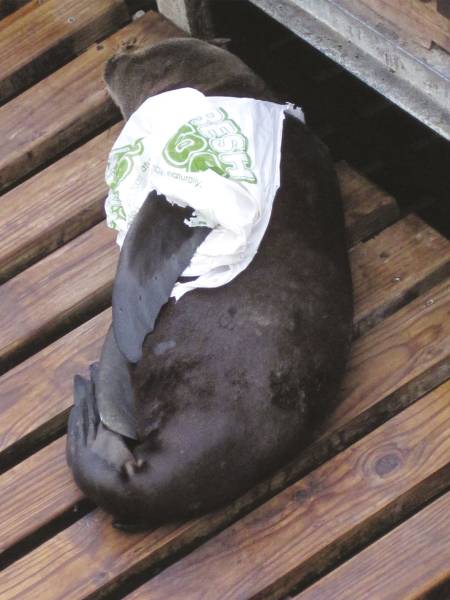

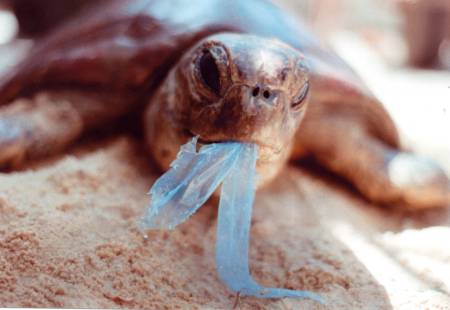
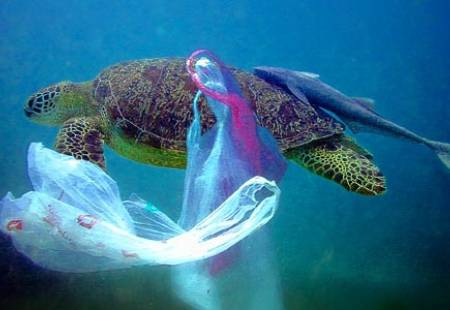
The photos above are just two examples of the potential threats that plastic shopping bags, drifting in the ocean, have on wildlife. All animals are potentially affected by entanglement in marine debris, whether that be fishing line, “loom bands”, bottle neck packaging, elastic bands, hair bands, hula hoops, or box band strapping.
Research shows that the average lifespan of a PSB is only 20 minutes and that 96% of all PSBs end up in landfill. This could be due to the fact that many people reuse them as bin liners. Please do not do this. Rather recycle as much of your refuse (plastic, paper, tins, glass and food waste) as possible at your local recycle station, and then look at alternative ways to line your small kitchen bin (old newspaper works a charm).
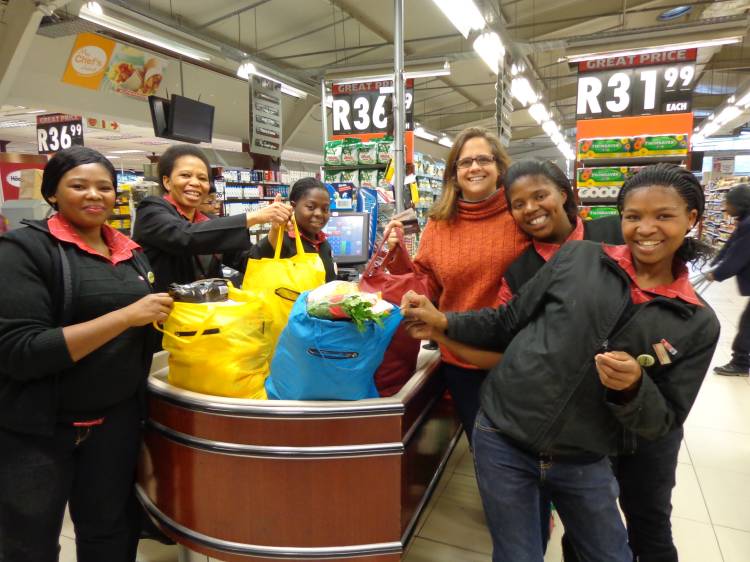
Buyisa-e-Bag was created in 2004 to put the bag levy (then 3c per bag) to good use for the benefit of the environment. Due to mismanagement, this group was dissolved in 2011, and the levy (by then 4c) continued to flow into an endless governmental black hole. This levy was increased to 6c in 2013 and, in a lucrative decade, 2004-2014, government confirms that R1.2-billion was collected and yet only R200-million was actually spent on environmental issues. At a cost of approximately 50c per bag it stands to reason that a family of four could possibly be spending well over R200 per year on the purchase of plastic bags. Investing in affordable, durable and stylish reusable bags does not only make economic sense, but also has a positive impact on the environment.
Banning of plastic shopping bags is a current world movement. The most incredible example perhaps is that of Rwanda, which successfully banned plastic shopping bags from entering their country. To this day you will not find a plastic bag wiggling its way into the supermarkets. Locally, there is growing support from national retailers, particularly Spar, Woolworths and Pick ‘n Pay.
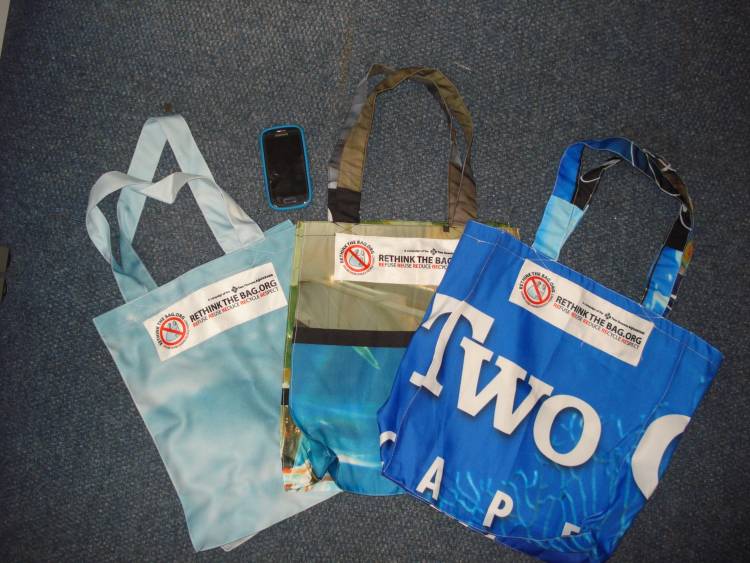
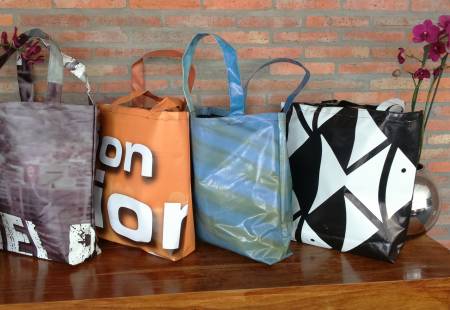
Rethink the Bag encourages the use of plastic bag alternatives that are crafted by local community projects/companies, using either recycled or sustainable materials and thus creating employment and diverting unnecessary waste from landfill. So it’s win, win, win for everyone! Providing the materials are in good condition, a company called Umoja can make quality shopping bags from your old banners, such as these Aquarium bags. Hosting a conference or reimagining school bags for your pupils? It’s time to try something different (contact Liliane at Umoja on 076 461 7036).
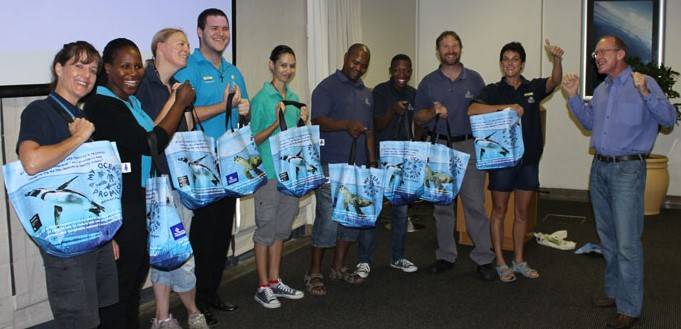
It has been more than four years since the staff at the Aquarium committed to no longer bringing plastic shopping bags into the workplace. With a staff count of over 100 people, we've calculated that over 95 000 plastic bags have been prevented from entering circulation in this time.
If we can do it, anyone can!
Make this your easy pledge to the environment and simply say no to plastic shopping bags. Sign the petition here.
Read more about Rethink the Bag and the Aquarium's other environmental campaigns.