On the third day one can see that the YBs are already in the studying zone as soon as they step into the Aquarium.
We start at 8.30am, but you will find most of them already sitting in front of different exhibits at 8am, noses buried in their study books. This morning is a nerve-wracking one, as they all need to write two assessments on the content learned on the second day.
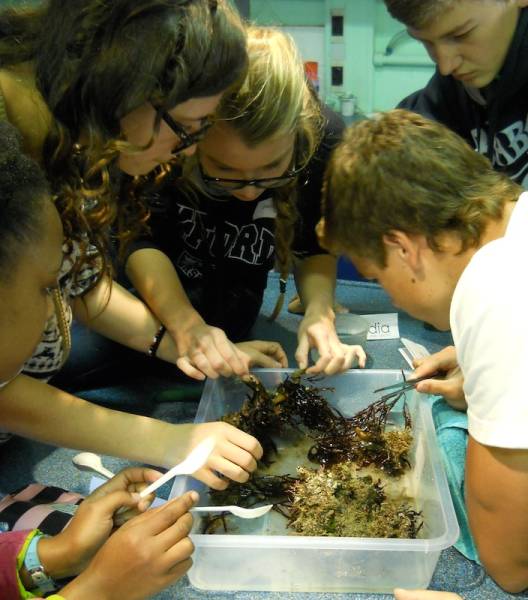
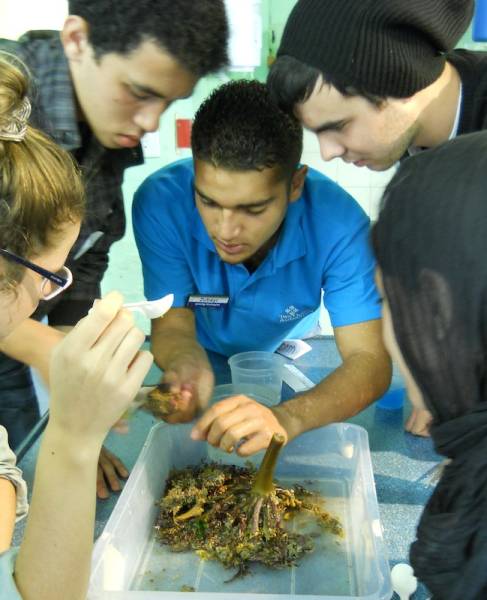
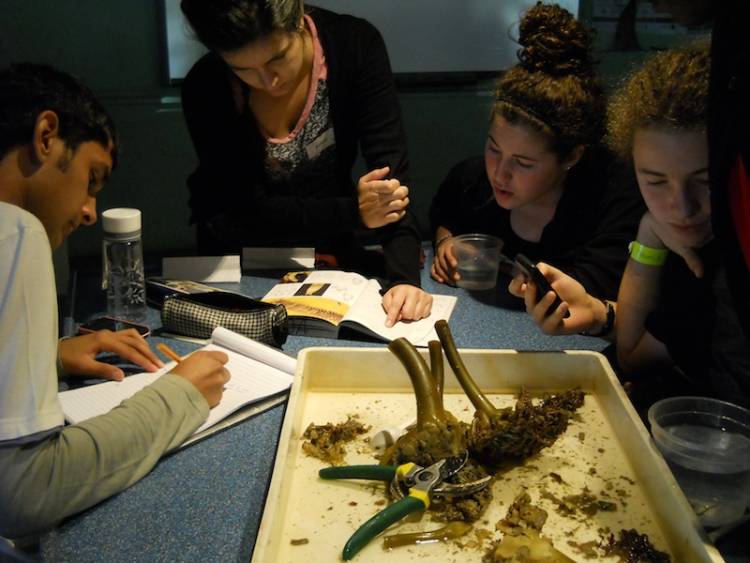
Once done with the assessments, a favourite activity is up next: kelp holdfast dissection. Each group gets a kelp holdfast to look through, for various small marine invertebrates such as worms and arthropods.
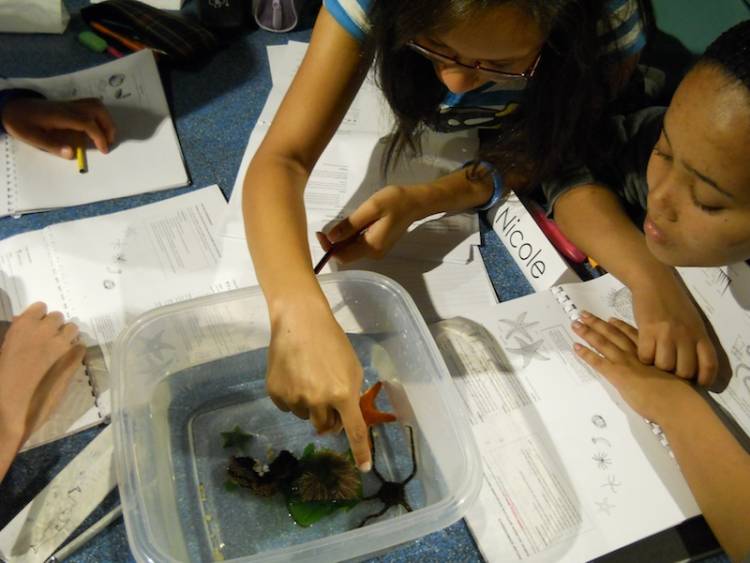
After being introduced to the group of athropoda, which includes crabs and rock lobsters, Xavier continues with his favourite animal group: the echinoderms. Echinodermata literally means “spiky skin”. Echinoderms include favourites such as starfish, sea urchins and sea cucumbers. They are one of the most diverse creatures in the sea, and have no terrestrial varieties.
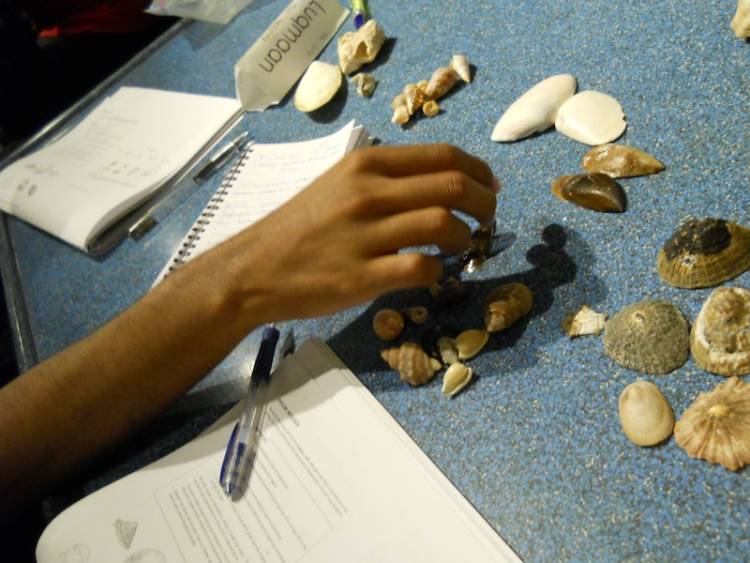
The next animal group is Mollusca, which include all sea snails, mussels, octopus and cuttlefish.
The last animals covered for the day are ascidians: a very strange group that, during their embryonic stage, have similar characteristics to backboned animals, making these very odd, lump-like animals very distant relatives of us. Another amazing thing about these animals is that they are the only animals that are able to produce cellulose.
Day 4 is looming: only one more day until our weekend camp in Kleinmond, something to which all of the YBs, as well as the staff, are looking forward.
Stay in touch: for daily Aquarium updates, follow us on Twitter (@2OceansAquarium) and become a fan on Facebook.