
At the Two Oceans Aquarium, we are home to many incredible creatures who continue to surprise and fascinate us. Here are three fun facts about our friends we bet you didn’t know.
Loggerhead turtle
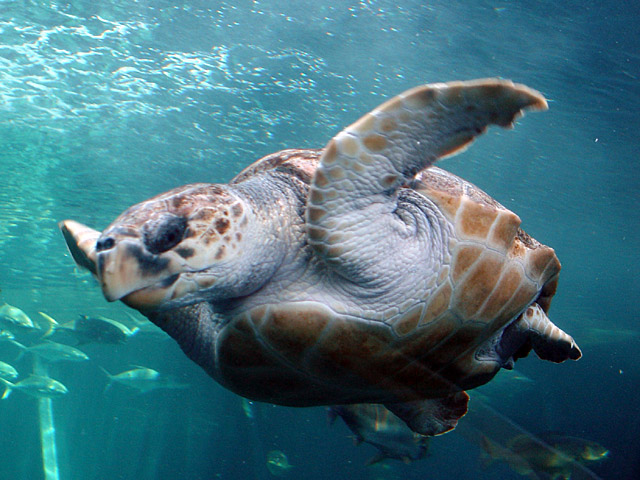
Loggerhead turtles nest regularly on the Southern African coastline, laying several hundreds of eggs. Females come ashore, to the very beaches on which they were born, to lay four to five clutches at 15-day intervals, but may only return to lay eggs every second or third year. Nesting occurs from the end of October to January and incubation takes about two months. Hatchlings emerge between January and mid-April, but only at night, as the hot sands of daytime prevent them from digging their way out. The baby turtle will wait for cool surface sand before emerging and making a dash for the sea.
The Knysna seahorse
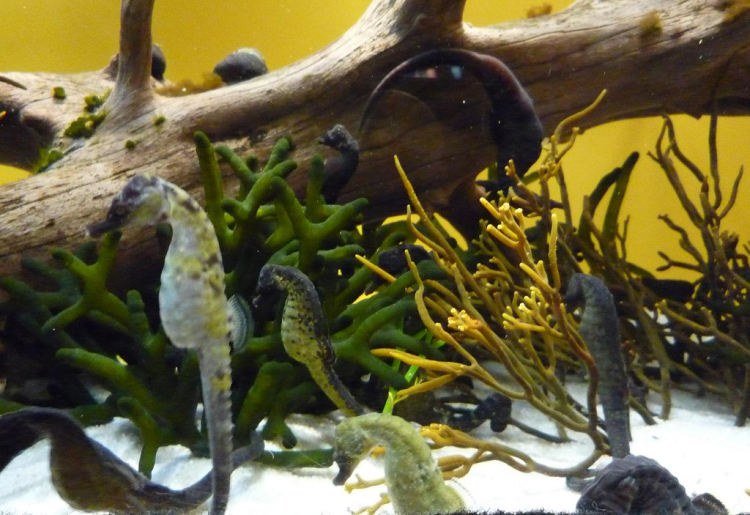
Seahorses are actually classified as fish despite their appearance of a mix-and-match body – a horse’s head, a monkey’s tail, chameleon-like eyes and insect-like body armour – because they have a backbone, gills, fins, and a swim bladder for buoyancy. It is estimated that they are over 40-million years old and have survived the centuries with very few changes to their body structure or organ functions. Seahorses are the only fish species where the male falls pregnant, incubating between 5 and 200 young in its pouch for up to three weeks. The Knysna seahorse, which lives in only a few southern Cape estuaries, is listed as the most endangered of its kind in all the world!
Hagfish
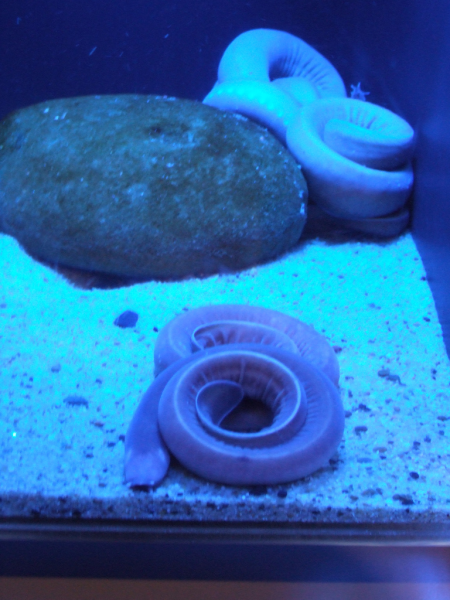
The hagfish might sound like something fit for the aSCAREium, described by Science Daily as “an eyeless, snot-covered, worm-like scavenger of the deep,” but these ancient vertebrates, the oldest alive, are incredible for a number of reasons. At 500-million years old, they predate even dinosaurs! They’re also very difficult to study due to the fact that they live on the depths of the ocean floor, and their reproductive functioning has baffled scientists for years. Luckily, Stacia Sower, a professor of biochemistry at the University of New Hampshire, and colleagues at two Japanese universities have identified the first reproductive hormone of the hagfish – a gonadatropin. Their research and findings on hagfish reproduction will hopefully go a long way toward protecting this ancient creature from overfishing. Hagfish are caught for their durable skins, which go into the making of belts and wallets, passed off as “eel” skins.
Come say hello to a hagfish, salute our Knysna seahorse, and travel with our turtle at the I&J Predator Exhibit, all at the Two Oceans Aquarium. We promise time with our friends is always fun and fascinating, whether you’re three or thirty-three.