See also: Diary of a diver: Book smarts
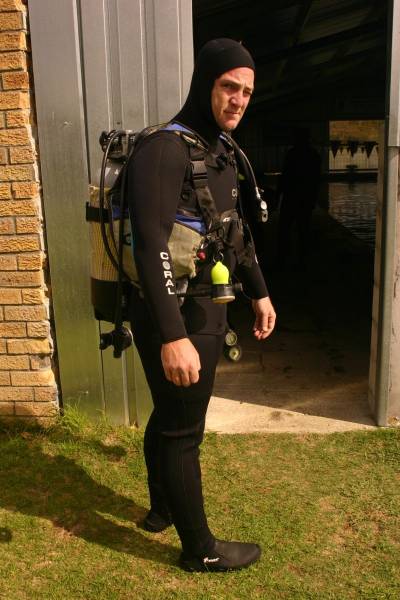
So what’s the next step for a prospective PADI Open Water scuba diver? The motley crew – Brendan, Franzisca and I – awoke early on a Saturday morning and headed out to Wynberg Military Base in Cape Town where Iain Robertson would introduce us to underwater shenanigans and the equipment that makes these shenanigans possible in the first place.
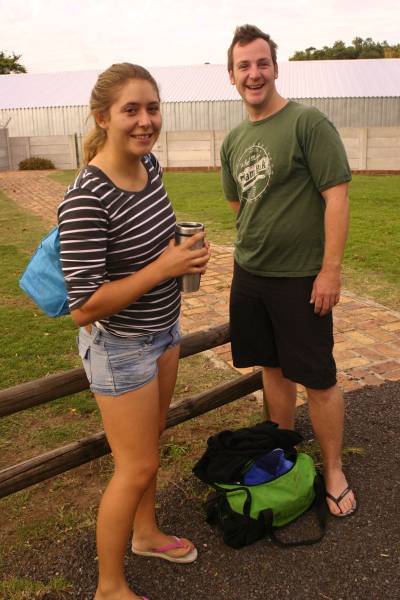
The first thing we had to do was prove that we could swim. “Easy!” I thought. “I can so swim. Only 200m in a heated pool – what’s the problem?”
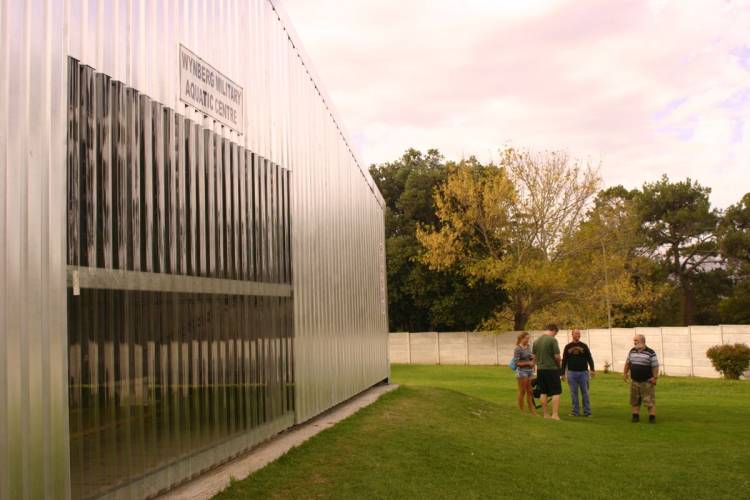
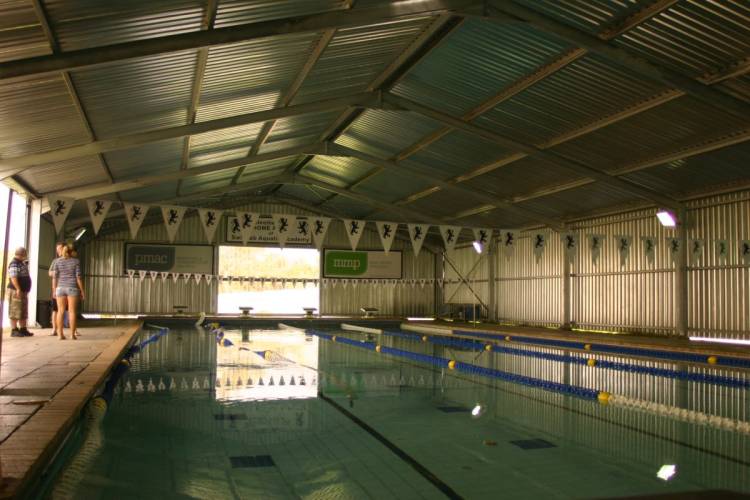
Well… Without revealing too much, let’s just say I completed six of the eight laps doing backstroke, and leave it at that.
With that little detail out of the way, we were ready to touch the self-contained underwater breathing apparatus for the first time. That’s what scuba stands for, by the way.
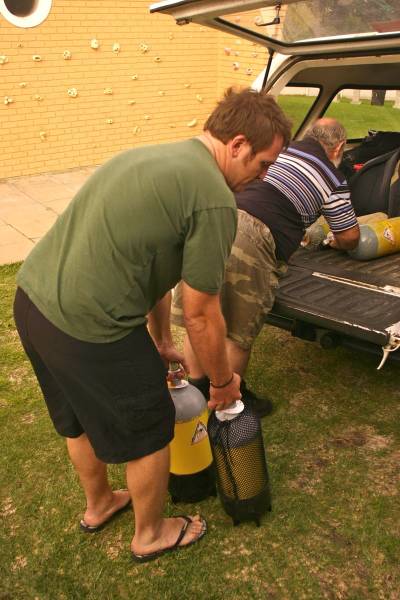
The scuba gear is heavy. While you don’t have to be super-fit to be a diver, I do think I’ll be working on my core strength in the weeks to come so that I can pick up a cylinder without groaning. My back and shoulders also need some work!
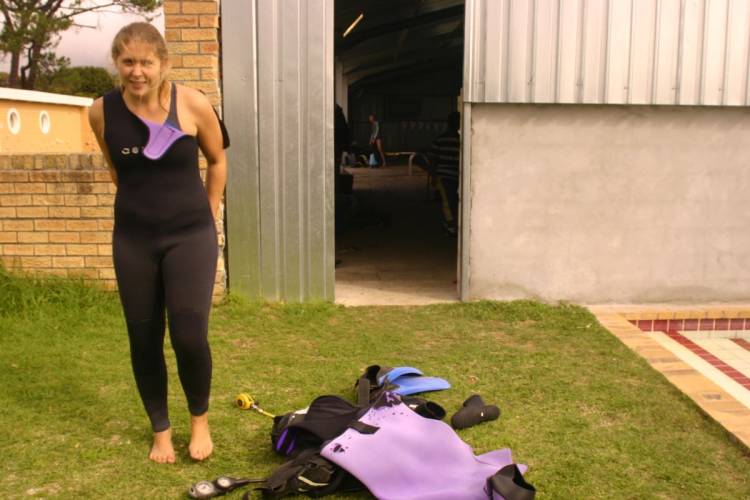
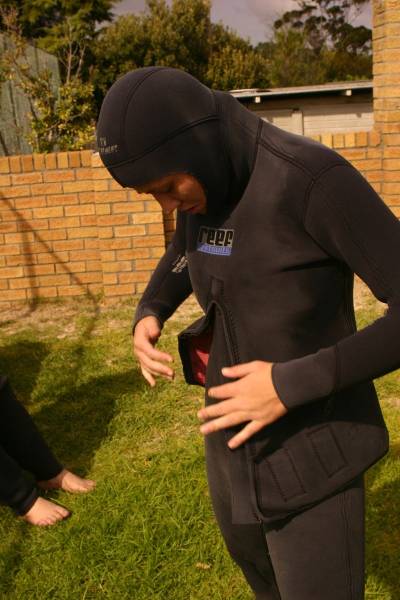
The donning of the wetsuits elicits giggles, as expected; they fit very tight in odd places but have to be tight. The insulating neoprene material (a synthetic rubber) lets in as little water as possible, which is then warmed by your body heat when you’re underwater. The material also makes you more buoyant in the water …
Ah, buoyancy. Putting the theory of buoyancy – your ability to float in water – into practice posed unexpected challenges. Buoyancy is important because it controls where you are in the water and good buoyancy allows you to enjoy the underwater world without dragging across the ocean floor and harming sea life.
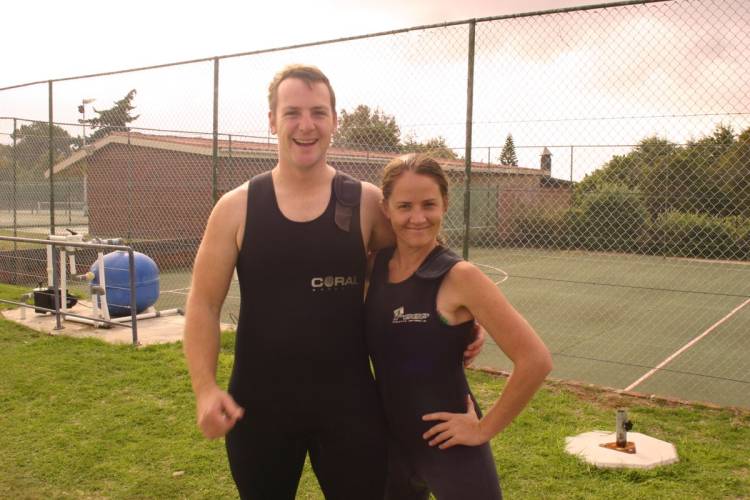
But it sounds a lot easier than it is! Up and down we floated in the pool, testing inflation and deflation on the buoyancy control device (BCD). I’ll admit, it was pretty awkward. Especially when Iain Robertson, our instructor, did a headstand for minutes – without putting his head on the floor of the pool! He just hung there like an upside down genie; Iain’s buoyancy control is an inspiration.
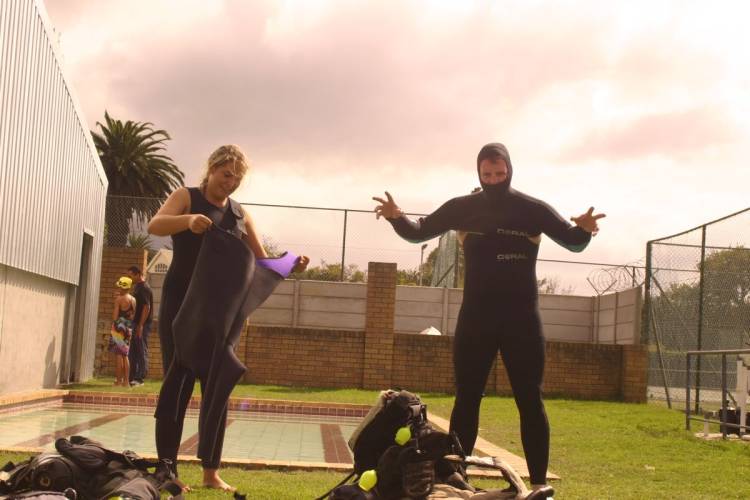
Surface swims, alternate air source breathing, the buddy system, emergency procedures, underwater mask clearing (tricky!)… We put it all into action over two days in the swimming pool.
Next we’ll go back to the books before taking to the ocean. So far, so good!
Learn to dive with Iain and the Two Oceans Aquarium
Iain’s Scuba School operates from the Two Oceans Aquarium. What’s more, you get to dive in the I&J Predator Exhibit when you’re done! (As do we.)
Already qualified? Take the plunge with sharks – no cage required.
Stay in touch: For daily Aquarium updates, follow us on Twitter (@2OceansAquarium) and become a fan on Facebook.