
No matter what we do or how hard we try to avoid plastic items and packaging, it's inevitable that we’ll receive various plastic items in the form of gifts or perhaps in the mail. These all threaten the environment. These entanglement hazards, like loops, lengthy cords and packaging, end up ensnaring and killing many of our marine animals. Many seals, for example, become trapped in the plastic cord that ends up cutting into their skin and ultimately strangling them.
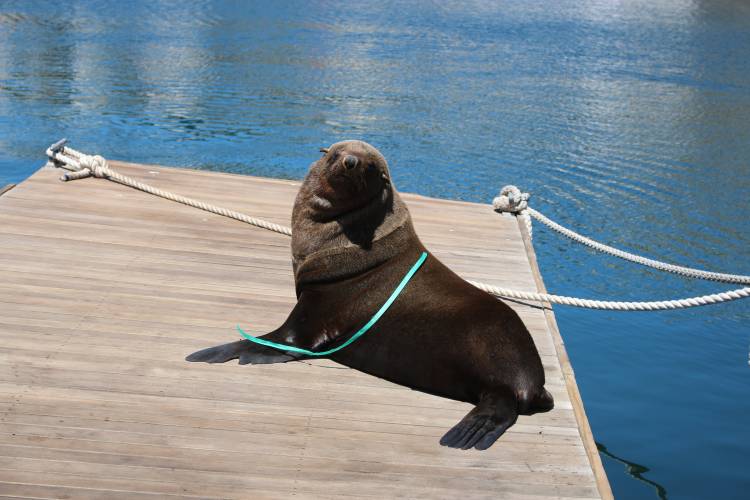
We know that Bob is returning home soon, so this needs to change – for him and for all other marine life!
Many marine species are known to be at risk of entanglement by plastic pollution, which results in millions of animal deaths each year. If we start looking at numbers, all seven species of endangered turtles, 114 types of fish, 54% of all whales, and 56% of all seabird species are being entangled in and killed by our plastic. This is excluding more obscure animals like horseshoe crabs and duck-billed platypuses who also suffer because of plastic cord and packaging.
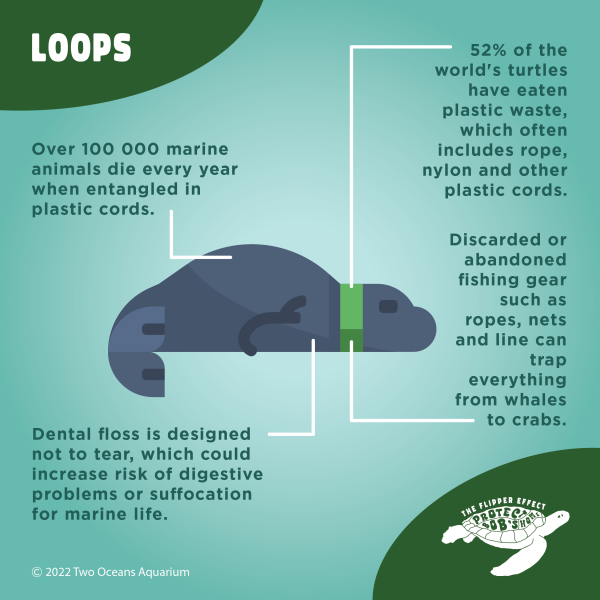
Sources: 1) Over 100 000 marine animals die every year when entangled in plastic cords. 2) Danger of dental floss 3) 52% of the world's turtles have eaten plastic waste. 4) Harm caused by discarded or abandoned fishing gear.
We understand and acknowledge that a lot of the time, these plastic items cannot be refused as they are often left on your doorstep, in your mailbox, or given to you as gifts. So, in this case, the solution would be to “Cut a Loop” – snip open plastic loops, like the rings from milk bottle lids or handles of shopping bags. Also, cut long lengths of material box bands, old underwear elastics, ribbons, synthetic cord, and even packaging tape into smaller pieces before discarding of them. Even when your waste is correctly disposed of, these lightweight items tend to easily blow out of garbage bins and landfills.
The Flipper Effect: Protect Bob's Home
_2_750_481.png)
While Bob is being readied for release after eight years of difficult rehabilitation, we realise we won't be able to protect him anymore. The reality is simple: The ocean is not safe for turtles. Together we can change that. Bob will be facing many of the same human-caused threats that resulted in his stranding in the first place, and which are the cause of harm to the overwhelming majority of distressed sea turtles
In order to create an ocean that is safe for Bob and all other creatures that call it home, we must continuously take small actions towards protecting it - these small actions compound into big change. This is #TheFlipperEffect!