
Plastic Free July is a time during which we look at how we can reduce our dependence on plastic, and through making better choices around the use of the material, have a positive impact on the environment. But first, we have to understand what plastic is, where it came from, where it is going, and what is our role in stopping the flow of plastic into the environment?
What is plastic?

Plastic is a human-made product that has polymers as its main building blocks. A polymer (natural or synthetic) is a substance that is constructed out of large, repeating molecules. Plastics are manufactured from oil, natural gas and in some cases plant materials. These materials are refined into ethane and propane. The ethane and propane are heat-treated to turn them into monomers (ethylene and propylene). The monomers are combined with a catalyst to create a polymer “fluff”. This foamy fluff is placed into an extruder (a machine that moulds materials) in which it is exposed to high heat, melted, and formed into a plastic pipe. The pipe is cooled and cut into small pellets, known as nurdles. These nurdles are the building blocks of all plastic products. They are melted, coloured, and then moulded into all the plastic items we use every day.
What is plastic’s history?
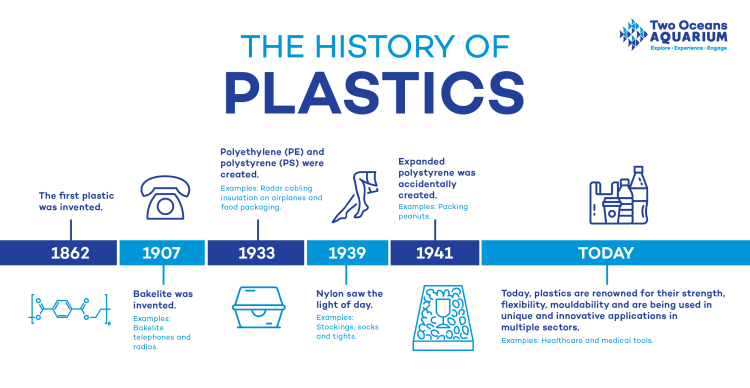
We now jump from a chemistry lesson, straight into a history lesson. Plastic is not as modern as one might think. The first plastic was invented in 1862 (or 1856, depending on the source) by Alexander Parkes. “Parkesine” as it was known, was discovered when Mr Parkes was trying to find a synthetic substitute for shellac which, at that stage, was used for waterproofing. Parkesine was a mixture of nitrocellulose (a flammable nitric ester of cotton or wood cellulose), alcohols and camphor. This mixture created a substance “as hard as horn, but as flexible as leather, capable of being cast or stamped, painted, dyed or carved.”
Did you know: Natural shellac is a resin secreted by the female lac bug? Particularly those in India and Thailand. Shellac is sold either as dry flakes or in liquid form and is used as food glaze and wood finish.
In 1907, Bakelite was invented by Leo Hendrik Baekeland. Bakelite combined phenol and formaldehyde, making it the first truly synthetic polymer. It replaced the use of shellac and hard (natural) rubber in the electricity industry as well as in home appliances.

But it was the Second World War that really created the biggest need, and pushes for innovation around plastics. In 1933, polyethylene was created, followed by polystyrene. Nylon saw the light of day in 1939, in the form of Du Pont’s “silk” hosiery, which was promptly rationed due to the US Government’s need to use this strong material in parachutes and rope during the war. And in 1941, expanded polystyrene was accidentally created. This new material was immediately put to use as thermal insulators and shock absorbers. From here plastics just took off and quickly became a staple in households, industries, and everyday life.
Did you know: Kevlar (yes, it is a type of plastic) was first introduced in 1965 as a replacement for the steel in motor racing tyres. Today, Hollywood keeps this material top of mind when referring to bulletproof vests.
How fantastic is plastic really?
Let’s just be completely honest – plastic is everywhere. It has permeated our lives in every single way imaginable. From the food we eat, the clothes we wear, the homes we live in, the work we do, the lifesaving equipment we rely on, and the adventures we go on – everything has plastic connected to it. But these very tangible and recognisable plastic items are not the only way that we have plastic in our lives. Looking at the super small, studies have found microscopic plastic in drinking water, our food, and even our blood.
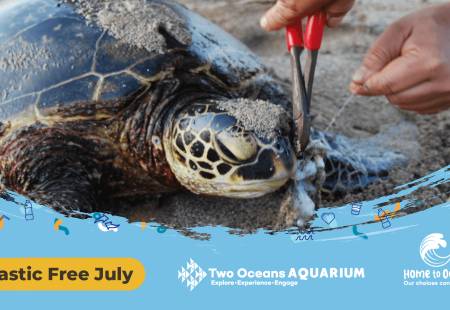
We’ve all heard about animals ingesting plastic. Who can forget the horrific video of the straw being pulled from a turtle’s nose, or the whale that died and was found with nearly 40kg of plastic in its stomach? Closer to home, we have of course all the turtles in the Two Oceans Aquarium Foundation’s turtle rehabilitation programme that have ingested plastic. There’s Bob that came to us in 2014 and ended up excreting a whole bunch of soft plastic, including pieces of balloons. Or all the little hatchlings that constantly pass plastic during their rehabilitation]. We are faced with these realities on a daily basis.
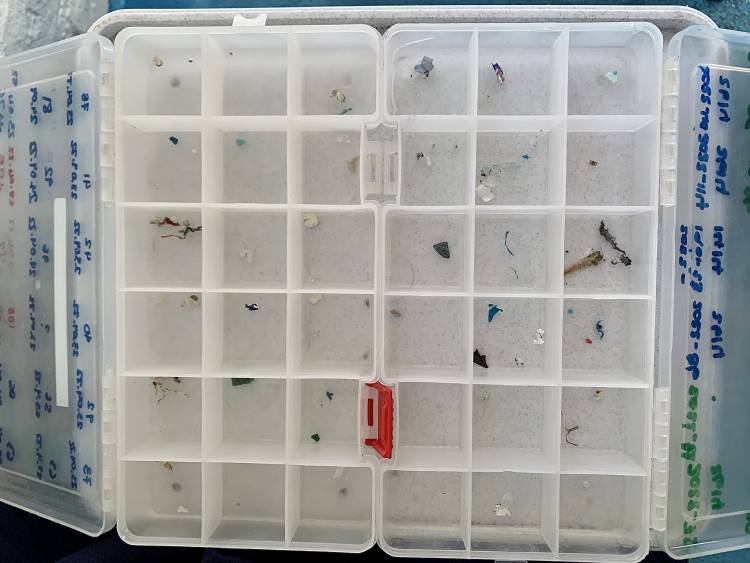
What proactive steps can we take to stop the flow of plastic into the ocean and the constant degradation of the natural environment by this human-made material? Well, we need to rehabilitate our relationship with the environment, and with plastic. As with any rehabilitation programme, we first have to acknowledge that we have a problem. A BIG problem. One that isn’t going to go away overnight. A problem that we will have to work on, not just as individuals, but also as communities, at the political and economic levels, as countries and as citizens of Earth.
There are big numbers associated with the amount of plastic in the ocean. Ocean Conservancy tells us that every year nearly 11 million metric tonnes of plastic enter the ocean. That is on top of the 200 million metric tonnes that are already found in the marine environment. These huge numbers are incredibly difficult for us to wrap our minds around, but we have to at least try, otherwise, we will never be able to tackle the problem.
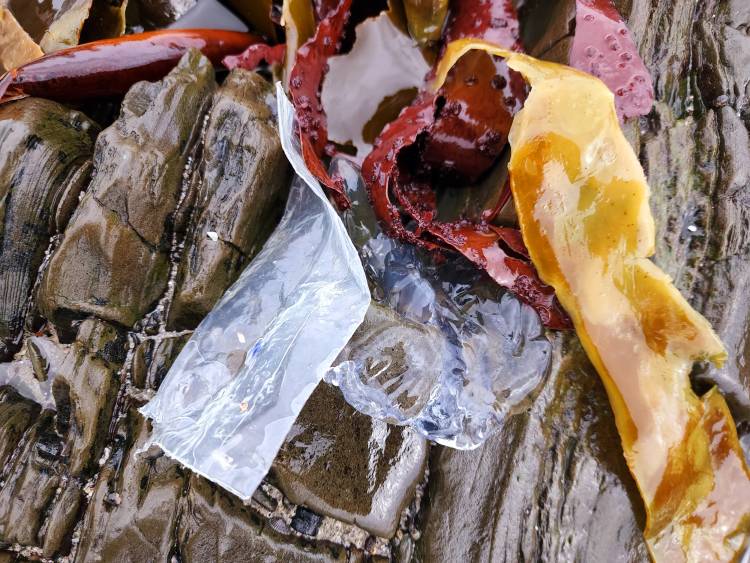
Did you know: The Titanic weighed an astonishing 23,5 metric tonnes. That is one heavy ship, but not nearly as heavy as the amount of plastic entering the marine environment every year!
For us to stop these big numbers from growing, we have to start by turning the spotlight onto our everyday lives. What are we doing to contribute to, or halt, the flow of plastic into the environment? How are we relooking our relationship with plastic? Are we showing the environment enough respect? All these questions are hard-hitting and, in some cases, perhaps difficult to answer. But we have to find answers that we, as individuals, are comfortable with. This might not be an easy task, and perhaps, when we find these answers, the reality might sit uncomfortably with us. But it is time that we accept these inconveniences and discomforts in our lives.
_653_600_70.jpg)
Let’s get practical!
After the introspection, you have decided to make a positive difference. Now what? Well, let’s start with something simple. Look around your home, office, car, etc. What easy changes can you make to ensure that your plastic contribution to the environment is reduced?
Replace single-use plastics with reusables.
- Replace those takeaway coffee cups with a keep-cup. Keep one in your car so that you can always be sure to have one on hand. Some coffee shops will even give you a discount if you bring your own cup.
- Replace all of those plastic shopping bags that you keep buying, with reusable bags. Keep them in your car, in your handbag, or get at least one that can clip onto your keys so that you are never without a bag.
- Sip with your lips. Say no to straws.
- When shopping, look for items in glass packaging, or at the very least, in recyclable packaging. Be a packaging connoisseur and choose wisely with your wallet. Where you spend your money will indicate to manufacturers what to produce. It is simply all about demand dictating supply. The more demand there is for reusable items, the more supply there will be.
Be responsible.
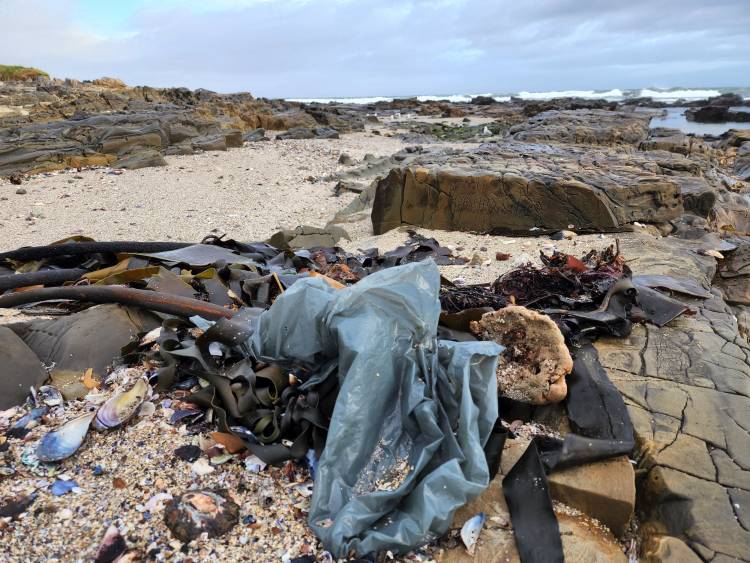
- If you have to buy plastic, always act responsibly with it. Whether that is recycling the item once you have used it, or returning it to the manufacturer, find a way of preventing the plastic from entering the environment – that includes landfill.
- Upcycle if you can. So, you can’t recycle the item and you can’t return it to the manufacturer, is there a way of reusing the item or upcycling it?
- NEVER litter. It is so easy to think that once our trash has left our hands, it becomes someone else’s problem, but this is a naïve and dangerous attitude to have. Your rubbish remains your problem! Remember – all drains lead to the ocean, so every time you litter, you are contributing to the plastic crisis in our ocean.
Speak out
- Speaking out is vitally important. Speak to your children, family, friends, ward councillor, the municipality, and community leaders. Tell them about the plastic crisis in the ocean and urge them to make a positive difference by changing their ways. Be sure to give them practical tips and ideas on how to make a change.
- Engage with politicians – make sure that they are aware of the plastic problem and challenge them with questions as to what they are going to do about it. Don’t vote for them if they are unwilling to do anything!
Join in
- If speaking out isn’t quite your way of tackling a problem, join others and lend your support (and perhaps your voice) to their campaigns to raise awareness.
Do it
- This is by far the most important point. It doesn’t matter which of the above suggestions you decide would be best for you, just do it! Don’t hesitate. Commit to the action that you are willing to take and follow through. And keep on doing it. Eventually, you will realise that it is easy to make a difference and that you have room and the ability to add another action. Once that realisation has taken root, you can add the next action, and the next action, and the next.
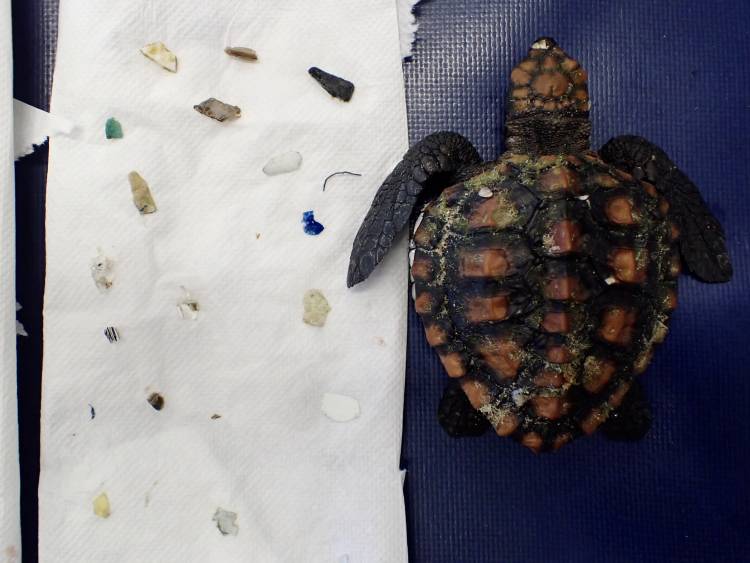
The environmental crisis that we are currently facing due to plastic in the ocean, leaves us with no other choice but to ask the difficult questions and to dig deep and find the true answers within us. Changing the situation starts with us as individuals, and we certainly have the power to bring about change. Being respectful of the environment and living a life that considers our impact on the environment, isn’t just an action, it is a way of being. Over time, it becomes second nature and eventually, it will become our “first nature” – as it should be.

_2_450_310_70_s_c1_c_t.jpg)