
This article was originally published by The Green Times, South Africa’s weekly green e-newspaper. Subscribe to its free monthly digital newsletter for green news, events and business directories.
“Our country’s energy consumption, which was 250-million gigajoules in 2004, is expected to increase to 375-million gigajoules by 2020. This will make considerable contributions to climate change, leading to floods, droughts and rising sea levels.”
So said Western Cape Minister of Finance, Economic Development and Tourism Alan Winde while reading Premier Helen Zille’s speech at the Western Cape Climate Change Summit on Tuesday, 20 September 2011. The summit was held to bring together various sectors and help them understand their impact and the role they and every individual needs to play to address climate change.
“Five to 20% of GDP goes to climate change. The Western Cape is especially vulnerable as we see rolling droughts and floods costing the province R1-billion each year.”
The agricultural sector is especially hard hit, as well as the fishing industry, as they are directly impacted.
“We must decouple economic growth from the increased results of climate change. In the province we need to move to a more sustainable path AND economic competence,” he said.
Now’s the time for action
During 2008 the provincial government had approved the Climate Change Action Plan. In 2010 the White Paper on Climate Change was published, as well as the Draft Sustainable Energy Bill. Now the Draft White Paper is being finalised. These will lead to actions across the province.
Last year the province also established the Green Cape initiative to create an enabling environment to develop a local skills base for wind and solar energy, with a dedicated waste-to-energy working group.
“We are not aggressive enough in making the change to the new economy. We find every excuse in the book why we don’t want wind, solar and nuclear energy, or we put a lid on gas extraction,” said the minister.
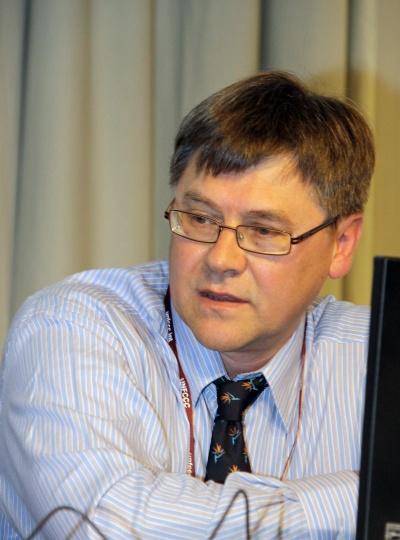
Dr Guy Midgley, a climatologist from the South African National Biodiversity Institute, said climate change is not all doom and gloom, as we do have choices.
“Climate change is simple in principle and complex in detail. Some people use details to try to derail the efforts to mitigate climate change,” he said.
Vulnerable Western Cape can adapt
“With ongoing research the details are becoming clearer. The Western Cape has specific vulnerabilities and opportunities, plus the capacity to adapt and great academic institutions working on exciting adaptation programmes.”
He said if people question the causes of climate change, one should simply ask them two questions:
1. Do you know the facts and are deliberately trying to fool me?
2. Do you not understand climate change?
“Mother Earth is helping us out by absorbing 50% of CO2 through natural vegetation and the oceans. The other 50% becomes greenhouse gases. Do we want to fight her and continue to geo-engineer the world?”
Thank you, Mother Ocean
The oceans absorb the bulk of the heat energy caused by the escalating greenhouse gases. This is detected very deep down. If they were shallower we’d have a much bigger problem.
In spite of all the mitigation efforts we WILL have further effects of climate change, therefore we all need to learn to adapt.
Normally it works like this:
More CO2 → more heat → more evaporation → more rain → dry areas become dryer and wet areas become wetter.
Western Cape in danger of droughts
However, the Western Cape is an exception. Here we sit in a difficult situation, as the winter rain is triggered by westerly fronts. Hadley cells circulation causes rain. The frontal systems are pushed further south, so we face serious issues, like droughts.
Midgley also said our country’s advanced temperature measurement indicates a positive trend. The impact of the heat on the Western and Northern Cape and our oceans is going to be hectic, though there are some pockets of cooling off the coast.
The Koue Bokkeveld shows the strongest warming trend. In this area the export fruit industry depends on chilly weather during the winter months to create quality fruit.
Twenty-percent drop in rainfall expected
In the Western Cape there is a natural climate variability in rainfall – for example, in the 1920s it was very dry. However, during those times farmers left their land. The prediction is that we’re heading for an up-to-20% drop in rainfall.
Our country spends R1-billion per year on extreme weather events.
Adaptation is the way forward.
‘Aliens are stealing our future’
“Pine trees constitute environmental pollution in the Southern Cape that wastes water,” Midgley said. “The aliens are stealing our future. We can create jobs and build the economy by removing them.”
He questioned the attitudes towards water in Cape Town and said that the dams on top of Table Mountain provide as much water as all the automatic flush urinals pour down the drain when no one’s using them. To change that would cost R50 each, yet this is not happening.
Peter Lukey, acting DDG Environmental Affairs, said: “The world needs to work together to address the injustice of poor countries biting the bullet for the rich ones’ actions.” He referred to the island of Anuwatu, which is disappearing due to greenhouse gases.
He said we expect magic to happen at COP17 in Durban at the end of the year. “We need to create an atmosphere conducive to solutions. Developing countries expect the rich countries to sort themselves out, but South Africa relies on 80% energy from fossil fuels. We have to show another way, which will be fantastic as it will be great to have clean air to breathe and to free up our water from aliens. This is exciting!”