

You can tell a lot about sharks simply by looking at their teeth – revealing their diets and, by extension, their lifestyles. While public perception about sharks is often quite negative, with their teeth viewed as "weapons", the reality is that, just like the teeth in our own omnivorous mouths, shark teeth are specialised for their diets, and by looking at them, scientists can tell what is on a shark's menu (it's not us).
(Cover image credit: Jean Tresfon)
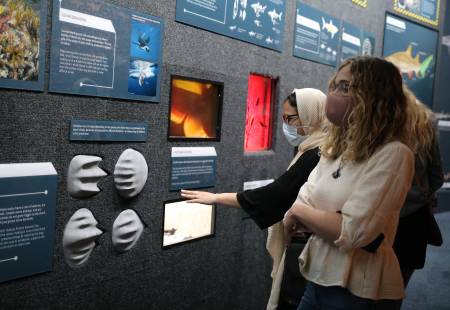
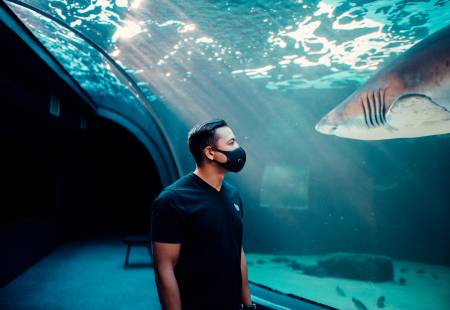
If you want to learn more about shark teeth, check out our Shark Alley space at the Save Our Seas Foundation Shark Exhibit.
Let’s take a closer look at shark teeth and see what we can tell about the sharks that have them:
Needle-like Teeth
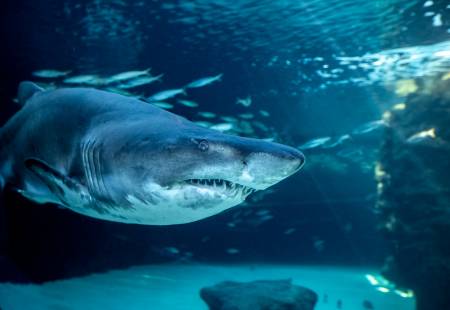
The sharp, pointy teeth of sharks like the ragged-tooth sharks in our Save Our Seas Foundation Shark Exhibit might look fearsome, but they actually tell us something quite important - this is a shark that eats slippery food, like fish. This style of tooth means that ragged-tooth sharks are unable to bite off pieces of their prey, so they tend to focus on prey that they are able to swallow in one bite.
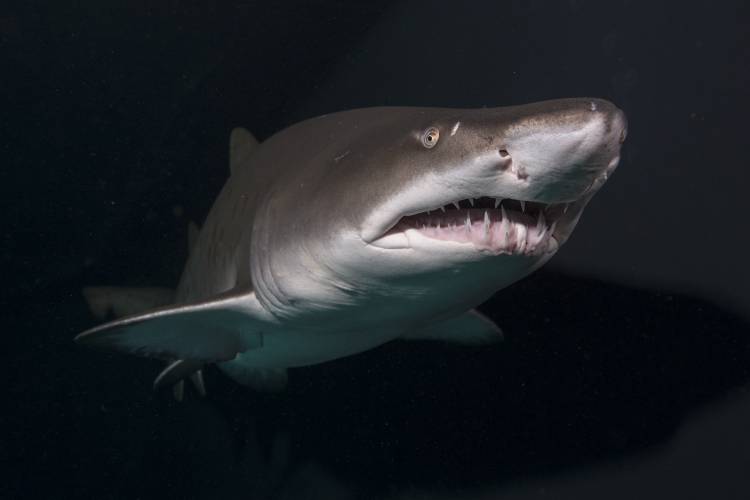
The diet of the ragged-tooth shark sometimes consists of fish that might be larger or stronger than what can be comfortably swallowed in one bite - so its teeth are curved to give it grip as it tries to thrash its food into pieces. Sharks that specifically focus on smaller prey tend to have straighter teeth.
This type of shark tooth serves a similar function to your own canine teeth!
Saw-like Teeth
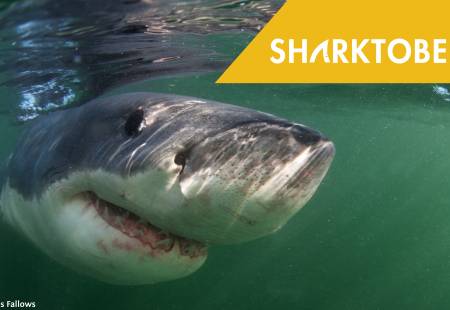
Sharks that specialise in hunting large prey, particularly marine mammals like seals, usually have a combination of pointed teeth on their lower jaw, with asymmetrical triangular teeth in their upper jaws. This tooth combination allow these sharks to bit off pieces of their prey, enabling them to consume prey larger than other shark species, and allowing them to take advantage of carrion, like dead whales.
_(32749142772)_750_495_70.jpg)
Many sharks with this tooth type have serrated upper teeth. The most extreme example of this is the tiger shark, which has hooked teeth that are sharp and serrated enough to bite through sea turtle shells.
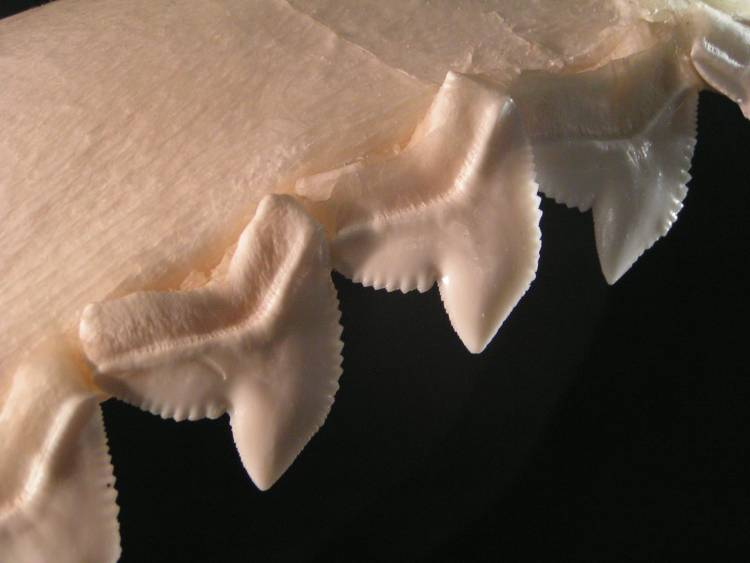
This cutting action is similar to how humans use their front incisor teeth.
Grinding Teeth
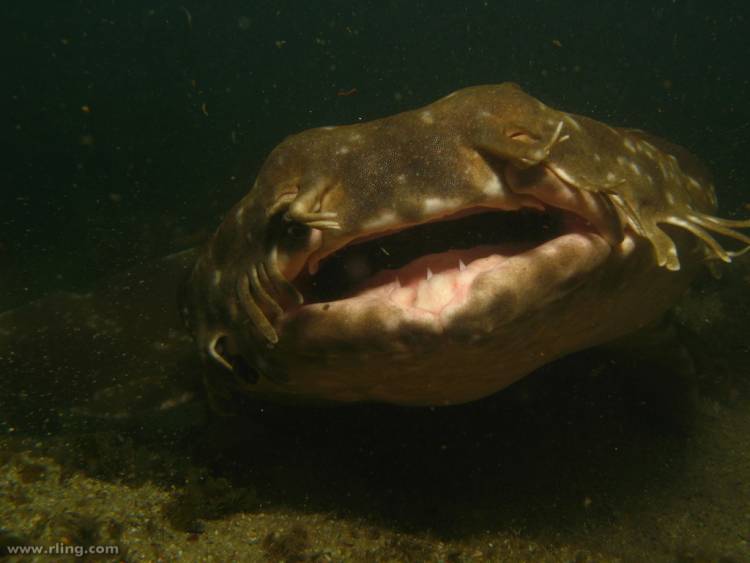
Many sharks prey on hard-shelled animals, like molluscs, crustaceans and worms. These sharks sacrifice sharp teeth for pavements of broad, flattened teeth that are ideal for grinding up hard shells.
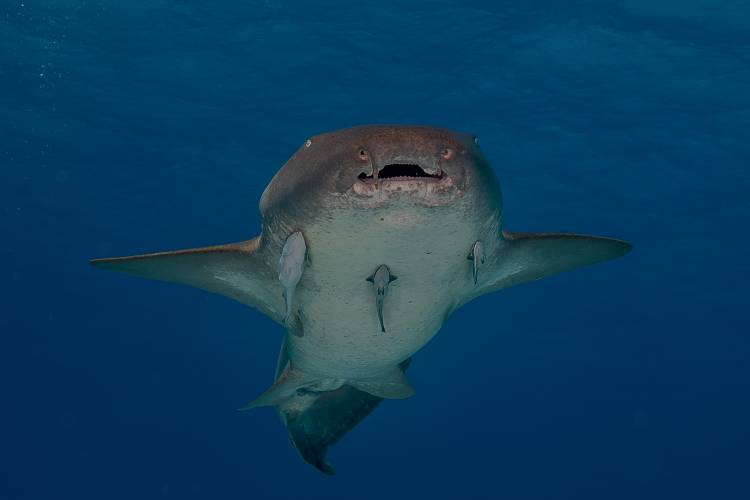
This arrangement of flattened teeth are similar in purpose to human molars (although ours don't grow back if we try to bite something too hard).
Other teeth
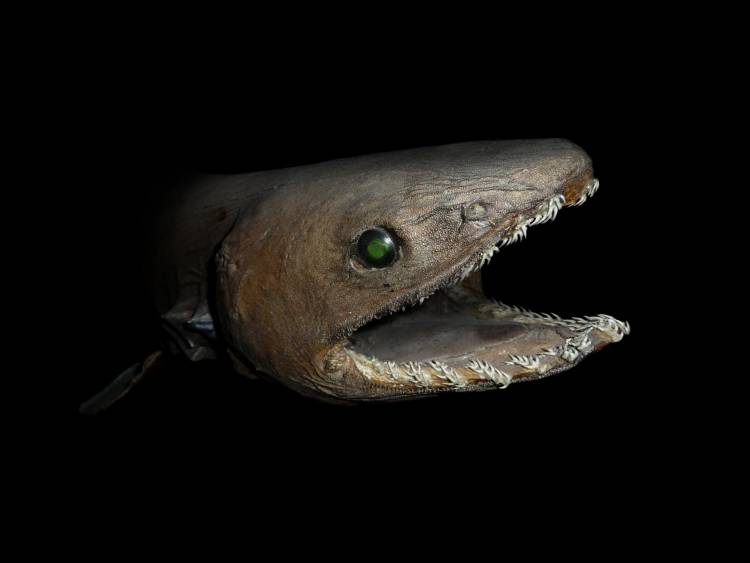
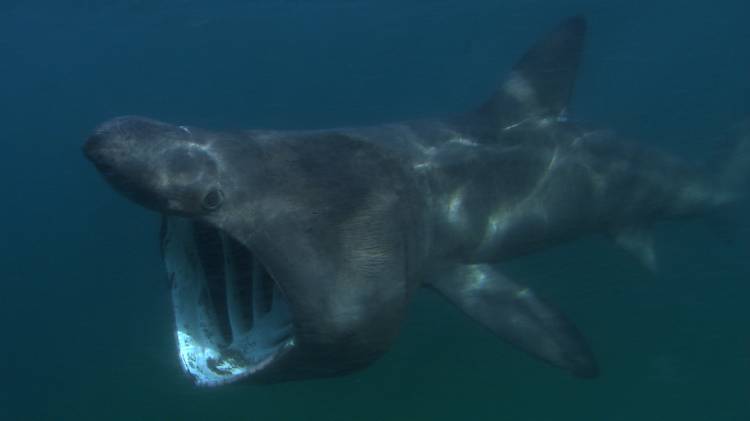
The above categorisation is a simplification, with each of the 500 known species of shark having its own unique combination of tooth features. Many are specifically adapted to unique feeding strategies - from carrion-eating scavengers to giant filter-feeders that have no need for teeth at all! Here are a few examples:
_720_540_70.jpg)
So, next time you see a shark - take a closer look at its features and see if you can figure out why it looks the way it does. This is the first step to being a shark scientist!




















_(32749142772).jpg)


