The business management session – chaired by Sea Life director Rob Hicks and addressed by keynote speaker Elena Kazlas of ConsultEcon – held the attention of delegates attending day three the 8th International Aquarium Congress at the Cape Town International Convention Centre on Wednesday 12 September 2012.
Kazlas, who has close to 20 years’ experience in aquarium development, stressed the important role being played by digital marketing and how vital it is for aquariums to track online reviews posted by visitors.
She also shared some interesting statistics with delegates, including the fact that less than half of the world’s 100 most populated cities have aquariums. Kazlas says this fact translates into massive growth potential, since there are only around 1 000 aquariums across the globe today. With just 10 aquariums compared with Asia’s 152, she believes Africa is strongly positioned to take advantage of this development opportunity.
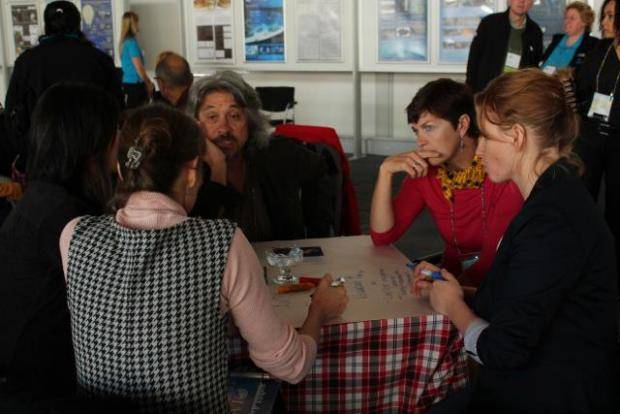
Kazlas ended her presentation by sharing her insight into best practice tips, such as conducting regular audience surveys; knowing the source of visitors; keeping a regular check on finances; monitoring industry trends; and reviewing websites.
Inspiration from Fukushima
Yoshitaka Abe, director of Aquamarine Fukushima, inspired delegates as he described the rebuilding of the Fukushima aquarium following US$25-million in damages caused by the devastating tsunami of March 2011. Despite the serious topic under discussion, he was able to share a lighter side, quipping: “Much of the marine life from the aquarium is now living in the Pacific Ocean and is very happy.”
Cape Town joins hands with Monaco
Other positive developments on the day included Two Oceans Aquarium’s signing of a five-year partnership with the Institut Oceanographique in Monaco.
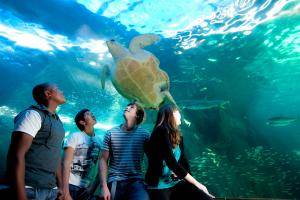
The agreement aims to consolidate the relationship between the two institutions, specifically in the fields of oceanography and marine biodiversity. The agreement will see the two facilities working closely together in the fields of research, animal husbandry, conservation, education and awareness, communication and personnel training.
Species that form the subject of specific projects such as sharks, turtles, sunfish, corals, marine bio-discovery and ocean acidification will be a finer focus of the collaboration.
Conversations examine collections sustainability
The final café conversation – aimed at exchanging ideas and problem solving – addressed the challenges of sustaining aquarium collections.
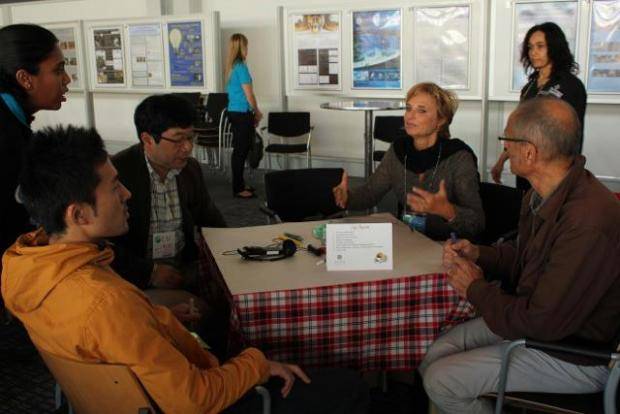
Under this topic, discussions centred on responsible and sustainable sourcing, costs and staffing, with common points of concern being ethics and permitting.
Delegates agreed that overcoming these challenges requires global communication with regard to reliable suppliers; improved communication between aquariums and local authorities; attention to training and education; and comprehensive collection plans.
They also proposed the creation of an organisation – representative of all institutions dealing with living organisms – to share information and solutions, particularly relating to permit problems.