
Every sea turtle at the Two Oceans Aquarium is a rescue that is on the path of recovery. The goal is always to release these precious, endangered animals back into the wild as quickly as possible, but "quickly" is relative - sometimes healing can take years! For long-term residents of the I&J Ocean Exhibit, like Bob and Harry, it's easy to forget that these animals are actually undergoing constant care - so let's take a look at the progress of these two remarkable turtles:
Harry:
Harry has come a long way since he was found on a Stilbaai beach in October 2020, and watching him swim across the I&J Ocean Exhibit really drives this home.

Despite his progress, his route to recovery has been slow, with both his intestinal issues and his "shell rot" skin infection taking a long time to clear. But nothing can stop Harry's magic, and he's a constant reminder that the recovery path of each turtle in our care is unique. What has been most encouraging is seeing the return of Harry's appetite. Harry went from having very little appetite and not pooping often enough...

...to needing to be enticed to eat prawns and other tasty high-protein foods to aid his healing...

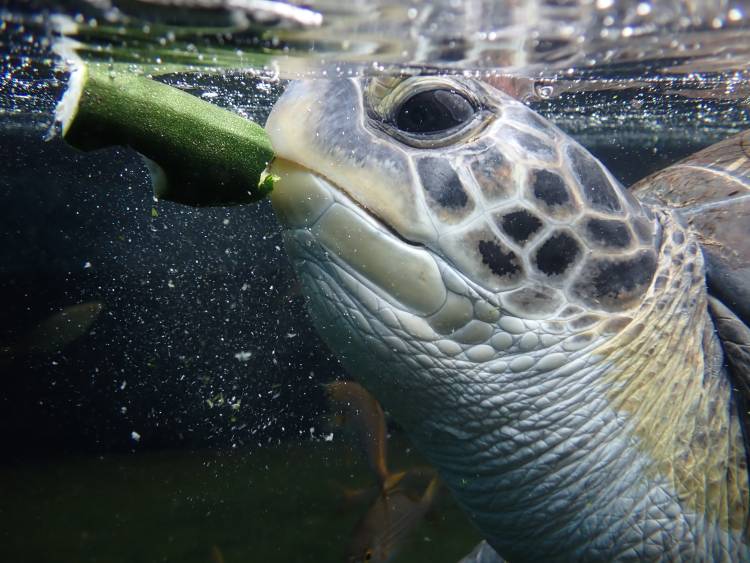
...to energetically stealing a pepper from Bob! Active feeding behaviour like this is an excellent sign of a turtle's health, and the team is very happy with the progress Harry is making!
To investigate why Harry had not been eating much and whether there could be a possible obstruction in his throat, our turtle team conducted a barium study; taking place over a couple of days with X-rays every few days to observe whether the barium had moved through his system as one would expect.
_750_563_70.jpeg)
It appears that Harry’s body has needed a lot of extra time to kickstart again, as a barium study showed that his gut was indeed working steadily. Following the results of his barium study, Harry was taken to visit our amazing friends over at Cape Animal Medical Centre for an endoscope to see whether there were any obstructions in his oesophagus - thankfully no obvious obstructions were identified.
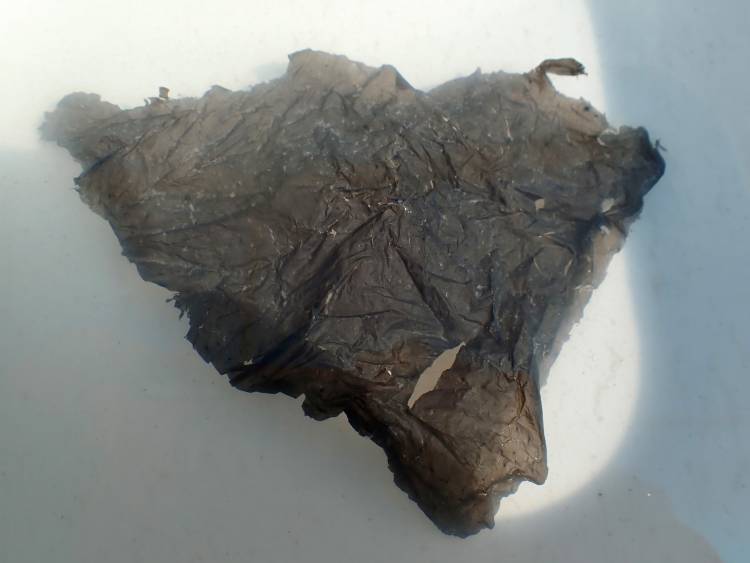
A heartfelt shout out to Dr Malan van Zyl and his amazing team for fitting Harry into their busy schedule. The assistance and support this team showed Harry truly has made the biggest difference in his recovery. Harry soon followed by pooping out a piece of plastic bag which very much resembled his favourite snack (sea lettuce)!
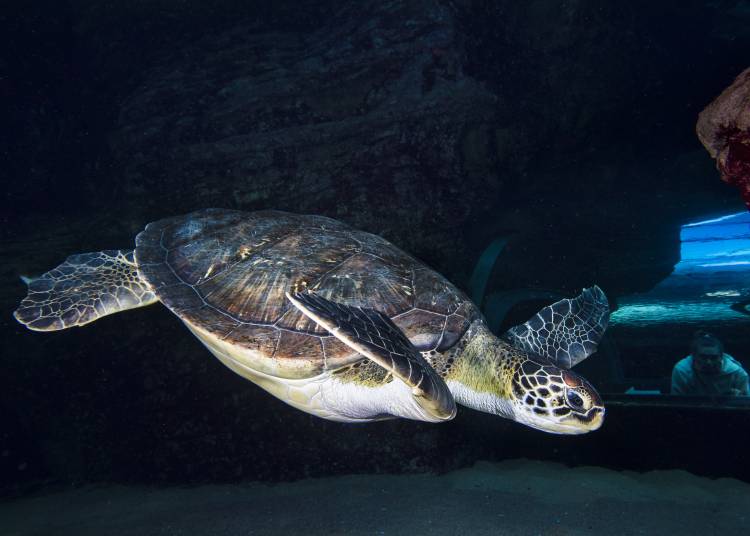
The next step for Harry was to provide him with extra space and depth, with the I&J Ocean Exhibit being the perfect place for this to happen, allowing him to start gaining weight, swimming further and eating more. Harry also met his ultimate roommate, Bob, who is also a long-term turtle rehab patient in our care.

Clearly, 2021 was a rough start for Harry, although we believe his year is finally looking up and there is a lot more positive swimming around the I&J Ocean Exhibit. We believe Harry and Bob are getting along swimmingly, with Harry appearing to take after Bob in loving bum wiggles!
_750_563_70.jpeg)
Bob:
Bob has been at the Aquarium for so long that it's easy to forget they are actually also on a path to recovery and eventual release back into the wild!
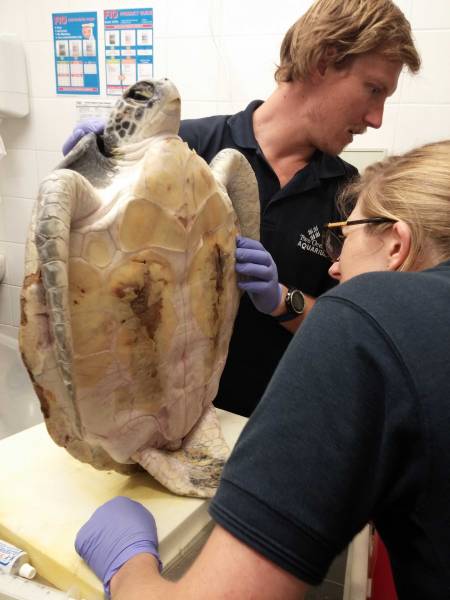
When rescued in 2014, Bob was in a bad state - intestines full of plastic pollution, severe plastron (the bottom shell) damage and a bad infection. Unfortunately, this all led to a brain infection, which caused damage that Bob is still dealing with to this day.
The permanent brain damage has affected Bob's ability to carry out many of the natural behaviours that a sea turtle needs to be able to survive in the wild, which is why Bob hasn't been released yet. However, as you may well know from humans who are dealing with brain damage, brains have "neuroplasticity" - the ability to create new pathways and potentially regain lost function to a degree.

Helping Bob recover is Alexandra Panagiotou, a Two Oceans Aquarium Education Foundation team member, who is running a programme of extensive enrichment activities and monitoring Bob's behaviour. Enrichment is a process where species-appropriate challenges and stimulation are provided at regular intervals to simulate the dynamic environment and challenges that an animal would encounter in the wild. It is hoped that encouraging Bob to engage with these simulated environmental stressors will encourage the return of brain function that would help cope with similar situations in the wild.

A wild turtle should be displaying behaviours like aggressive feeding, hiding and flight response - things Bob has been pretty blasé about. Alex is already seeing results, with Bob responding to new enrichment activities with more "wildness" than has been observed in the past, so we're becoming increasingly optimistic about Bob's release prospects! Here are some examples of improvements Alexandra has observed:
- Bob's predictable swimming patterns have decreased (meaning taking new routes rather than following habit)
- Bob is swimming "randomly" more often - these are swims with no clear goal and are totally exploratory, unlike swimming to a feeding spot when hungry, for example.
- Bob has also shown more aggression during feeding times, meaning active displays of territorial behaviour when feeding.
_450_310_70_s_c1_c_t.jpg)