There are many different seabirds the world, that are dependent on the ocean in some way, whether it is for breeding, feeding or habitat.
Since the annual Waddle for a Week campaign has come and gone, let’s remind ourselves about the cute and cuddly (though in most cases not at all) ones – penguins!
All penguins belong to the order Sphenisciformes with six different genus classifications, grouping similar penguin species together. There are 17-19 species of penguins, the total number depending on who you ask.
Scientists often have differing opinions on whether some species should be split into two, due to significant genetic differences between two populations.
All penguins are flightless (above water, that is) and can mostly be found in the Southern Hemisphere. You will always find them in colonies and most of them have the well-recognised black-and-white plumage.
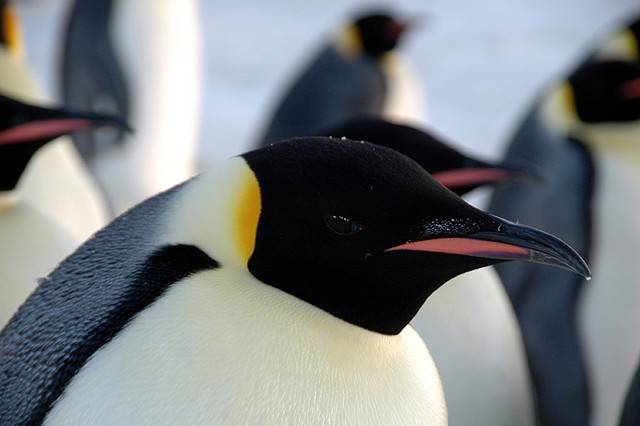
The first are the great penguins (the Aptenodytes), which are the emperor and king penguins, the largest two species. Both have the black-and-white counter-shading, which many marine animals use to be “invisible” from predators from above as well as below while swimming.
Both also boast beautiful “sunset” plumage on and around their heads, a key characteristic of this genus.
Emperor penguins can reach up to 130cm in height, 23kg in weight and are the largest of all of the penguins. You can only find them on the Antarctic continent and amazingly, their colonies can be seen on satellite images from space.
King penguins, on the other hand, are found on sub-Antarctic islands and are the second-largest penguin species, reaching up to 1m in height.
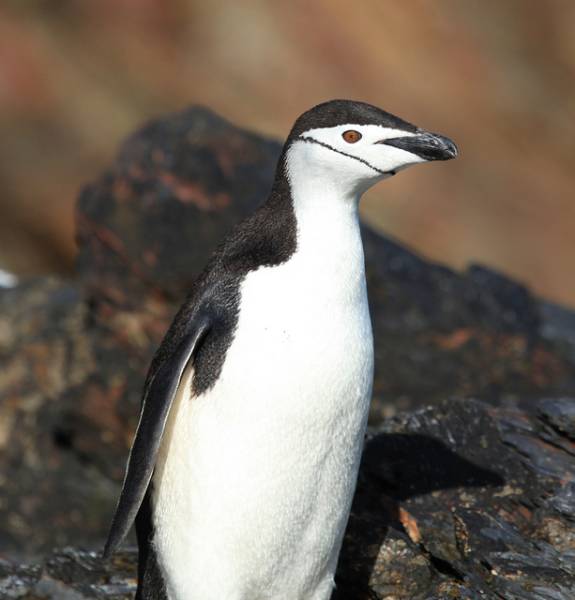
Pygoscelis penguins, commonly known as brush-tailed penguins, have distinct stiff, long tail feathers and are the second-largest penguins. They also have a white ring around their eyes. There are three species in this group, the Adélie, the gentoo and the chinstrap penguin.
The Adélie penguin can be found in Antarctica, with the other two more spread out on the sub-Antarctic islands.
It’s easy to see where chinstrap penguins get their name from.
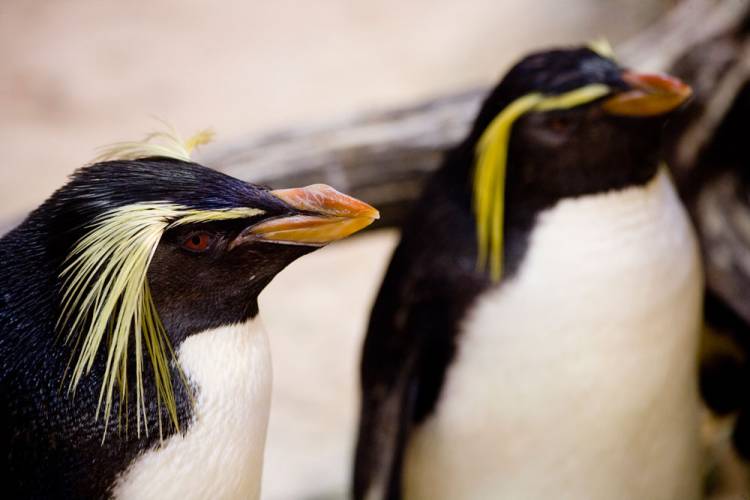
The Eudyptes or crested penguins are the ones that most of us know, due to certain animated movies. There are six or seven (again, depending on who you ask) different species and all of them have yellow or orange crested feathers on their heads. They also have red or orange beaks, and even red eyes sometimes.
Our personal favourites are of course the rockhopper penguins, as we have our very own residents here at the Two Oceans Aquarium. And you might wonder, since all of these crested penguins live on sub-Antarctic islands, why are they here in our Aquarium?
All of them are rescue birds that have landed up on our shores, usually because of fishermen who kept them as pets for a while and then tossed them overboard before docking in at Cape Town harbour.
Since all of our rockies have been exposed to local diseases, they will never be able to return to their colonies so as to not infect the wild rockhoppers.
The little penguin (Eudyptula) is, as the name suggests, tiny. There is only one species, also called the fairy penguin, which is found on the coasts of Australia, Tasmania and New Zealand. An adult male only weighs about 1.2kg, and it is a nocturnal species that burrows. It is, in fact, the only nocturnal penguin species. It, along with the banded penguin, is also the only one that burrows.
Another thing in common with banded penguins is that it looks like a juvenile banded penguin, because of its blue-grey plumage. This is particularly interesting as its habitat does not overlap with any of the banded penguin’s, so no one is really sure how and why it looks like that.
Another penguin species that is the only one within its genus is the yellow-eyed penguin (Megadyptes).
It has been linked to the crested penguin, due to its red beak and yellow feathers. It has yellow eyes, as the name suggests, and a yellow band running to the back of the head.
These bird is endemic to New Zealand’s South Island, which means that it is not found anywhere else. As opposed to other penguins, the yellow-eyed penguin is not colonial and is often found in pairs or very small groups. It is definitely one of the most distinctive species, with its almost completely yellow head.
Last, but definitely not least, are the banded penguins (Spheniscus). They are characterised by their black beak, white band on the head and a black band across the chest.
There are four species: the Magellanic, Humboldt, Galapagos and African penguin. While all of the banded penguins look very similar, they have safely been classified into separate species due to their very distinct and non-overlapping distributions. Banded penguins are also called the tropical penguins, due to their distributions in higher latitudes.
The one that definitely fits this description is the Galapagos penguin, found on the Galapagos Islands, around the Equator and in the Northern Hemisphere. So, it’s a very special penguin indeed!
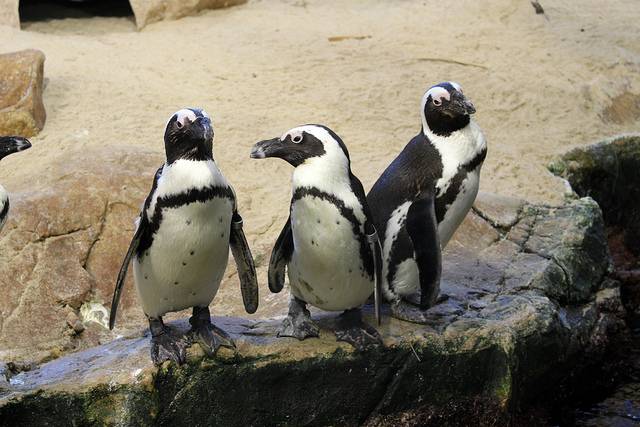
Closer to home, we have our very own African penguin, which can only be found in Southern Africa, from Namibia to Algoa Bay in South Africa. The African penguin is an endangered species, with a population decline rate of 2% a year. With a healthy population of about 1-million birds 100 years ago, it is shocking to realise that only 5% of that original number remains. Only 50 000 viable breeding birds remain to keep the population going.
While, historically, the collection of African penguin eggs, the removal of their guano and the introduction of predators such as cats contributed to the major decline in numbers, presently overfishing, oil pollution and competition with other animals for food are making it particularly difficult for this species to catch up and reproduce fast enough.
Like so many other animals on this planet, the African penguin needs action now and luckily there is something all of us can do, big or small. Make a Penguin Promise! This can be anything from not using drinking straws (because straws happen to be the number one item picked up during beach clean-ups and are swallowed by seabirds all the time) to only eating sustainable seafood. Do one thing and see how little it actually affects your life, but how much it will help our planet.
For more information on Penguin Promises, visit www.penguinpromises.com.
Stay in touch: for daily Aquarium updates, follow us on Twitter (@2OceansAquarium) and become a fan on Facebook.