
I have a big soft spot for sea turtles. They are among my favourite marine creatures. So I was devastated and angered when I received an email on Thursday morning from Dr Supraja Dharini of the Tree Foundation about the mass stranding of 800 olive ridley turtles along the east coast of India, in Andhra Pradesh state. And when I looked at the images, I cried.
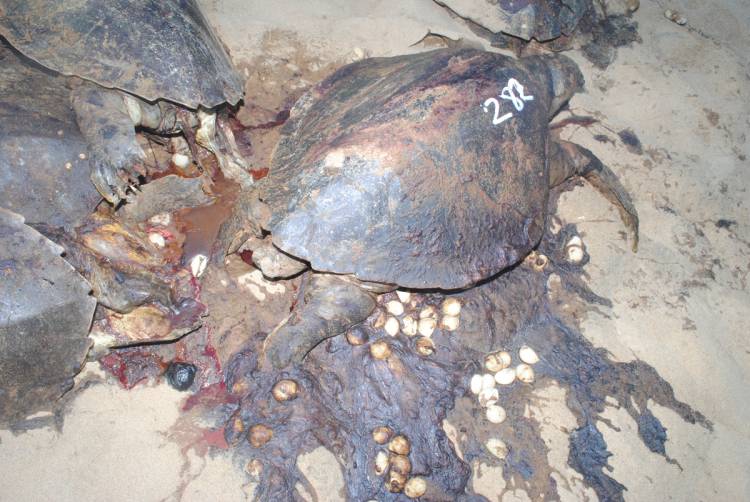
This is what I read:
“Tragic stranding of over 800 dead olive ridley sea turtles in one night
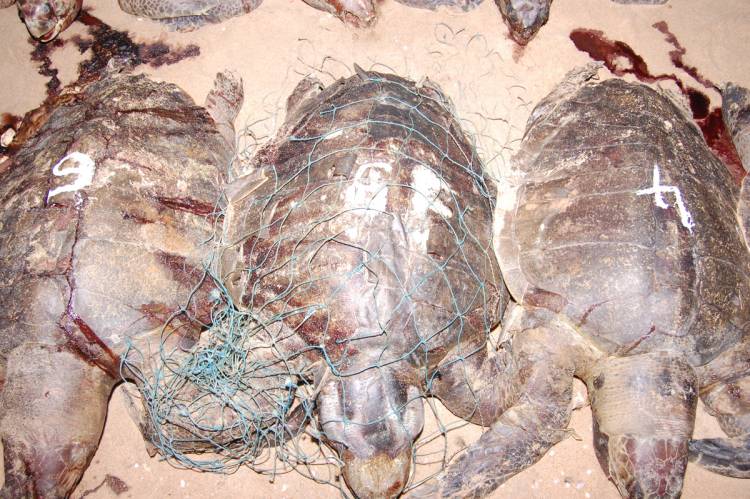
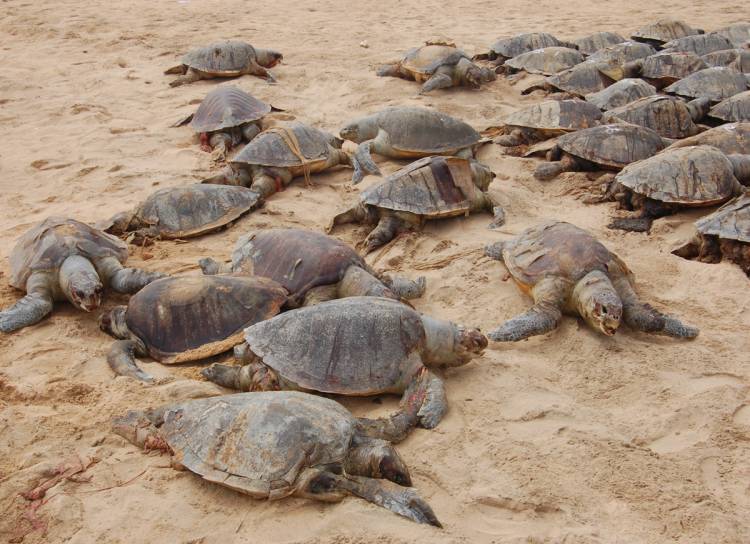
“On the weekend of the 22nd of this month, over 800 endangered olive ridley sea turtles were washed ashore in Andhra Pradesh, India. This was no freak accident; the turtles fell victim to a large number of trawl boats that came to the area on the 17th and 18th from the nearby city of Chennai to fish for shrimp. Our good friends at Tree Foundation India, who have been working tirelessly to protect sea turtles and other marine life for the last 12 years, witnessed the mass stranding first-hand. As far as the eye could see, turtles were washed up all along the coast. This is what shrimp fisheries are doing to sea turtles.
“The turtles had become entangled and suffocated in the fishing gear, and once the fishing gear was raised, the turtles were simply discarded into the sea, dead. The obvious signs of drowning through entanglement are bulging eyes, a swollen neck, trawl fishing gear marks and internal hemorrhage visible from the underside.
“These trawlers were reported by local communities to be fishing only about 4km from shore when the state legal requirement is 8km; this means they were fishing illegally as well as indiscriminately.
“Looking at how much work is done every day around the world by conservation groups and NGOs, a loss of life of this scale is soul destroying. This tragedy was avoidable. Where there is legislation to protect sea turtles and other endangered marine species, it needs to be enforced continually, not just when the cameras are around.
“Even the photos do not clearly show the scale of the tragedy.”
And then these images:
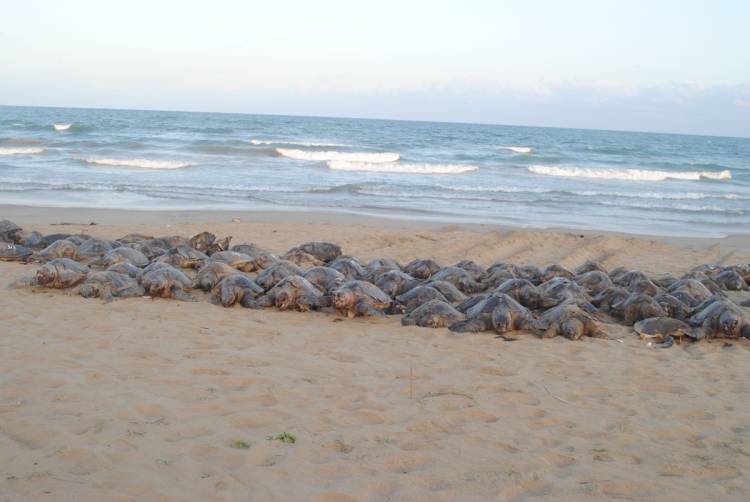
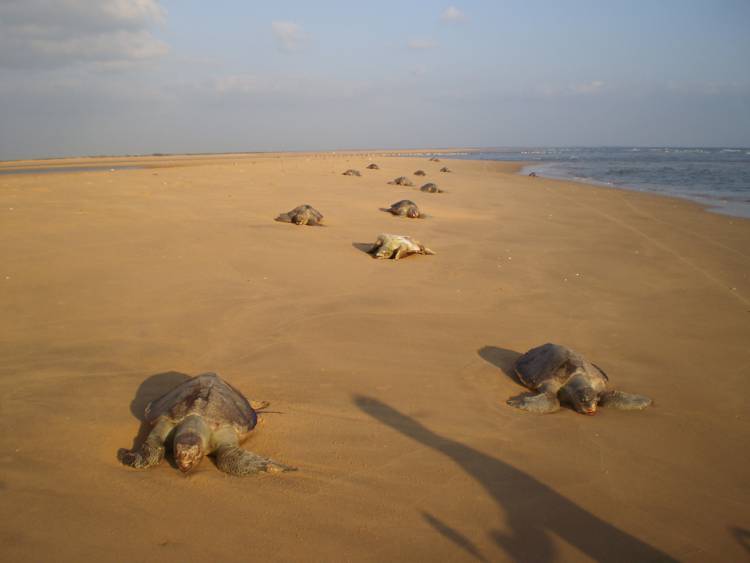
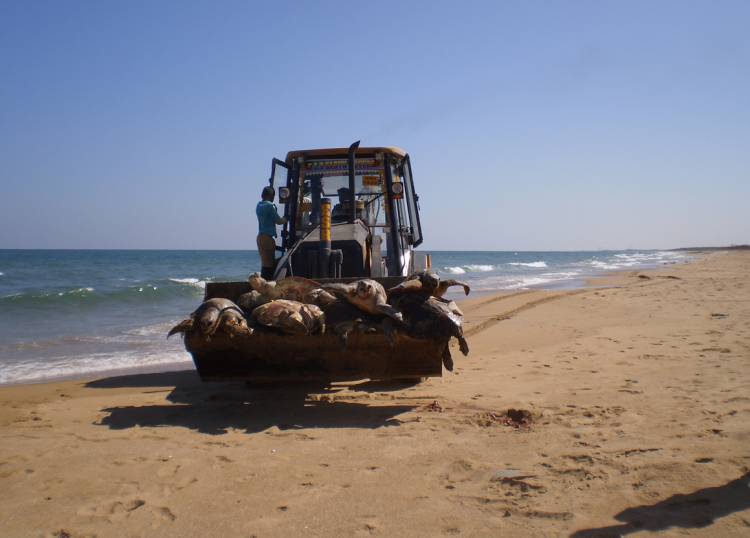
“This huge loss of an endangered species in one night is more than three times the total number recorded in the past six years in the region. To say it is a tragedy would be a gross understatement,” said Dr Dharini in her email.
She asked that this information be shared because, as she so rightly states, “Change comes only through public awareness in the first instance.”
Not only I am incredibly sad about the loss of these animals, but my heart goes out to Dr Dharini, her organisation and the local fishermen of India. I first heard about Dr Dharini’s work when she spoke at TedxSeaPoint in March 2012 – I was moved then by her passion, her humility and her tireless commitment to the turtles and to raising environmental awareness.
Dr Dharini and the Tree Foundation work closely with local impoverished fishing communities because, as she states, “if local sea turtle conservation is to be a sustainable programme, the fishermen have to be involved”.
At the outset she explained to the fishermen that “their livelihoods and the lives of turtles are inextricably linked”. She managed to convince five fishermen to join her for a workshop and they in turn garnered support from a further 12. At the end of the workshop, the fishermen volunteered to protect sea turtles if she could train them in conservation methods.
Dr Dharini said she realised that “conservation and community development go hand in hand. Only if we care for their well-being will they be involved in conservation”.
Working with large companies, the Tree Foundation has been instrumental in sourcing alternative means of income for the fishermen, holding medical camps for health check-ups, organising safety-at-sea workshops, providing bedding for children and arranging awareness programmes.
Dr Dharini and the Tree Foundation have been successful in changing the attitudes of local fishermen and communities towards sea turtles and the marine environment in general. The fishermen are proud of their efforts, and therefore the mass olive ridley stranding is not only a tragedy in environmental terms, but also an insult and devastating blow to those who have committed their lives to protecting sea turtles.
Illegal and indiscriminate fishing practices are pillaging our oceans and undermining the tireless conservation efforts of many individuals and organisations across the globe. This is why programmes such as the Marine Stewardship Council (MSC) and the Southern African Sustainable Seafood Initiative (SASSI) are so important. This is why it is critical that we as consumers know where our seafood comes from and how it was caught. And if you don’t know, ask.
This is how you can make a difference and assist people like Dr Dharini, the Indian fishermen and all of us at the Two Oceans Aquarium to save endangered sea turtles and prevent tragedies of this scale from happening again.
Click here for more information about turtles.
Stay in touch: For daily Aquarium updates, follow us on Twitter (@2OceansAquarium) and become a fan on Facebook.