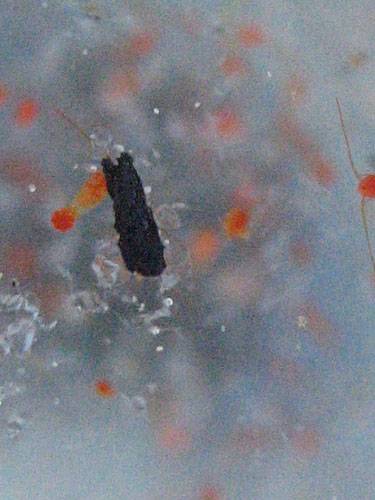
This year’s theme – Southern Ocean: It is the small things that count – focuses on plankton. Although much emphasis is placed on other, larger marine species, plankton form the basis of marine food webs.
Made up of microscopic plants (phytoplankton) and animals (zooplankton), plankton are very important in the marine food chain as the largest fish in the world, the whale shark, and large whales feed on it.
Our country boasts a coastline of more than 3 000km, with oceans rich in marine life, and it is time we learn to appreciate these unique oceans and coasts as a source of national pride – which is also one of the aims of National Marine Week 2012.
A mini-waddle for the African penguin
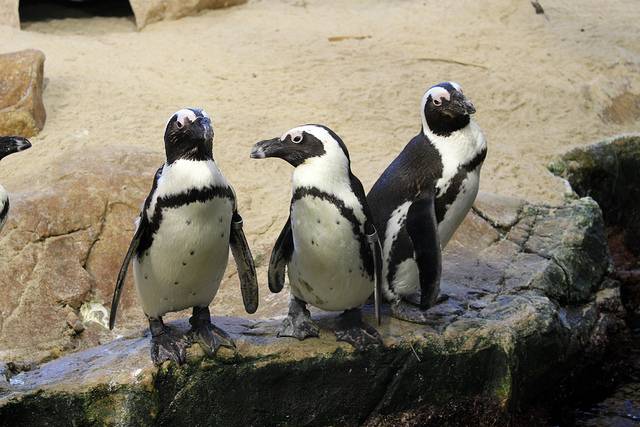
Also during National Marine Week, the Two Oceans Aquarium will join a number of other facilities around the country to celebrate International African Penguin Day on 13 October.
It is estimated that in about 1900, approximately 1.5-million African penguins existed in the wild. Today that number has dwindled to less than 60 000. The aim of International African Penguin Day is to raise awareness of the plight of the African penguin, as it could be extinct within the next 15 years.
Penguins face several threats, including oil spills and food-source depletion. When a penguin gets covered in oil from a spill, its feathers lose their waterproofing, which means it cannot swim and hunt for food. Further, it ingests the toxic oil when it tries to clean its feathers, which could kill it.
For further information regarding the celebration of International African Penguin Day at the Two Oceans Aquarium, please visit Two Oceans Aquarium or email Hayley McLellan on hayley.mclellan@aquarium.co.za. To learn more about African penguins and to make a Penguin Promise, please visit www.penguinpromises.com.
Say no to plastic
In our continued effort to protect our oceans’ marine life, the Aquarium banned plastic bags from its premises. In a memorandum to all the Aquarium staff in 2011, Two Oceans Aquarium Managing Director Dr Patrick Garratt highlighted a presentation senior bird trainer Hayley McLellan had previously made, and banned single-use plastic bags from the institution.
Save our seafood
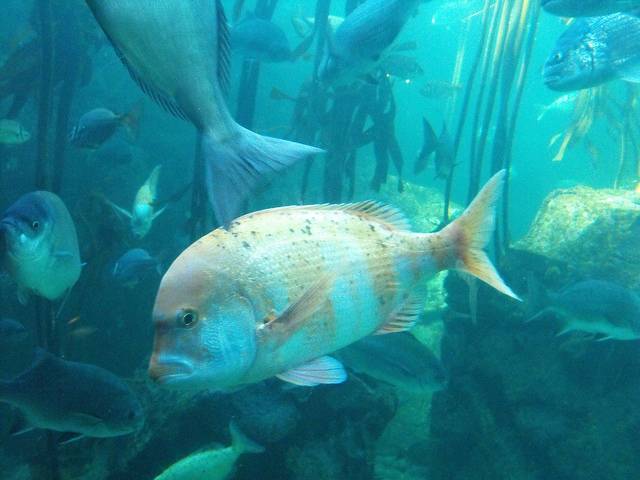
However, there are also other issues affecting our oceans’ marine life. Overfishing causes the collapsing of local and global fishing stocks, and some scientists believe that by 2050 only half of the world’s population will have access to fish protein.
In South Africa, many of our inshore marine resources are considered overexploited, collapsed or fully exploited, according to a report released by the World Wildlife Fund South African Sustainable Seafood initiative (WWF SASSI).
Recovery plans have been put been put into place to address fully fished species, but WWF SASSI has also undertaken the task of providing retailers, restaurants and consumers with information about the sustainability of their food choices.
It has also formed a relationship with Pick n Pay, to help the national retailer meet its goal of transforming its entire fresh, frozen and canned seafood range by the end of 2015.
The Aquarium is also committed to serving seafood from sustainable fisheries, and our Shoreline Café became Africa’s first restaurant to be awarded Chain-of-Custody certification from the Marine Stewardship Council. The restaurant has also adopted a number of other green initiatives to reduce its impact on the environment.
With such a beautiful coastline, let’s all do our part to preserve our oceans and marine life.