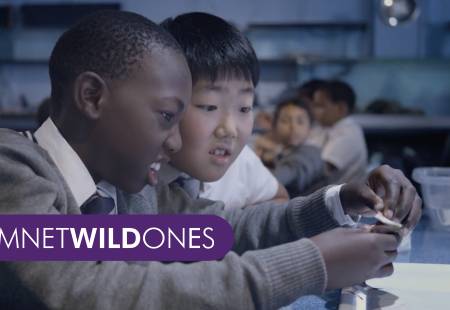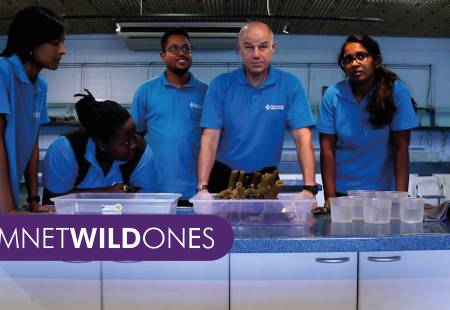

From 9 to 13 July, 44 grade 8 learners joined the Two Oceans Aquarium's Marine Science Discoverers course. These young aspiring marine biologists and ocean scientists got to explore their passion by joining our Marine Science Academy programme, thanks to generous sponsorship from the American International School of Cape Town.
The course began with an introduction to South Africa's fantastic local marine environment, learning about its rich ecosystems and inhabitants.
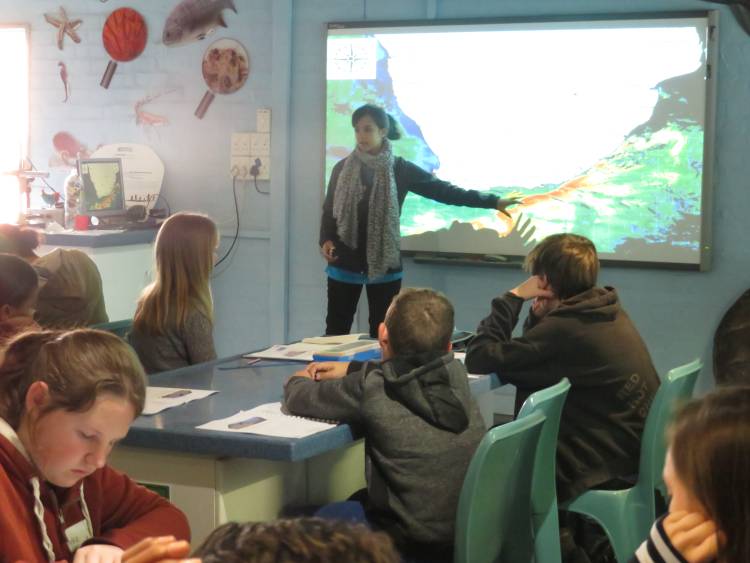
As they learned about the coastal ecosystems, the Earth's geology and tectonic systems were described - after all, these are the same processes that formed the coastlines we see today.
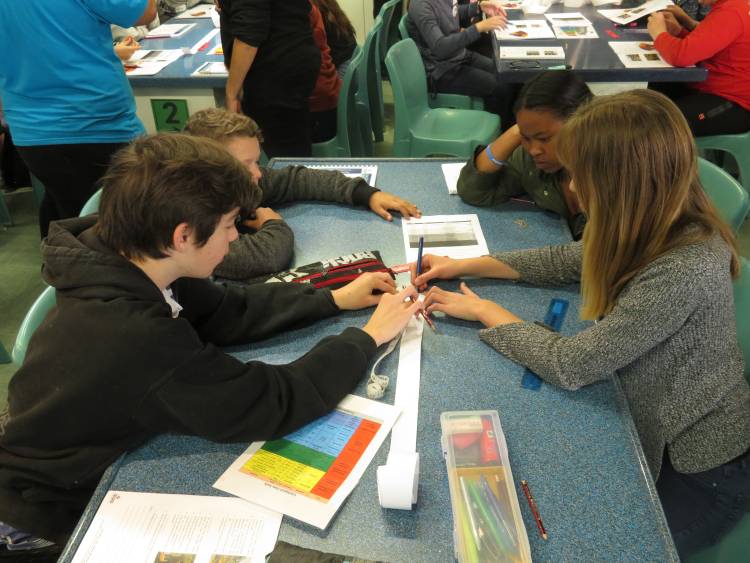
The second day of the course took the focus off of our coastal landscapes and put it onto the processes that have shaped life on Earth, including evolution, biology, symmetry and basic taxonomy.
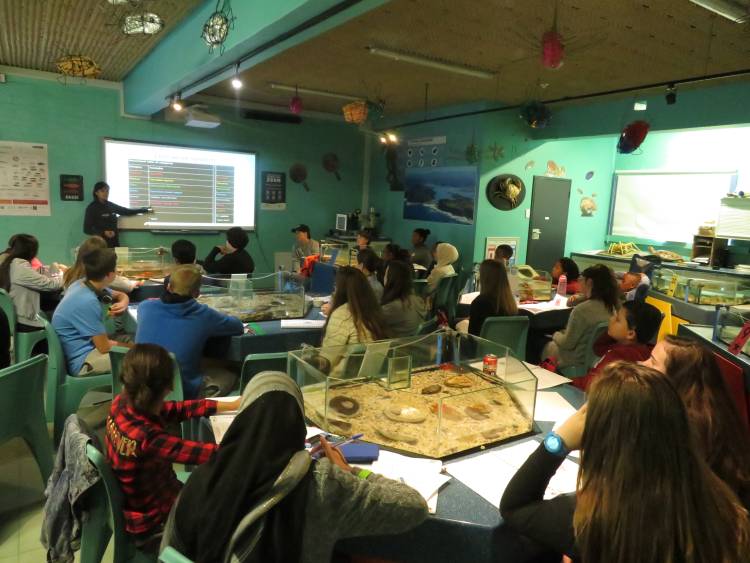
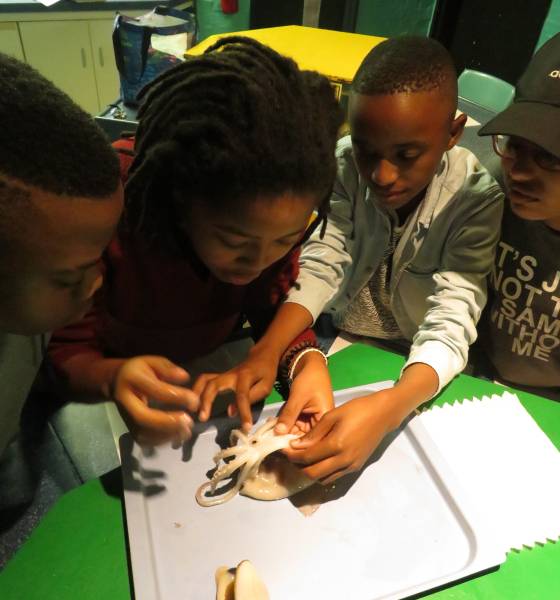
Marine molluscs were used as a case study. Their different categories were discussed with a focus on their adaptations within the Mollusca phylum. A combination of live and dead specimens were examined, as well as shells for each group. Learners studied the anatomy of squids, noting their adaptations, and how advanced or different they are from their snail-like cousins.
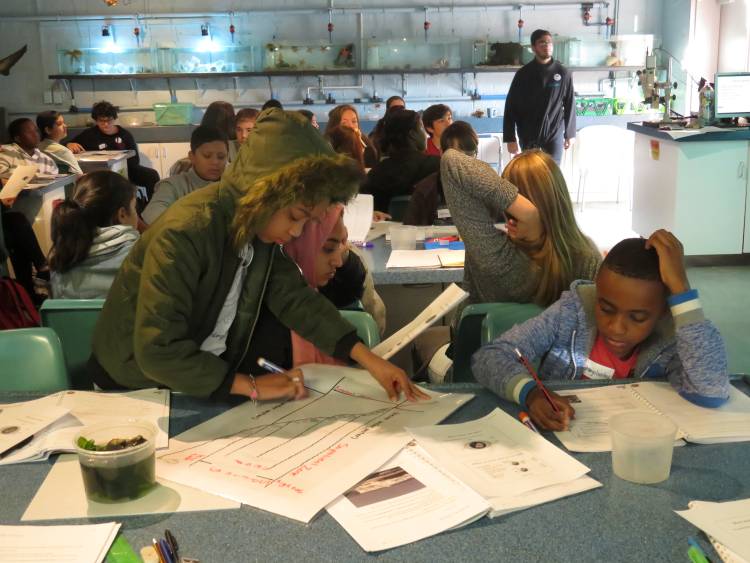
The third day gave the Marine Science Discoverers a chance to combine the lessons they had learned about the ecology and environment of South Africa's rocky shores by looking at the factors that shaped the adaptations of life here. From the variability of the water's pH (acidity or alkalinity) to the climate and currents.
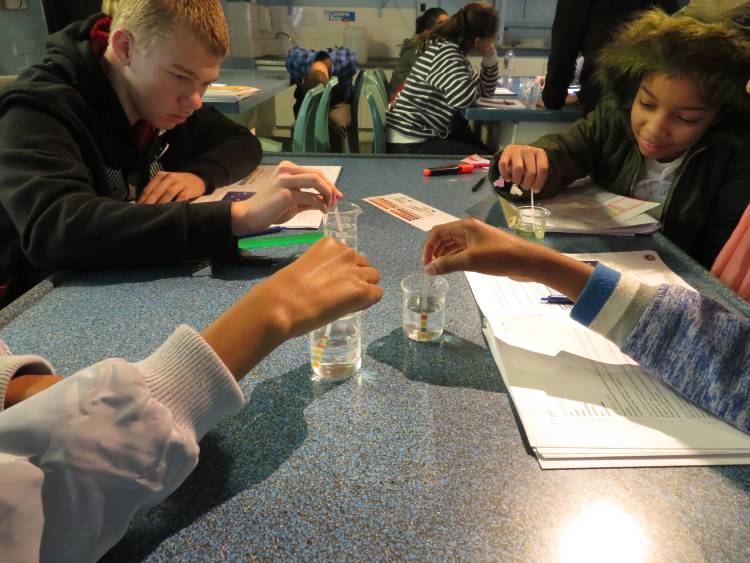
Learners were given a lesson on pH levels, the importance of the ocean's pH and how to measure pH using three different liquids. They were given a litmus strip to test the liquid and compare it against the pH chart in order to find the pH.
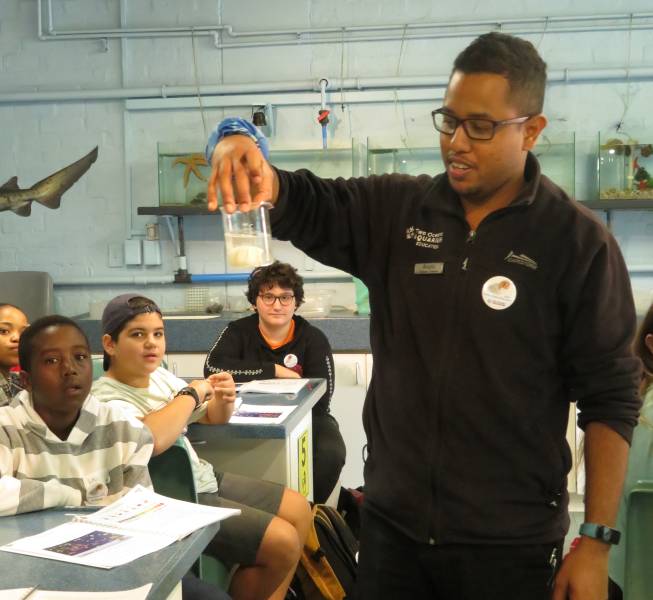
These factors were discussed in the context of a rocky shoreline, and learners were given the chance to interpret how these factors would affect the various parts of the ecosystem differently.
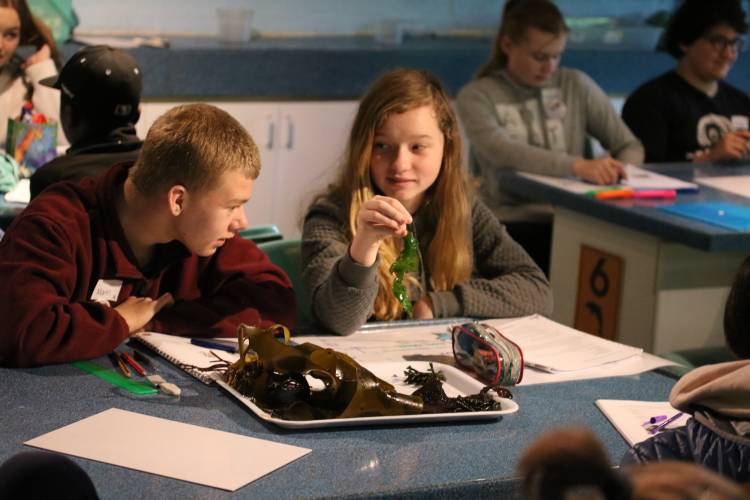
The fourth day of the course started with a closer look at macroalgae - seaweeds.
_750_500_70.JPG)
To end off day four, students were given articles to read and summarise. These articles varied from ocean pollution to shark finning. Each group had a different topic, however, each one linked to human impacts on the marine environment. The groups had to report back to the class explaining the causes, and solutions to some of these impacts.
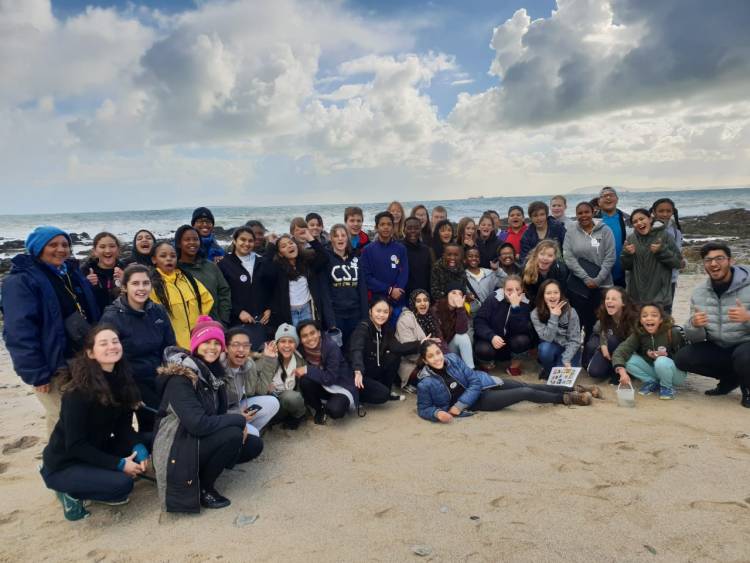
The final day of the course would put everything the learners had discovered so far together, by carrying out a thorough scientific investigation of an actual rocky shoreline at Mouille Point.
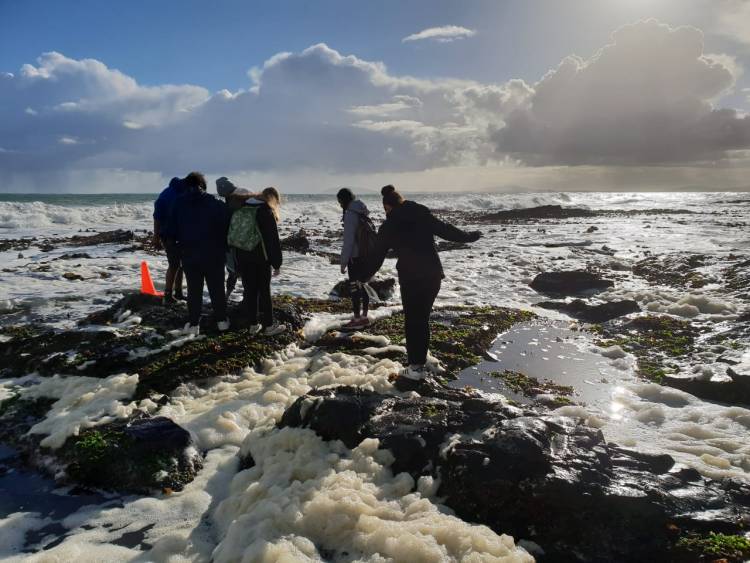
Students had to use quadrats to determine the plant and animal distribution across the rocky shore's profile.

Once back at the Aquarium, learners had to choose a hypothesis, look at the data they had gathered, and prove or disprove their theories using scientific reasoning.
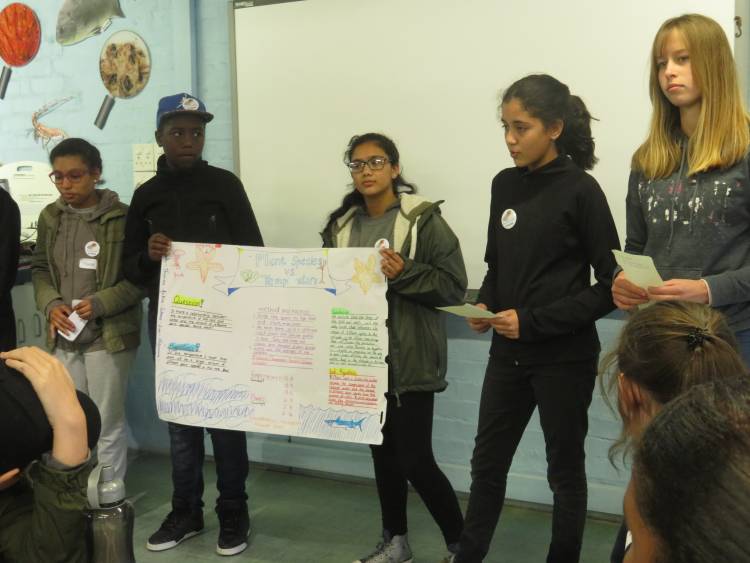
This course aimed to increase an interest in science in general and to introduce the different elements that make up the fields of marine biology, ecology, oceanography and zoology. The feedback from the students was unanimous in praise for the enthusiastic presenters, the ability to work with real scientific equipment, to engage with real animals, meet new people, and to explore the marine ecosystem.
We are grateful to the American International School of Cape Town for providing the sponsorship which made this memorable experience possible.
Ocean education for your kids
There are many ways your children can get involved in environmental education opportunities at the Aquarium. Here are a few of the most popular options:
- School classes, youth groups and other organisations can book a classroom visit that fits in with your curriculum:
- Pre-school: A wide range of interactive Puppet Stories, from I Love Turtles to a Water Cycle Adventure.
- Grade 1-3: Discover underwater wonders and learn about different kinds of fish.
- Grade 4-6: Fun lessons with topics from fish anatomy and marine conservation to the close relatives of sharks.
- Grade 7-9: Lessons from water conservation to rocky shore ecology.
- Grade 10-12: Exciting topics from sharks and ecotourism to biodiversity and anatomy.
- Individual children of all ages can take part in FREE courses from our Marine Science Academy:
- Grade 6: Become Junior Biologists and study marine life and conservation on our coast.
- Grade 7: Learn Smart Living and learn how our lives and the environment interact (next course's closing date on 27 July)
- Grade 8: Become a Marine Science Discoverer if you're in grade 8 and learn about careers in ocean science.
- Grade 9: Become Marine Science Explorers - time to get hands-on with ocean life.
- Grade 10: Apply for our flagship Young Biologist course, and jumpstart a marine career.
- Grade 11 & 12: FET Zoology and Oceanography courses - a stepping stone into marine science tertiary studies.
- If you can't get to the Aquarium, we'll come to you!
- A fully equipped mobile aquarium, Oceans in Motion, is on the road - bringing the ocean's wonders and lessons to previously disadvantages schools in the Cape Town area.
- The Smart Living outreach programme engages with learners on key environmental issues such as energy, water, waste and protecting biodiversity.
If you would like to make a booking for your class, get involved in one of the above courses or are an adult looking for training opportunities or to take part in our job shadowing programme, please visit our Environmental Education Centre portal for more information and the relevant contact details.
_450_310_70_s_c1_c_t.jpg)
_450_310_70_s_c1_c_t.jpg)